

If you’re struggling with anxiety, depression, or thoughts of self-harm, please don’t walk through this alone. Talk with someone you trust, reach out to a pastor or counselor, or call your local mental health helpline. If you are in the United States, you can contact the Suicide and Crisis Lifeline by dialing 988, available 24 hours a day. You’re not alone. God cares deeply for your mind and soul, and so do I.
“But this I call to mind,
and therefore I have hope:
The steadfast love of the LORD never ceases;
his mercies never come to an end;
they are new every morning;
great is your faithfulness.
‘The LORD is my portion,’ says my soul,
‘therefore I will hope in him.’”
— Lamentations 3:21–24, ESV
Some struggles have a clear beginning but no clear ending. We can often point to the moment something changed, the conversation that wounded us, the loss that left an empty space, or the season when life became heavier than it had been before. What’s much harder to identify is the moment when everything is supposed to feel normal again. So we wait, often without knowing how long that waiting will last or what healing is supposed to look like when it finally comes.
We pray for relief, direction, restoration, or some sign that things are moving forward. We do what we know to do. We lean on people we trust, return to Scripture, and remind ourselves of what we believe about God. Yet there are still mornings when the same weight is waiting for us when we wake up. The grief is still there. The anxiety still rises. The questions remain unanswered. In those moments, it can become difficult to tell the difference between patiently waiting on God and simply feeling stuck.
That’s one of the hardest places to live spiritually. It’s one thing to trust God when we can see what He’s doing, but it’s another to keep trusting Him when the situation remains unresolved. The longer the waiting continues, the easier it becomes to wonder whether hope is simply another way of trying to convince ourselves that things will eventually get better.
Biblical hope is stronger than that. It doesn’t require us to pretend the pain is gone, and it’s not built on the assumption that tomorrow will necessarily be easier than today. Scripture gives us a hope that can exist alongside grief, uncertainty, disappointment, and exhaustion because its foundation isn’t found in changing circumstances.
Lamentations 3 brings us directly into that tension. Its words were not written from the safety of a resolved story but from within devastation itself. To understand why the speaker can still say, “therefore I have hope,” we first need to understand the world in which those words were spoken.
Hope in the Ruins
Lamentations was born out of catastrophe. Jerusalem had fallen to Babylon, the city had been devastated, the temple had been destroyed, and the people of Judah were living with the consequences of war, hunger, displacement, death, and humiliation. What had once represented stability, worship, identity, and national life had been torn apart. This wasn’t the pain of one bad day or one difficult family. An entire people were trying to make sense of life after nearly everything familiar had been shaken.
The historical setting is the Babylonian destruction of Jerusalem, commonly dated to 586 BC. Second Kings and Jeremiah describe the siege, famine, executions, destruction, and deportations that surrounded the fall of the city. Lamentations gives us something different but equally important: it helps us feel the weight of those events from inside the grief. The book speaks of hunger, ruined worship, lost homes, violence, shame, and a community struggling to understand what had happened and where God was in the middle of it.
Lamentations also makes clear that Judah’s suffering wasn’t interpreted merely as the result of Babylon being stronger. The book understands Jerusalem’s fall within Israel’s covenant relationship with God. Judah had rebelled, and the destruction of the city was seen as judgment in keeping with the warnings God had already given His people. That matters because it keeps us from flattening the passage into a generic message about hardship. This was a particular historical crisis with a particular theological meaning.
At the same time, we have to be careful about how we carry that setting into our own lives. Lamentations explains why Jerusalem suffered in that moment, but it doesn’t give us permission to assume that every experience of depression, anxiety, grief, trauma, illness, or loss is direct punishment from God. The connection to our lives isn’t that our suffering must have the same cause. The connection is that Scripture shows us how faith can speak honestly from within deep pain while still holding on to the character of God.
Chapter 3 brings that tension into sharp focus. The speaker uses intensely personal language, but his grief also reflects the suffering of the larger community. By the time we approach verses 19–26, hope has been worn down to the point that he has just said his endurance and expectation from the Lord are gone. The circumstances have not yet been restored. The grief hasn’t been resolved. That’s what makes the words that follow so significant: hope begins to emerge before the ruins are gone.
This is the world we need to keep in mind as we read Lamentations 3. The speaker isn’t looking back on a difficult season from the safety of a happy ending. He’s still living inside the devastation. That is precisely why his movement toward hope matters so much.
When Hope Comes Back Into View
The passage begins with memory. The speaker asks that his affliction and wandering be remembered, describing his experience with the bitter images of wormwood and gall. Then he acknowledges that he remembers it himself. The pain isn’t distant enough to be considered objectively. It’s still heavy, still vivid, and still capable of bowing him down inwardly. Lamentations doesn’t present faith as the ability to forget what has happened. The suffering is remembered honestly, and the weight of it isn’t dismissed.
Then comes the turn in verse 21: “But this I call to mind, and therefore I have hope.” The Hebrew carries the idea of bringing something back to the heart or mind. The speaker isn’t erasing one set of memories and replacing them with another. He’s bringing a greater truth into the same field of vision. His suffering remains real, but it’s no longer the only reality shaping what he sees. What follows most naturally explains what he brings to mind: the steadfast love, compassion, and faithfulness of the Lord.
That is the center of the passage. Hope doesn’t rise because the circumstances suddenly improve. It rises because the speaker remembers who God is. His mercies haven’t been exhausted. His faithfulness hasn’t diminished. His compassion is still fresh morning by morning. The ruins around him don’t become less real, but they’re no longer allowed to define God’s character. The speaker learns to interpret his suffering in light of who God has revealed Himself to be, rather than interpreting God only through what he’s suffering.
Verse 24 takes that confession one step further: “The LORD is my portion… therefore I will hope in him.” In a book filled with loss, that statement carries tremendous weight. Judah had experienced the collapse of land, security, worship, leadership, and ordinary life. Yet the speaker identifies the Lord Himself as his portion. He’s not saying those other losses don’t matter. He’s saying that beneath everything that’s been stripped away, God remains the deepest ground of his belonging and hope.
That hope naturally leads into waiting. Verses 25–26 declare that the Lord is good to those who wait for Him and seek Him, and that it’s good to wait quietly for His salvation. This isn’t passive resignation. Waiting is joined with seeking. The speaker isn’t withdrawing from God, but turning toward Him with expectation. At the same time, the quietness of this waiting carries humility. He doesn’t demand that God act on his timetable or assume that faith gives him control over the outcome. He waits because he believes deliverance comes from the Lord.
Taken together, these verses don’t offer a technique for escaping sorrow. They show us what hope looks like while sorrow is still present. The speaker remembers the pain, brings God’s character back into view, confesses the Lord as his portion, and chooses to wait for the salvation only God can give. His grief hasn’t disappeared, but his suffering no longer has the final word. Hope becomes possible because God’s compassion, faithfulness, and goodness remain true even when the circumstances haven’t yet changed.
Hope While You Wait
The hope of Lamentations 3 isn’t distant theology for people whose lives are already put back together. It speaks most clearly to those who are still carrying something unresolved. That’s where many of us live more often than we’d like to admit. We may know God is faithful and still feel exhausted. We may believe He’s good and still have unanswered questions. We may trust Him deeply while still wishing the pain would lift faster than it has.
That’s why this passage matters so much for our mental and emotional lives. It doesn’t ask us to choose between honesty and faith. It shows us how to hold both. We can acknowledge what hurts without allowing pain to become the only voice shaping our understanding of God. We can seek Him without pretending we know when relief will come, and we can wait without surrendering hope.
For the weary soul, that kind of hope has to become something we actually practice in the middle of ordinary days.
1. Bring God’s Character Back Into View
Pain has a way of becoming loud. When anxiety rises, grief lingers, or discouragement settles in, our attention can begin to narrow until the struggle feels like the truest thing about our lives. We may still know what we believe about God, but the weight of what we’re experiencing can make those truths feel farther away than they once did. That doesn’t mean our faith has disappeared. It means suffering has a way of dominating our perspective if we let it become the only thing in view.
So bring God’s character back into view. Return to what Scripture says about Him. Remember where you’ve seen His faithfulness before. Let trusted believers speak truth into places where discouragement has made it hard to see clearly. Refuse to let one painful season become the final definition of who God is.
The speaker in Lamentations doesn’t deny the weight of what’s happened. He remembers it clearly. But he also brings the character of God back into view. The devastation is still real, but so are God’s compassion, faithfulness, and goodness. He doesn’t convince himself that the pain is smaller than it is. He reminds himself that the pain isn’t the whole story.
That’s the work before us as well. When our emotions are unstable, God’s character isn’t. When our perspective becomes clouded, His faithfulness hasn’t changed. Hope isn’t strengthened by pretending pain is small. It’s strengthened by remembering that God remains who He has always been.
2. Let Grief and Hope Exist in the Same Heart
One of the quiet dangers in Christian conversations about suffering is the pressure to move on too quickly. We can begin to believe that mature faith should sound confident all the time, that continued sadness means we haven’t trusted God enough, or that wrestling with discouragement somehow discredits what we say we believe. Without meaning to, we can turn hope into a performance and make hurting people feel as though they have to hide the parts of their story that are still painful.
Don’t force yourself into that kind of false resolution. Name what still hurts. Be honest about what you miss, what you fear, and what you wish were different. Bring that grief before God without assuming that honesty is the opposite of faith. Lamentations gives us room to do both.
The speaker is hopeful, but he’s still wounded. He confesses God’s faithfulness, yet the book continues to contain tears, questions, and appeals for help. Hope has entered the story, but grief hasn’t been pushed out. The two exist side by side.
That matters deeply for anyone walking through depression, trauma, loss, or prolonged emotional strain. Faith doesn’t require us to become emotionally numb. We don’t honor God by minimizing what’s happened or rushing ourselves into a version of healing that isn’t yet real. We can say, “This still hurts, and I still trust Him,” without contradiction.
We can grieve what was lost and still believe God is at work. We can admit that today is hard without turning one hard day into a verdict on the goodness of God. Hope doesn’t cancel grief. It keeps grief from becoming final.
3. Wait Actively, Not Passively
Waiting on God can sound passive, especially when we’re already tired. It can feel like being told to sit still and do nothing while life remains unresolved. But Lamentations connects waiting with seeking. The person who waits for the Lord is also the person who continues to turn toward Him.
So keep moving toward what is faithful and healthy. Pray. Stay in Scripture. Remain connected to people who can help carry the burden. Pursue counseling or medical care when they’re needed. Rest when your body is depleted. Set boundaries where harm is continuing. Keep making wise choices even when you can’t yet see the outcome you hoped for. Waiting doesn’t mean doing nothing. It means refusing to abandon God while you do the next faithful thing in front of you.
That’s especially important in mental health struggles because healing is often slower than we want it to be. There may not be one dramatic breakthrough moment. Progress may come through small steps, setbacks, conversations, treatment, support, prayer, and time. None of that means God is absent from the process.
Lamentations doesn’t give us a schedule for when relief will come. It gives us a posture for the waiting. Seek the Lord. Trust His character. Keep walking. And when the answer still isn’t visible, remember that waiting isn’t wasted simply because it’s unfinished.
When the Waiting Is Still Here
Maybe the hardest part of hope is that it often has to be practiced before we can see what God is doing. The waiting may still be here, the grief may still have weight, and the answer may still feel farther away than we want it to be. We may still wake up with questions, find ourselves discouraged by slow progress, and wish God would move faster than He seems to be moving. But those realities don’t mean He’s stopped being faithful. His character isn’t measured by the speed of our healing, the clarity of our circumstances, or how strongly we happen to feel His presence on a given day.
That’s what makes biblical hope so different from optimism. Optimism looks for signs that things are getting better. Hope looks to God even when the signs are hard to find. It keeps turning toward Him in the unresolved middle, trusting that who He is remains steady even when everything around us feels uncertain. We don’t have to pretend that pain no longer matters or force ourselves into a better emotional place before we’re ready. We can be honest about what still hurts and still choose to believe that God isn’t finished with us.
As this Mind & Soul series comes to a close, that may be one of the most important truths to carry forward. Christ-centered wholeness isn’t a life untouched by anxiety, depression, grief, trauma, exhaustion, or disappointment. It’s a life increasingly anchored in Christ in the middle of those realities. It’s learning to bring our minds, emotions, wounds, fears, and hopes under His care while refusing to let any one struggle become the final definition of who we are.
There may still be work ahead. There may still be conversations to have, help to receive, boundaries to establish, habits to rebuild, prayers to keep praying, and healing that unfolds more slowly than we’d choose. None of that makes the journey less spiritual. God often meets us in the process, not just at the point of resolution.
So if you’re still waiting, don’t mistake unfinished for abandoned. Keep turning toward the Lord. Keep letting His character speak louder than your fear. Keep receiving the care and support you need. Keep taking the next faithful step in front of you.
The waiting may not be over yet, but you’re not waiting without hope.

If you’re struggling with anxiety, depression, or thoughts of self-harm, please don’t walk through this alone. Talk with someone you trust, reach out to a pastor or counselor, or call your local mental health helpline. If you are in the United States, you can contact the Suicide and Crisis Lifeline by dialing 988, available 24 hours a day. You’re not alone. God cares deeply for your mind and soul, and so do I.
“The Spirit of the Lord GOD is upon me,
because the LORD has anointed me
to bring good news to the poor;
he has sent me to bind up the brokenhearted,
to proclaim liberty to the captives,
and the opening of the prison to those who are bound;
to proclaim the year of the LORD’s favor,
and the day of vengeance of our God;
to comfort all who mourn;
to grant to those who mourn in Zion—
to give them a beautiful headdress instead of ashes,
the oil of gladness instead of mourning,
the garment of praise instead of a faint spirit;
that they may be called oaks of righteousness,
the planting of the LORD, that he may be glorified.
They shall build up the ancient ruins;
they shall raise up the former devastations;
they shall repair the ruined cities,
the devastations of many generations.”
– Isaiah 61:1–4, ESV
There are some experiences in life that hurt for a season, and then there are others that seem to divide life into a before and an after. A death, betrayal, abuse, accident, divorce, frightening diagnosis, or season of deep instability can change the way we experience the world around us. Even after the immediate crisis has passed, something can remain unsettled beneath the surface. Life may look normal again from the outside while internally we realize we’re not experiencing it the same way we once did.
That’s part of what makes deep hurt so difficult. The event may be over, but its effects can linger. Certain places, conversations, dates, sounds, or situations can awaken emotions we thought we’d moved beyond. Sometimes we simply realize that something we believed was behind us still hurts. For Christians, that can create another layer of struggle as we begin wondering what our continued pain says about our faith. Shouldn’t I be over this by now? If I really trusted God, would this still affect me?
Those questions can turn suffering into shame. We can begin treating healing like proof of spiritual maturity, as though strong Christians recover quickly and faithful people eventually stop feeling the weight of what happened. But Scripture gives us a more compassionate picture. God doesn’t minimize suffering, and He doesn’t ask wounded people to pretend their wounds are less significant than they really are.
Isaiah 61 speaks into a world marked by grief, brokenheartedness, captivity, and devastation. Yet the brokenhearted aren’t told to repair themselves or prove how strong they are. God sends His Anointed One toward them. That difference matters. Healing isn’t proof of spiritual strength. Restoration begins with the grace of God and unfolds under the care of Christ. Faith after trauma doesn’t mean pretending the hurt never happened. It means learning that, in Christ, the hurt no longer has the authority to determine how the story ends.
The World Behind Isaiah 61
Isaiah 61 doesn’t emerge from a peaceful or uncomplicated moment in Israel’s story. Isaiah’s ministry repeatedly looks ahead to the consequences of Judah’s rebellion, including judgment, exile, loss, and the devastation of Jerusalem. By the time we reach this passage, the language reflects a people who’ve been brought low. There are broken hearts, captives, mourners, ashes, ruined cities, and places that have remained devastated for generations. Whatever else we take from these verses, Isaiah isn’t describing shallow disappointment. He’s speaking into real and lasting devastation.
The surrounding chapters help us understand why. Isaiah 59 confronts the reality of sin and injustice and makes clear that God’s people can’t ultimately rescue themselves. Isaiah 60 then begins looking toward restoration as darkness gives way to God’s glory and Zion is renewed. Isaiah 61 continues that movement by introducing the Spirit-anointed messenger through whom God’s restoration comes. The emphasis isn’t on wounded people finding the strength to rebuild themselves. It’s on God intervening on their behalf.
That historical setting is important. The coming return from Babylon and rebuilding of Jerusalem provide a real historical horizon for the language of ruins and restoration, but Isaiah’s vision reaches beyond reconstructed walls and repopulated cities. God is promising to comfort His people, establish them in righteousness, and make their renewed lives a display of His glory. The restoration is both tangible and spiritual, personal and communal.
And at the center of it all stands the One who says, “The Spirit of the Lord GOD is upon me, because the LORD has anointed me” (Isaiah 61:1). Isaiah doesn’t fully explain His identity here, but the rest of Scripture does. Centuries later, Jesus reads these words in the synagogue at Nazareth and declares, “Today this Scripture has been fulfilled in your hearing” (Luke 4:21). The promised restoration Isaiah sees ultimately comes through Christ.
The One Who Comes to the Brokenhearted
Isaiah 61 begins with God’s initiative. “The Spirit of the Lord GOD is upon me, because the LORD has anointed me” (Isaiah 61:1). The messenger doesn’t appoint Himself, and the wounded people don’t summon Him through their own strength. The Spirit is upon Him, the LORD has anointed Him, and the LORD has sent Him. Everything that follows flows from God acting first on behalf of people who can’t restore themselves.
The people He comes to are described as poor, brokenhearted, captive, bound, and mourning. The word translated “poor” carries the broader sense of those who’ve been brought low or afflicted, which fits the surrounding picture of loss, oppression, grief, and devastation. Then Isaiah says the messenger has been sent “to bind up the brokenhearted.” The image is one of tending and wrapping a wound. Their brokenness isn’t dismissed or treated as a failure of faith. God sends His Anointed One directly toward those whose hearts have been crushed.
The messenger also comes “to proclaim liberty to the captives” and “the year of the LORD’s favor” (Isaiah 61:1–2). Isaiah’s language strongly echoes the Jubilee pattern of release and restoration found in Leviticus 25, though the promise here reaches beyond a literal Jubilee year. The larger point is that God is bringing a freedom and restoration His afflicted people can’t produce for themselves. At the same time, Isaiah announces “the day of vengeance of our God” (Isaiah 61:2). God’s restoration doesn’t ignore evil or injustice. The God who comforts His people is also the righteous Judge who acts against what oppresses and destroys.
That comfort becomes especially vivid as Isaiah turns to those who mourn in Zion. God gives them “a beautiful headdress instead of ashes, the oil of gladness instead of mourning, the garment of praise instead of a faint spirit” (Isaiah 61:3). These images describe a God-given reversal from grief and despondency toward dignity, joy, and renewed life. They aren’t commands telling mourners to manufacture enough joy or praise to overcome their suffering. God is the One who gives. Restoration begins with what He provides, not with what wounded people manage to produce.
The result is that those who were once brokenhearted and mourning are called “oaks of righteousness, the planting of the LORD, that he may be glorified” (Isaiah 61:3). The picture is one of stability and reestablishment. God hasn’t simply changed their mood; He’s established a people whose restored lives display His righteous and saving work. Their restoration genuinely benefits them, but its ultimate purpose reaches beyond them. They become evidence of the faithfulness and glory of the LORD.
Then verse 4 completes the movement: “They shall build up the ancient ruins; they shall raise up the former devastations; they shall repair the ruined cities, the devastations of many generations.” The people God has restored now become participants in restoration. In Isaiah’s immediate context, these are real ruins, devastated places, and cities associated with Zion. The destruction hasn’t been denied or renamed. It’s still called devastation. But it no longer represents the end of the story. Those whom God has comforted and established are now able to participate in rebuilding what has long remained broken.
That progression is central to the passage. The brokenhearted don’t begin as builders. They begin as recipients of God’s grace. The LORD sends, the Anointed One restores, God establishes His people, and then they begin rebuilding. And when Jesus later reads these words in Nazareth and declares, “Today this Scripture has been fulfilled in your hearing” (Luke 4:21), He identifies Himself as the One through whom this promised restoration ultimately comes.
Living in the Grace of Restoration
If Isaiah 61 teaches us anything clearly, it’s that restoration doesn’t begin with the wounded person trying harder. It begins with God moving toward the brokenhearted through His Anointed One. That matters because many of us instinctively approach healing as something we need to accomplish. We want to understand what happened, get control of our reactions, fix what was damaged, and move on. When that process takes longer than we expected, we can become frustrated with ourselves or even begin to wonder whether we’re failing spiritually.
But the movement of this passage gives us a different way forward. Before there’s rebuilding, there’s receiving. Before there’s strength, there’s comfort. Before there’s participation, there’s grace. That means the Christian response to deep hurt isn’t to deny it, rush it, or prove that we’re stronger than it. It’s to allow Christ to meet us honestly in the places that still bear the effects of what happened, and to trust that His care can lead us toward restoration one faithful step at a time.
1. Let Christ Meet You Where It Still Hurts
One of the most difficult parts of healing is admitting that something still hurts. We can become remarkably good at functioning around pain. We keep going to work, serving at church, taking care of our families, meeting expectations, and doing what needs to be done. From the outside, life may look stable. But inside, certain situations may still unsettle us, memories may surface without warning, or reactions may reveal that something hasn’t fully healed.
The temptation is to hide those places, especially when we believe we should be further along by now. We may tell ourselves that enough time has passed, that other people have experienced worse, or that bringing it up again would only mean we haven’t moved on. But Isaiah 61 reminds us that Christ isn’t repelled by brokenheartedness. He moves toward it.
That means honesty can become an act of faith. Instead of asking, “Why is this still bothering me?” we can begin asking, “What is this pain showing me that still needs the care of Christ?” Sometimes that means sitting quietly in prayer and acknowledging what we’ve avoided. Sometimes it means finally telling a trusted friend what has been happening beneath the surface. Sometimes it means recognizing that pastoral support, counseling, medical care, or another form of professional help may be part of the care God is providing.
Receiving help doesn’t make faith smaller. It often requires faith to stop pretending we can carry everything alone. Christ’s care may come through Scripture and prayer, but He also works through people, wisdom, community, and appropriate support. The goal isn’t to prove that we’re strong enough without help. It’s to become willing to receive the grace God is already extending.
2. Don’t Measure Your Faith by How Quickly You Heal
Deep hurt creates its own sense of time. Sometimes we think we should be over something because months or years have passed. We compare where we are now with where we assumed we would be, and every difficult day begins to feel like evidence that we’ve made no progress.
That pressure can become especially damaging when we spiritualize it. We may assume that mature faith should make grief shorter, triggers disappear, or emotional responses become easier to control. Then, instead of seeing healing as a process, we begin treating it like a spiritual grade. Good days mean we’re doing well. Hard days mean we’re failing.
Isaiah 61 doesn’t place that burden on the wounded person. God is the One who binds, comforts, gives, plants, and establishes. The passage doesn’t tell us how quickly that work happens. It tells us who’s doing it.
That changes how we learn to evaluate progress. Healing may look like being able to enter a situation that once overwhelmed you. It may look like setting a boundary without guilt, recognizing a harmful pattern, asking for help before reaching a breaking point, or noticing that a memory no longer has the same power it once did. It may even look like having a difficult day and realizing that one hard moment doesn’t erase months of growth.
There will likely be seasons when progress feels uneven. You may feel steady for a while and then encounter something that catches you off guard. That doesn’t automatically mean you’ve gone backward. That doesn’t automatically mean you’ve gone backward. Some wounds are deep, and restoration rarely unfolds in a perfectly straight line. The better question isn’t, “Why am I not healed yet?” but, “How is Christ meeting me faithfully here?”
The presence of pain doesn’t prove the absence of progress.
3. Rebuild from Grace, Not from Pressure
Isaiah 61 eventually moves from comfort to rebuilding. “They shall build up the ancient ruins; they shall raise up the former devastations” (Isaiah 61:4). But that movement only comes after God has already acted. The people don’t rebuild in order to become worthy of restoration. They rebuild because restoration has already begun.
That order gives us freedom when we’re trying to figure out what life after hurt should look like. We don’t have to rush into repairing everything at once. We don’t have to return every relationship to what it was, force reconciliation where trust hasn’t been rebuilt, or prove that we’ve moved on by pretending everything is normal. Rebuilding can be patient, wise, and appropriately limited.
For one person, rebuilding may mean learning how to be emotionally present with their children in ways no one was present with them. For another, it may mean learning how to trust slowly and wisely after betrayal. It may mean changing patterns in a marriage, establishing boundaries with someone who repeatedly causes harm, reconnecting with community after isolation, or choosing not to pass bitterness into the next generation.
Sometimes rebuilding is less dramatic than we imagine. It may look like learning to rest without guilt, re-entering a place that once felt unsafe but is now genuinely safe, having a conversation you’ve avoided, or choosing a healthier response when an old pattern tries to return. Small acts of faithfulness matter because restoration is often built through repeated, ordinary choices.
Not every ruin will be restored exactly as we hoped. Scripture doesn’t promise that every relationship will be repaired, every loss reversed, or every painful chapter rewritten. But Christ can still bring something new from what has been devastated. He can establish us in ways that make our lives more rooted, wise, compassionate, and faithful than they were before.
We don’t rebuild to prove that we’re healed. We rebuild because grace has begun making us steady again.
When the Hurt Is No Longer the Final Word
Some wounds become part of our story whether we would’ve chosen them or not. We may always wish certain things had happened differently. We may carry scars from places that once felt impossible to survive. But in Christ, the wound doesn’t have to become the final definition of who we are.
That is where hope begins to take shape. Not in pretending the past didn’t matter, and not in forcing ourselves to feel stronger than we are. Hope grows as we learn that Christ is present even in the places that still ache. He’s not intimidated by what has been broken, and He isn’t impatient with the process of restoration.
There may still be difficult days. There may still be moments when something old feels unexpectedly close. But those moments don’t get to decide the direction of your life. The grace of God is still at work, often quietly, steadily, and more deeply than we can see in the moment.
So if you are walking through the aftermath of something painful, you do not have to prove that you are healed. You do not have to hide what still hurts. You do not have to rush the work God is doing in you.
You can keep bringing the wounded places to Christ.
And you can trust that the One who meets you there is still writing the story.

“Blessed are the poor in spirit, for theirs is the kingdom of heaven. Blessed are those who mourn, for they shall be comforted. Blessed are the meek, for they shall inherit the earth. Blessed are those who hunger and thirst for righteousness, for they shall be satisfied.”
— Matthew 5:3–6, ESV
We tend to have a picture in our minds of what a blessed life should look like. It usually looks stable, successful, comfortable, and somewhat under control. We imagine the blessed person as someone who has enough strength for the day, enough answers for the questions in front of them, and enough confidence to keep moving forward. Even spiritually, it’s easy to assume that the people closest to God are the ones who seem the most put together. They know what to say, their faith appears steady, and their lives seem ordered.
That’s part of what makes the opening words of Jesus so surprising.
When the King begins to describe life under His reign, He doesn’t begin with the strong, accomplished, comfortable, or spiritually impressive. He begins with the poor in spirit, those who mourn, the meek, and those who hunger and thirst for righteousness. These aren’t the people we would naturally point to and say, “There’s what blessing looks like.”
Need doesn’t usually feel like blessing. Grief certainly doesn’t. Meekness can look like weakness in a world that rewards control, and hunger is a reminder that something is still missing. Yet these are the people Jesus names first, and over each of them He speaks the same word: blessed.
That word matters. Jesus isn’t saying they necessarily feel happy, and He isn’t suggesting that need, grief, weakness, or dissatisfaction are good simply because they hurt. He’s declaring that these people stand in a position of favor because of what God has promised them. Their present condition doesn’t tell the whole story. The kingdom belongs to them. Comfort is coming. Inheritance is coming. Satisfaction is coming.
The first words of the Sermon on the Mount begin overturning the way we measure blessing. Jesus calls blessed the people who know they need what only God can give.
A Different Picture of Blessing
When Jesus begins speaking in Matthew 5, He’s addressing people who know what it means to live with vulnerability. Galilee wasn’t the center of religious or political power. It was home to ordinary families, fishermen, laborers, farmers, the sick, the poor, and people whose lives could be deeply affected by circumstances beyond their control. Matthew has already shown crowds coming to Jesus carrying disease, pain, oppression, and physical limitation. These were people living with real needs, not abstract ones.
They also lived under Roman rule, within a system where political authority was largely out of reach for the average person. Wealth, land, status, and social standing could make an enormous difference in someone’s security. A family with resources had more options. A person with influence had greater access. Those without either were far more exposed when hardship came.
That matters when we hear Jesus begin talking about blessing.
In that world, visible security could easily be associated with favor. Land meant stability and something to pass on. Financial provision offered a measure of protection. Reputation could open doors, while a loss of status could close them. Health, influence, and social position all carried practical weight, especially in a culture where there were few safety nets when life went wrong.
At the same time, the people listening to Jesus weren’t hearing His words without a biblical framework. Israel’s Scriptures had long spoken about the poor, the humble, the afflicted, and the righteous who trusted God while others seemed to prosper. Psalm 37 describes people surrounded by wrongdoing who are told not to envy the wicked, but to trust the Lord, continue doing good, and wait for Him. Isaiah speaks of good news to the poor, comfort for those who mourn, and God restoring what has been broken. Those themes were already part of Israel’s story and hope.
So when Jesus speaks about the poor in spirit, those who mourn, the meek, and those who hunger and thirst for righteousness, He isn’t introducing categories that would have sounded completely foreign. His words connect with a long biblical pattern in which God sees those the world often overlooks and remains faithful to people who depend on Him.
What makes the moment especially significant is that Jesus has already begun proclaiming that the kingdom of heaven is near. He has been teaching, healing, and restoring people across Galilee, and now He begins describing the people who stand within the blessing of that kingdom. For listeners who knew uncertainty, grief, limitation, and the frustration of waiting for God to make things right, those promises would have carried real weight.
Jesus isn’t speaking to people untouched by struggle. He’s speaking to people who understand what it means to need, to wait, and to hope for God to act. That is the world in which the Beatitudes are first heard, and it’s the setting we need to keep in view before we begin looking more closely at what Jesus means by each one.
Blessed Are the Empty-Handed
Jesus begins with words that set the tone for everything that follows: “Blessed are the poor in spirit, for theirs is the kingdom of heaven” (Matthew 5:3, ESV).
To be poor in spirit isn’t to believe we’re worthless, incapable, or somehow lacking value before God. Jesus isn’t praising low self-esteem, and He certainly isn’t suggesting that spiritual weakness is something we should manufacture. The picture is one of humility and dependence before God. The poor in spirit come to Him without pretending they possess everything they need within themselves. They recognize that when it comes to the kingdom of God, they don’t arrive with something to bargain with or a spiritual résumé that places God in their debt.
That’s where the idea of empty hands becomes helpful. We spend so much of life learning how to become capable. We gain experience, solve problems, make plans, develop skills, and hopefully grow wiser along the way. Those things aren’t bad. In fact, much of that growth is part of faithfully stewarding what God has given us. The problem comes when our ability slowly becomes our security and we begin living as though we can provide for ourselves what only God can give.
Jesus starts somewhere entirely different. The kingdom belongs to those who know they need the King.
That’s why “Kingdom blessing begins where self-sufficiency ends” is more than a statement about reaching the end of ourselves in a crisis. Sometimes God uses circumstances beyond our ability to remind us how dependent we are, but Jesus isn’t requiring a dramatic collapse. He’s describing a posture before God that never really becomes unnecessary. Spiritual maturity doesn’t mean slowly graduating from dependence on God. If anything, walking with Jesus should make us increasingly aware of how much we need His grace in every part of life.
From there, Jesus moves naturally into mourning: “Blessed are those who mourn, for they shall be comforted” (Matthew 5:4, ESV).
It can be tempting to read this only as mourning over personal sin. There’s certainly a place for that. When we see our sin clearly, repentance should involve genuine sorrow over what’s contrary to God and the damage it causes. But Jesus doesn’t tell us exactly what these mourners are grieving, and the biblical picture is broader than personal guilt alone. Isaiah had spoken of God bringing comfort to those who mourn as He restores what’s been broken, and that background helps us hear Jesus’ promise within the larger hope of God’s restoration.
There are many reasons faithful people mourn. We grieve our own failures and the consequences of sin, but we also grieve death, fractured relationships, suffering, injustice, and the pain we sometimes have no ability to fix. There are moments when we look honestly at ourselves or the world around us and simply know this isn’t how things are supposed to be.
Jesus doesn’t dismiss that grief or treat it as evidence of defective faith. He doesn’t tell those who mourn to hurry up and become cheerful. He promises comfort.
That distinction matters. Jesus isn’t calling mourning itself good as though pain is something God wants us to pursue. The mourner is blessed because grief won’t have the final word. Under the reign of God, what is broken now will not remain broken forever. Kingdom hope gives us the freedom to grieve honestly because our hope doesn’t depend on pretending everything is already okay.
That same dependence on God begins to take another shape when Jesus says, “Blessed are the meek, for they shall inherit the earth” (Matthew 5:5, ESV).
Meekness is easily mistaken for weakness, especially in a culture that rewards confidence, assertion, and the ability to make things happen. But Jesus isn’t describing someone who is timid, passive, or unwilling to confront what’s wrong. Matthew later uses this same language of Jesus Himself. The One who overturned tables, confronted hypocrisy, spoke truth directly, and willingly walked toward the cross could also describe Himself as gentle and lowly in heart.
Psalm 37 gives us an even clearer picture of what Jesus means. The psalm describes righteous people living among those who seem to prosper through wrongdoing. Instead of telling them to beat the wicked at their own game, it repeatedly calls them to trust the Lord, continue doing good, resist destructive anger, and wait for God to act. Then comes the promise Jesus echoes: “But the meek shall inherit the land” (Psalm 37:11, ESV).
That helps us see meekness as something much stronger than passivity. Meekness refuses to secure through sinful means what it trusts God to ultimately provide. It can speak truth without needing to humiliate. It can exercise authority without dominating. It can establish boundaries without seeking revenge. It can confront wrongdoing without becoming consumed by anger. The meek person doesn’t have to grasp for control because their future isn’t ultimately secured by their ability to overpower someone else.
And there’s something beautifully unexpected about Jesus’ promise: the people who refuse to grasp are the ones who inherit.
That brings us to the fourth Beatitude, where dependence becomes desire: “Blessed are those who hunger and thirst for righteousness, for they shall be satisfied” (Matthew 5:6, ESV).
Hunger and thirst tell us that something is still missing. Nobody hungers for what they already possess in fullness, and Jesus doesn’t describe a casual interest in righteousness. He pictures a longing deep enough to be felt.
Righteousness will become an important theme throughout the Sermon on the Mount. Jesus will talk about reconciliation, purity, honesty, generosity, prayer, forgiveness, love for enemies, and doing the will of the Father. So the righteousness Jesus names here can’t be reduced to looking religious or simply knowing the right things. It’s a desire for God’s rightness to increasingly shape who we are and how we live, while also longing to see what is wrong around us brought under His good rule.
That means hunger for righteousness has to reach close to home. It’s one thing to want God to correct what’s wrong in the world, our church, our family, or someone else. It’s another thing to ask Him to expose what still needs to change in us. Kingdom hunger says, “God, I want Your way even when Your way confronts mine.”
At the same time, this hunger reaches beyond us. We look at suffering, injustice, broken families, damaged relationships, and the countless ways sin has distorted what God made good, and something in us longs for things to be made right. We don’t simply want relief from what makes us uncomfortable. We want the righteousness of God to take deeper root in us and to increasingly be seen around us.
Jesus promises that this hunger won’t remain unanswered: “they shall be satisfied.”
Taken together, these first four Beatitudes give us a picture of people whose lives are turned toward God because they know they can’t produce the kingdom for themselves. They need what God alone can give, grieve what only He can finally restore, refuse to seize through sinful control what He has promised to provide, and hunger for a righteousness they can’t fully establish on their own.
They are, in a very real sense, empty-handed. But empty-handed doesn’t mean abandoned.
That’s the surprising center of Jesus’ words. The poor in spirit have the kingdom. Those who mourn have comfort ahead. The meek have an inheritance waiting. Those who hunger for righteousness have the promise of satisfaction. Their blessing isn’t found in pretending their need has disappeared. It’s found in the faithfulness of the God upon whom their need depends.
Living with Open Hands
These opening Beatitudes don’t simply give us a different way to think about blessing. They also expose the ways we often try to secure life for ourselves. We want enough strength to avoid dependence, enough control to avoid uncertainty, and enough comfort to avoid the ache of things that are still unresolved. Jesus points us in another direction. Life under the King is lived with open hands.
1. Be honest about where you still need God.
Most of us are more comfortable being useful than needy. We like being the person others can depend on, the one who knows what to do, the one who can solve the problem and keep moving. There’s nothing wrong with growing in wisdom, skill, responsibility, or experience. Those are good gifts, and they should be developed. But even good things can quietly become places of trust.
That’s where this gets personal. It’s worth asking where we’ve started trusting our own ability more than we realize. Maybe it’s in leadership, finances, parenting, work, relationships, or even in the routines of our faith. We can get so used to carrying responsibility that we stop bringing those responsibilities before God in the same way. We keep moving, keep planning, keep solving problems, and before long prayer can become something we add in instead of the place we start.
Jesus doesn’t call us to become less capable. He calls us away from the illusion that capability makes us self-sufficient. We can plan faithfully, work hard, seek wise counsel, make difficult decisions, and still live as people who know that wisdom, strength, endurance, and fruit ultimately come from God. Open hands begin with the humility to admit that there are places in our lives where we simply don’t have what we need within ourselves.
Sometimes the most faithful prayer we can pray is also one of the simplest: “God, I need You here.”
2. Refuse to confuse control with faithfulness.
When something matters deeply to us, we naturally want to secure the outcome. We want the conversation to go a certain way, we want people to understand our intentions, and we want to protect what we’ve built or correct what feels unfair. Sometimes action is necessary. Faithfulness can require confrontation, boundaries, difficult conversations, strong leadership, or protecting someone who is vulnerable. Meekness doesn’t mean doing nothing, and it doesn’t mean avoiding conflict simply because conflict is uncomfortable.
But meekness does force us to ask a harder question. Not only, “What am I trying to accomplish?” but also, “Who am I becoming in the way I’m trying to accomplish it?” There’s a difference between faithfulness and grasping. We can speak truth without humiliating someone, lead without dominating, establish boundaries without becoming vindictive, and stand firm without letting anger shape us. We can do what’s right without believing everything depends on our ability to force the result.
That can feel risky because control gives us the illusion of security. If I push harder, maybe I can guarantee the outcome. If I defend myself enough, maybe I can protect what people think of me. If I stay in control, maybe I can keep things from falling apart. But the meek person learns to do what is faithful and entrust what is uncontrollable to God. That isn’t weakness. It’s trust.
3. Let your grief and hunger keep turning you to God.
Jesus blesses those who mourn and those who hunger and thirst for righteousness, which means there’s room in kingdom life for both sorrow and longing. Some things should grieve us. Sin should grieve us. Broken relationships should grieve us. Injustice, loss, suffering, and all the ways this world falls short of God’s good design should grieve us. Faith doesn’t require us to pretend those things don’t hurt, and it doesn’t ask us to rush past them just to sound hopeful.
At the same time, grief doesn’t have to leave us only staring at what’s broken. It can become a deeper longing for God to make things right. That’s where mourning and hunger begin to meet. We grieve what’s wrong, but we also ask God to shape righteousness in us while we wait for restoration around us. Instead of only asking, “Why hasn’t this changed?” we can also begin asking, “What does faithfulness look like while I wait?”
Sometimes that will mean repentance. Sometimes it may mean reconciliation, patience, mercy, honesty, justice, or simply continuing to obey when the outcome still feels unfinished. Hunger for righteousness keeps us from settling into bitterness or apathy. It reminds us that even when we can’t fix everything, we can still live in a way that reflects the King. Open-handed faith doesn’t deny what’s missing. It brings that longing honestly before God and trusts that He’s still at work.
Open Hands Before the King
There’s something freeing when we realize that life under the King was never meant to be sustained by our own strength. We don’t have to prove that we’re enough, force every outcome, hide every sorrow, or pretend that nothing is missing. Jesus meets us in the places where our need is real and teaches us to trust Him there.
That kind of trust won’t always look impressive. Sometimes it’ll look like asking for help. Sometimes it’ll look like waiting when we’d rather take control, grieving what still hurts, or continuing to obey when nothing around us seems to be changing. But faithfulness doesn’t become less meaningful simply because it feels unfinished.
The Beatitudes invite us to stop measuring our lives only by what we can see right now. The King is still at work, and His promises are more dependable than our circumstances. We can live with open hands because our future doesn’t rest on what we’re able to hold together.
So perhaps the question to carry with us is simple: What are we still holding that Jesus is asking us to place in His hands?
That’s where life under the King keeps beginning.

“I am doing a great work and I cannot come down. Why should the work stop while I leave it and come down to you?”
— Nehemiah 6:3 (ESV)
Sometimes the greatest threat to finishing what God has called us to do isn’t an obstacle standing directly in front of us. Sometimes it’s something trying to pull our attention away from the work altogether. Nehemiah had already faced ridicule, threats of violence, exhaustion, and internal injustice. Any one of those challenges could have stopped the rebuilding of Jerusalem’s wall, yet by the beginning of Nehemiah 6, the work was almost finished. The breaches had been closed, and the only major task remaining was setting the doors into the gates.
The finish line was in sight, but the opposition wasn’t finished. Sanballat, Tobiah, Geshem, and the others hadn’t been able to stop the work through mockery, intimidation, or threats. Even the internal crisis of chapter 5 had been confronted. So the strategy changed. Instead of attacking the work directly, they began targeting Nehemiah personally. They tried to distract him. When that failed, they spread rumors and political accusations. When those tactics didn’t work, they turned to spiritual manipulation. Even after the wall was completed, Nehemiah discovered that the influence of his enemies still reached inside the community he was trying to rebuild.
Nehemiah 6–7 reminds us that faithfulness requires more than starting well. It requires staying focused when distractions multiply, discerning truth when deception sounds convincing, finishing what God has entrusted to us, and then faithfully stewarding what has been built. Sometimes one assignment is completed while the larger mission is still unfolding. Finishing the wall didn’t mean Nehemiah’s work was finished. The wall may have been complete, but the mission wasn’t.
The World Behind the Mission
By the time we reach Nehemiah 6, Jerusalem has been living with the consequences of destruction and exile for well over a century. The Babylonians had destroyed the city in 586 BC, tearing down its walls, burning its gates, destroying the temple, and carrying much of the population into exile. When Persia later conquered Babylon, Jewish exiles were permitted to return in stages. The temple was eventually rebuilt, Ezra returned to teach the Law, and then Nehemiah arrived during the reign of Artaxerxes I with authorization to address Jerusalem’s ruined defenses and weakened condition.
That larger story matters because Nehemiah’s work was never simply a construction project. Jerusalem was still part of the Persian Empire, not an independent Jewish kingdom, and in the ancient world a city’s walls represented far more than physical protection. They helped provide security, regulate access, strengthen political and economic stability, and restore a measure of dignity to the people living inside them. For Jerusalem in particular, the condition of the city was also tied to the worship and witness of God’s covenant people. The temple had been rebuilt, but the city surrounding it remained vulnerable.
The restoration of Jerusalem had unfolded in stages. The people had returned from exile, the temple had been rebuilt, the Law had been taught, and now the walls were being restored. Yet the rebuilding of the city was only one part of a much larger work. God was not merely restoring structures. He was restoring a people, and that meant the community itself would need to be ordered around faithfulness, worship, leadership, security, and obedience.
Nehemiah 6–7 stands at the turning point between those two movements. Up to this point, much of the book has centered on getting the wall rebuilt while the people faced ridicule, threats of violence, exhaustion, and internal injustice. By chapter 6, the physical work is nearly complete, but the restoration is not. As the story moves into chapter 7, Jerusalem now has walls and gates, but a protected city still needs trustworthy leaders, organized security, residents, worship, and a community that understands who they are as the people of God.
The focus of the book begins to shift here. The question is no longer simply whether Jerusalem’s walls can be rebuilt. The question becomes what kind of people will live behind them. Nehemiah 6–7 therefore serves as a bridge from physical reconstruction toward the spiritual and communal restoration that will become even more prominent in the chapters ahead.
The wall mattered, but it was never the final goal. God was rebuilding a people.
Staying Faithful When the Strategy Changes
Nehemiah 6 opens with the wall almost complete. The breaches had been closed, and only the doors still needed to be set into the gates. Sanballat, Tobiah, Geshem, and the others had already failed to stop the work through mockery, intimidation, and threats, so their opposition began to take a different shape. Instead of attacking the work head-on, they turned their attention more directly toward Nehemiah.
Sanballat and Geshem invited him to meet them in the plain of Ono. On the surface, the request could have sounded diplomatic, but Nehemiah understood that something more dangerous was behind it: “They intended to do me harm” (Nehemiah 6:2). His response was simple and direct: “I am doing a great work and I cannot come down” (Nehemiah 6:3). Nehemiah wasn’t elevating himself or claiming that his time was too important for others. He understood that the work was great because God had entrusted it to him, and he refused to abandon that assignment for a meeting designed to pull him away from it. Four times the invitation came, and four times his answer remained the same.
When distraction didn’t work, the pressure became more public. Sanballat sent an open letter accusing Nehemiah of planning rebellion and trying to make himself king. It was a serious accusation, especially for someone serving under the authority of the Persian king, but Nehemiah refused to let the rumor consume him. He denied the accusation and immediately recognized what was really happening. His enemies wanted the people to become afraid so that “their hands will drop from the work, and it will not be done” (Nehemiah 6:9). The attack may have been aimed at Nehemiah’s reputation, but the real target was the mission. So rather than becoming consumed with defending himself, Nehemiah prayed, “But now, O God, strengthen my hands.”
The deception became even more subtle when it came through Shemaiah. He warned Nehemiah that people were coming to kill him and urged him to hide inside the temple. This time the pressure sounded spiritual, which could have made it even more convincing. Yet Nehemiah recognized that following the advice would require him to violate God’s command, and he refused. He eventually understood that Shemaiah had been hired by Tobiah and Sanballat. Their goal was to use fear to push Nehemiah into sin, then use that failure to damage his credibility. Nehemiah’s discernment rested on something solid: no message can truly come from God if obeying it requires disobedience to what God has already revealed.
After all of these attempts to stop the work, the wall was finally completed in fifty-two days. The people had worked, guarded, sacrificed, and persevered, but Nehemiah also understood that their success could not be explained by human effort alone. Even the surrounding nations recognized that “this work had been accomplished with the help of our God” (Nehemiah 6:16). God had sustained the work through every form of opposition.
Still, completion didn’t mean every problem disappeared. Tobiah remained connected to influential people within Judah, and some of the nobles continued defending him and reporting Nehemiah’s words back to him. The wall may have closed the physical breaches around Jerusalem, but there were still relational and spiritual vulnerabilities within the community. Visible success did not automatically mean that everything beneath the surface was healthy.
That helps us understand the transition into chapter 7. Nehemiah didn’t finish the wall and assume the work was over. He immediately began thinking about how the restored city would be protected, led, and sustained. He appointed gatekeepers, singers, Levites, and leaders to care for Jerusalem, and Hananiah was specifically described as “a more faithful and God-fearing man than many” (Nehemiah 7:2). That description stands out after everything we’ve just seen in chapter 6. Nehemiah’s enemies repeatedly tried to control him through the fear of people, yet the kind of leader needed for the next stage of the mission was someone marked by the fear of God.
Nehemiah also established practical safeguards for the city’s gates and guards. The wall had been completed, but it still needed to be protected. Once again, his leadership held dependence on God and practical wisdom together. Trusting God never meant ignoring responsibility.
Then the focus moved from the structure itself to the people who would live within it. Jerusalem was large, but its population was still small, so Nehemiah organized the people by genealogy. The long list that follows may feel less dramatic than the events of chapter 6, but it is not an interruption. It preserves family identity, priestly qualification, covenant continuity, and the makeup of the restored community. The wall was never meant to stand around an empty city. God was restoring a people.
By the end of chapter 7, those people are registered and settled in their towns, preparing the way for what happens next. Chapter 8 will turn their attention toward the Word of God. The physical rebuilding has reached completion, but the deeper work of restoring and forming the people is still unfolding.
Staying Faithful Where God Has Placed Us
Nehemiah 6–7 does more than show us how one leader finished a difficult assignment. It presses the same questions into our own lives. What has God actually entrusted to us? What keeps pulling our attention away from it? What voices are shaping our decisions? And once something has been built, are we willing to do the slower work of stewarding it well? Most of us will never rebuild a city wall, but all of us are responsible for something. We’re building families, relationships, ministries, careers, habits, and lives. Faithfulness requires more than enthusiasm at the beginning. It asks us to remain focused when distractions multiply, grounded when fear becomes loud, and responsible when the excitement of building gives way to the quieter work of sustaining.
1. Protect Your Attention from What Pulls You Away
Nehemiah’s response to Sanballat is one of the clearest statements of focus in Scripture: “I am doing a great work and I cannot come down” (Nehemiah 6:3). He knew what God had placed in front of him, and that clarity helped him recognize what didn’t deserve his attention. That distinction is important because distractions are not always obviously wrong. Some can look important, urgent, or even reasonable. Sanballat’s invitation sounded like a meeting, not an attack. Yet Nehemiah understood that accepting it would pull him away from the work God had actually given him to do.
Our distractions often work the same way. There’s always another conversation we could enter, another opinion we could defend ourselves against, another opportunity we could pursue, or another demand asking for our attention. Some of those things may be legitimate, but not every legitimate thing belongs to us. That doesn’t mean we become stubborn or unavailable. Nehemiah had already shown in chapter 5 that he was willing to listen when real concerns needed his attention. Staying focused isn’t the same thing as refusing accountability. It’s learning to discern the difference between something God is asking us to address and something that’s simply pulling us away from what He’s already entrusted to us.
That makes the question personal. What has God placed in front of me in this season, and what keeps pulling me away from it? Maybe it’s the constant pressure to defend myself when I feel misunderstood. Maybe it’s comparison, social media, another person’s expectations, or an opportunity that’s good but simply not mine. Whatever it is, focus sometimes requires the humility to say no without feeling the need to justify myself over and over again. Starting now, I can begin filtering demands through the responsibilities God has actually given me. Sometimes faithfulness simply means staying on the wall.
2. Test the Voices That Use Fear to Move You
Shemaiah’s warning sounded spiritual, and that’s what made it dangerous. He spoke about the temple, warned of a real threat, and offered advice that appeared to provide safety. Yet following it would have required Nehemiah to disobey what God had already revealed. That contradiction exposed the message for what it was.
We need that same kind of discernment. There are countless voices competing to shape the way we think, react, and make decisions. Some come from people around us. Others come through culture, social media, fear, insecurity, or even our own internal dialogue. Some voices may even use Christian language or claim spiritual authority. The question isn’t simply whether something sounds spiritual. The question is whether it agrees with the truth God has already given us.
Fear makes that discernment more difficult because fear creates urgency. It tells us that we need to react now, protect ourselves immediately, or make a decision before we have time to think clearly. It asks, “What if this goes badly?” “What will people think?” or “What if I lose something?” Nehemiah didn’t allow fear to become the authority governing his obedience. He tested the message against God’s Word and refused to let pressure push him into compromise.
That same anchor is available to us. When a voice is driving us toward panic, retaliation, dishonesty, bitterness, or disobedience, we need to slow down long enough to ask whether that voice is actually leading us toward faithfulness. Starting now, I can bring my fear under the authority of God’s truth. I can ask whether the advice I am receiving agrees with Scripture, whether it’s producing obedience or compromise, and whether I’m making a decision because it’s right or simply because I’m afraid. The goal isn’t to never feel fear. The goal is to refuse to let fear lead.
3. Steward What God Has Helped You Build
The wall was finished in fifty-two days, but Nehemiah didn’t treat completion as permission to stop paying attention. He immediately began appointing leaders, establishing safeguards, organizing the people, and preparing the city for the next stage of restoration. That part of the story may be less dramatic, but it’s where lasting leadership is tested.
We tend to celebrate beginnings and finish lines. We celebrate launching something, reaching a goal, completing a project, or finally seeing a prayer answered. Those moments matter, but lasting fruit usually depends on what happens after the celebration. A marriage isn’t sustained by the wedding. A ministry isn’t sustained by the launch. A new habit isn’t sustained by one good week. A church doesn’t become healthy simply because attendance grows, and a vision doesn’t become lasting simply because the original goal was reached. What has been built must be stewarded.
That means asking different questions. Who needs to carry responsibility? What rhythms need to be established? What safeguards need to remain in place? Who needs to be developed? What needs ongoing attention so that what God has entrusted to us doesn’t slowly weaken through neglect? Nehemiah also reminds us that systems are never the final goal. Jerusalem had walls, but the city still needed people. The structures existed to serve the life and worship of the community.
That same principle matters in every area of leadership. Systems can help us organize, protect, and sustain what God is doing, but they must always serve people rather than replace them. The goal is not simply to build something impressive. The goal is to faithfully steward people, responsibilities, and opportunities in a way that honors God. Starting now, I can look beyond completion and ask what faithfulness requires next. I can develop people instead of carrying everything myself, build healthy rhythms instead of depending only on momentum, and protect what God has entrusted to me without assuming that yesterday’s success guarantees tomorrow’s faithfulness. Finishing well means more than reaching the finish line. It means caring for what God has helped us build.
Finishing Faithfully
Nehemiah 6–7 reminds us that faithfulness is tested not only in how we begin, but in whether we stay focused when pressure, fear, and distraction try to pull us away. Nehemiah couldn’t control what others said or did, but he could remain faithful to what God had placed in front of him. The same is true for us. We all have people, responsibilities, and assignments God has entrusted to us, and faithfulness may look different from one season to the next. Sometimes it means pushing through resistance. Other times it means refusing distraction, staying grounded in truth, or caring well for what God has already helped us build. The wall was finished, but the mission was still unfolding.
Jesus gives us the fullest picture of that kind of faithfulness. He remained committed to the work the Father gave Him through rejection, accusation, suffering, and the cross. He didn’t simply begin faithfully; He finished faithfully. That leaves us with a simple but searching question: Am I still faithful to what God has placed in front of me? The next step may not be dramatic. It may simply be staying on the wall, refusing to let fear lead, and continuing to steward what God has entrusted to you.

If you’re struggling with anxiety, depression, or thoughts of self-harm, please don’t walk through this alone. Talk with someone you trust, reach out to a pastor or counselor, or call your local mental health helpline. If you are in the United States, you can contact the Suicide and Crisis Lifeline by dialing 988, available 24 hours a day. You’re not alone. God cares deeply for your mind and soul, and so do I.
“Do nothing from selfish ambition or conceit, but in humility count others more significant than yourselves. Let each of you look not only to his own interests, but also to the interests of others. Have this mind among yourselves, which is yours in Christ Jesus.”
— Philippians 2:3–5 (ESV)
There are moments when I feel steady. My thoughts are clear, my emotions feel settled, and I can respond to life with patience and perspective. In those moments, it’s easy to believe I’m growing, becoming more secure, and learning how to handle pressure well.
Then one unexpected conversation changes everything.
A comment catches me off guard. A decision disappoints me. Someone questions my intentions or offers criticism I wasn’t prepared to hear. Almost immediately, the steadiness I thought I had begins to unravel. I become defensive. I replay the conversation and analyze every word. I imagine what the other person may have meant, think about what I should have said, and feel an almost urgent need to explain myself, protect myself, or prove that I was right.
The conversation may have ended hours ago, but it continues in my mind.
Maybe you’ve experienced that too. Something small on the surface reaches much deeper than you expected. What should’ve been a difficult moment becomes an internal struggle, revealing how much of your peace was connected to being understood, respected, affirmed, or in control.
We often think emotional strength means becoming unaffected by those things. We picture resilient people as naturally confident, difficult to offend, and always able to control their thoughts. We assume stability comes from becoming more secure in ourselves, more certain of our abilities, or less dependent on the approval of others.
But Philippians 2 points us in a different direction. Paul doesn’t tell believers to build their lives around greater self-confidence. He tells them to adopt the mind of Christ, a mind marked by humility, service, obedience, and surrender.
Jesus possessed the highest possible position, yet He didn’t use that position for His own advantage. He willingly took the form of a servant, entered the limitations of human life, humbled Himself, and obeyed the Father even when obedience led through suffering and death. His stability wasn’t rooted in protecting His status, preserving His reputation, or controlling the outcome. It was rooted in complete surrender to the will of the Father.
That should change the way we understand emotional resilience.
Resilience isn’t the ability to control every outcome or move through life without being wounded. It’s not pretending that rejection, conflict, disappointment, or suffering don’t hurt. It’s the ability to remain grounded when life moves beyond our control because we know that none of those things can remove us from the care, authority, and purpose of God.
True stability is found in surrender. The mind shaped by Christ becomes steady as the heart learns to surrender.
The World Behind the Mind of Christ
Paul wrote to the believers in Philippi from prison, which means his words about joy, humility, and emotional steadiness didn’t come from a comfortable or predictable season of life. His freedom had been taken from him, his future was uncertain, and he was facing the real possibility that his life could soon end.
Still, the letter is filled with joy.
That joy wasn’t denial. Paul doesn’t pretend his circumstances are easy, nor does he minimize the suffering, opposition, anxiety, and sacrifice surrounding him. He speaks honestly about the possibility that his life may be poured out, but he refuses to let his circumstances become the controlling interpretation of his life. Instead, Paul interprets his circumstances through Christ rather than interpreting Christ through his circumstances.
That difference is central to Christian resilience. When our circumstances become the lens through which we understand God, our hope begins to rise and fall with whatever is happening around us. When life feels good, God feels near. When life becomes painful, confusing, or unfair, we begin to question whether He is present and good, or whether our lives still have purpose.
Paul reverses that pattern. He begins with who Christ is, what Christ has done, and where history is moving under Christ’s lordship. Only then does he look at his imprisonment. His chains are real, but they’re not ultimate. His suffering is painful, but it’s not meaningless. His future may be uncertain to him, but it’s not uncertain to God.
The believers in Philippi also understood what it meant to live under pressure. Philippi was a Roman colony shaped by military history, public honor, social rank, citizenship, and loyalty to the emperor. It was a place where status mattered, reputation carried weight, and recognition could determine how a person was treated. People understood how to protect their position, preserve their honor, and pursue personal advantage.
Those cultural values didn’t disappear when people entered the church. Pride, rivalry, comparison, and concern for status could still shape relationships among believers. That is why Paul’s appeal for unity wasn’t abstract. He was calling the church to live differently from the world around them and differently from the self-centered instincts still at work within them. His answer wasn’t simply better communication, stronger personalities, or greater agreement. He pointed them to Jesus.
Before Paul explains what the mind of Christ looks like, he reminds the Philippians that their lives are rooted in something deeper than Roman status, public approval, or freedom from suffering. They belong to Christ, and that shared identity creates both the foundation and the responsibility for a different way of living.
Because they belong to Him, they are called to think, relate, endure, and serve in a way shaped by Him. The verses that follow show us exactly what that means.
The Mind of Christ Revealed
Paul begins with a series of reminders: encouragement in Christ, comfort from love, participation in the Spirit, affection, and compassion. He isn’t questioning whether these things exist. His point is closer to, “Since these things are true, let them shape the way you live.”
Paul begins with grace before he moves to responsibility. The Philippians aren’t being told to create unity so they can earn a place in Christ. They’re being called to live in unity because they already belong to Him. Christ has encouraged them, His love has comforted them, and the Spirit has joined them together. Their relationships should now reflect the life they’ve received.
Paul asks them to be of the same mind, share the same love, and remain united around the same purpose. He isn’t demanding that every believer think exactly alike about every issue. He’s calling them to move in the same direction, with the same allegiance and commitment to the gospel.
That kind of unity becomes difficult when selfish ambition and conceit are allowed to grow. Selfish ambition turns relationships into competition, pushing us to protect our influence, advance our position, or get our way. Conceit carries the idea of empty glory, the desire to be noticed or treated as important. Those motives can hide beneath good activity. We can serve and still want recognition. We can defend truth and still be determined to win.
Paul places humility directly against those instincts. He tells the Philippians to count others as more significant than themselves and to look not only to their own interests, but also to the interests of others. He isn’t asking them to deny their value or ignore their responsibilities. He’s asking them to widen their field of vision and take the needs, dignity, and good of another person seriously.
Then Paul turns from the command to the clearest possible example: “Have this mind among yourselves, which is yours in Christ Jesus.”
What follows is not simply a statement about who Jesus is, although it is certainly that. Paul is showing the church what this mindset looks like when it’s fully lived. Christ existed in the form of God. His story doesn’t begin in Bethlehem. Before entering human life, He already possessed divine glory and equality with God. Yet He didn’t use that position for His own advantage.
Jesus had nothing to prove and no higher status to reach, but He didn’t cling to His position in a self-serving way. Instead, He emptied Himself by taking the form of a servant and being born in human likeness. Paul isn’t saying Jesus stopped being divine. He explains the emptying through what Christ took on. The One who existed in the form of God entered genuine humanity, and the One with the highest status took the position of a servant.
Paul then takes the movement lower. Jesus humbled Himself by becoming obedient to the point of death, even death on a cross. His humility wasn’t merely an attitude. It became visible through obedience as He submitted Himself to the Father through rejection, suffering, and death.
The cross marked the lowest point of that descent. In the Roman world, crucifixion was not only painful; it was shameful. It was associated with slaves, rebels, and those stripped of public honor. The One who possessed divine glory willingly entered the deepest humiliation the empire could impose.
But Paul doesn’t leave Jesus there. He says, “Therefore God has highly exalted Him.”
The movement now turns upward. The One rejected by human authorities is vindicated by God. The One publicly shamed is given the name above every name. The One who took the form of a servant is revealed as Lord over all creation.
Paul says every knee will bow and every tongue will confess that Jesus Christ is Lord. His words echo Isaiah, where every knee bows before the Lord. Now that same universal acknowledgment is directed toward Jesus. No ruler, empire, spiritual power, or human judgment stands outside His authority.
The One who descended into the lowest place has been exalted to the highest. The One who refused to grasp for glory has been given the name above every name. The One who surrendered Himself in obedience is the Lord before whom all creation will bow.
This is the mind Paul calls believers to share: a mind shaped by grace, freed from selfish ambition, attentive to others, secure in identity, and surrendered to the Father. It isn’t weak or passive. It’s steady because it no longer has to grasp for recognition or control what belongs in God’s hands.
Learning to Live with the Mind of Christ
Philippians 2 shows us that the stability of Christ was rooted in surrender. Jesus didn’t build His life around protecting His position or controlling how others responded. He entrusted Himself to the Father and remained obedient even when that obedience led through rejection and the cross.
That doesn’t mean biblical surrender is passive. Jesus spoke truth, confronted sin, exercised authority, and refused to be controlled by the expectations of others. Surrender doesn’t require us to ignore harm, remain silent in unhealthy situations, or abandon wise boundaries. It means placing our identity, reputation, future, and need for vindication into the hands of God.
Much of our emotional instability grows from trying to control what faithfulness cannot guarantee. We want to do what is right, but we also want to determine how others receive us, how quickly circumstances change, and whether our efforts are recognized. The mind of Christ teaches us to remain faithful without demanding control over how our obedience is received.
Living with the mind of Christ, then, means learning to surrender the image we protect, widen our concern beyond ourselves, and trust God with what happens next.
1. Surrender the Need to Protect Your Image
One of the clearest places surrender is tested is in the way we respond when our image feels threatened. A comment is misunderstood, a decision is questioned, or someone forms an opinion of us that feels unfair. In those moments, the urge to correct the record can become almost consuming. We replay conversations, rehearse explanations, and try to manage how we’re being perceived.
That reaction often reveals how much of our peace has become tied to being seen correctly. When our identity depends on the approval of others, criticism feels larger than correction and misunderstanding feels like rejection. We’re no longer simply dealing with a difficult conversation. We’re defending the version of ourselves we need others to believe.
The mind of Christ offers another way. Jesus knew who He was, so He didn’t have to preserve His reputation at every cost. He remained faithful and entrusted Himself to the Father. That doesn’t mean reputation never matters or that falsehood should never be corrected. It means we stop asking the opinions of others to carry the weight only Christ can bear.
Because our identity is secure in Him, we can listen without immediately defending ourselves, admit when we’re wrong without believing failure defines us, and endure being misunderstood without allowing another person’s opinion to become our identity. Our worth isn’t secured by being seen correctly by everyone around us. It’s secured in Christ.
2. Widen Your Field of Vision
Pressure has a way of narrowing our vision. When we feel hurt, overwhelmed, or threatened, our attention naturally turns toward what we need, what we fear, what we have lost, or what someone has done to us. That response is understandable, especially when the pain is real. But if we remain there too long, our struggle can slowly become the only thing we see. We begin interpreting every conversation through our own wounds, another person’s weakness starts to feel like an inconvenience, and their needs can feel like one more demand placed on us. Without realizing it, self-protection can make our world smaller and our hearts less attentive to the people around us.
The mind of Christ widens our field of vision. Jesus was never detached from human suffering, yet He also wasn’t consumed by His own comfort or position. He noticed the overlooked, moved toward the hurting, and used His strength for the good of others. Even as He walked toward the cross, He continued to see and serve the people around Him. That doesn’t mean we ignore our own pain, neglect our limits, or pretend we have nothing to carry. Christlike concern for others isn’t the denial of our humanity. It’s the refusal to allow our experience to become the only experience that matters.
Sometimes that begins with something simple: listening before preparing a response, asking one more question, considering how a decision affects someone else, or making room for a burden we didn’t immediately notice. Turning outward may not remove our struggle, but it keeps pain from becoming the center of everything. It reminds us that our lives are part of something larger than the emotions of the moment and that even in difficult seasons, God can still use us to bring compassion and care to someone else.
3. Entrust the Outcome to God
One of the hardest parts of surrender is releasing what happens after we obey. We may be willing to tell the truth, make the right decision, apologize, serve faithfully, or take a difficult step, but we still want some control over how others respond. We want the conversation to go well, the relationship to improve, the effort to be recognized, or the situation to change quickly. When those outcomes don’t come, discouragement can turn into frustration or resentment, and we may begin measuring faithfulness by whether it produced the result we expected.
Philippians 2 gives us a different pattern. Jesus humbled Himself in obedience without grasping for His own vindication or exaltation. He remained faithful through rejection, suffering, and the cross, and He entrusted what came next to the Father. That distinction matters for us. We’re responsible for acting with truth, humility, wisdom, and love, but we’re not responsible for forcing someone to understand us, receive us, forgive us, or change. We’re responsible for obedience. God remains responsible for the outcome.
Entrusting the outcome to Him doesn’t mean we stop caring about what happens. It means we stop believing everything depends on our ability to control it. We can take the next faithful step and leave room for God to work in ways, places, and timelines we cannot see. Hope becomes more resilient when it’s no longer tied to one specific result, but rests instead in the certainty that Jesus Christ is Lord, that God sees what is hidden, and that faithful obedience is never wasted.
When Surrender Becomes Strength
Philippians 2 reminds us that stability isn’t found in protecting ourselves from every wound, misunderstanding, or disappointment. It’s found in knowing who we are in Christ and trusting the Father with what we cannot control. That kind of surrender may look like resisting the urge to defend ourselves immediately, choosing to notice someone else’s burden, or obeying God without knowing how the outcome will unfold. It may not always feel strong, but Jesus shows us that surrender isn’t defeat. The cross wasn’t the end of His story, and the Father was never absent from it.
That truth has a way of exposing how much energy we spend trying to manage what was never ours to control. We want to be understood, seen accurately, and assured that our obedience will lead to the result we hoped for. But the mind of Christ calls us to something deeper than control. It calls us to faithfulness. We can speak truth, walk in humility, love others well, and still leave room for God to work beyond what we can see.
So maybe the question isn’t whether you can hold everything together, but what you need to place back into God’s hands. Whatever you’re carrying, surrender doesn’t make you weak. It reminds you that Jesus is Lord, God is still at work, and your life is held by Him.
True stability is found in surrender, because a sound mind is rooted in a surrendered heart.
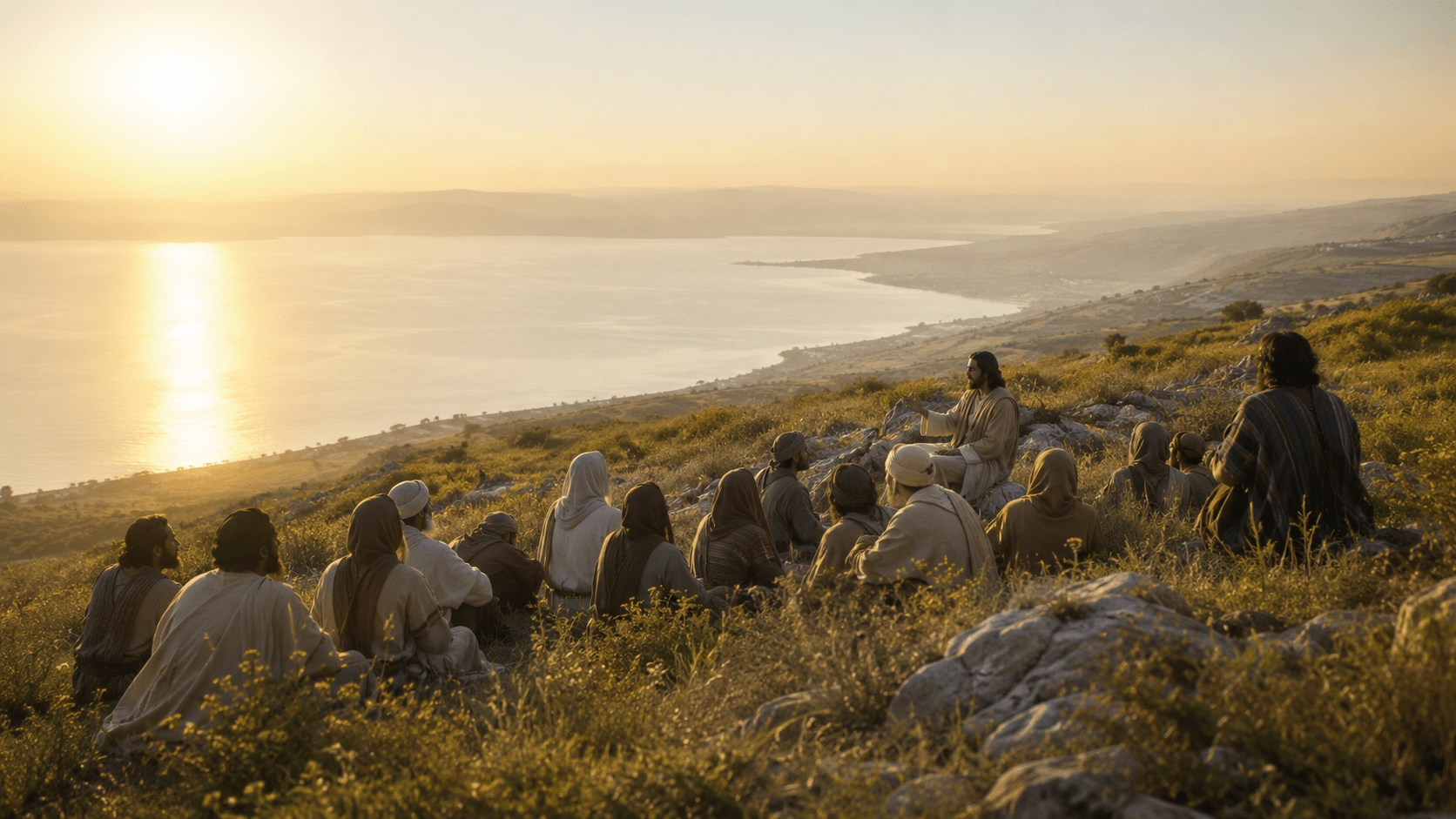
“And he went throughout all Galilee, teaching in their synagogues and proclaiming the gospel of the kingdom and healing every disease and every affliction among the people. So his fame spread throughout all Syria, and they brought him all the sick, those afflicted with various diseases and pains, those oppressed by demons, those having seizures, and paralytics, and he healed them. And great crowds followed him from Galilee and the Decapolis, and from Jerusalem and Judea, and from beyond the Jordan. Seeing the crowds, he went up on the mountain, and when he sat down, his disciples came to him. And he opened his mouth and taught them, saying:”
— Matthew 4:23–5:2, ESV
There are moments when a voice rises above the noise, not because it’s the loudest, most entertaining, or most popular, but because of who’s speaking. Authority gives weight to words. A judge speaks, and the courtroom listens. A doctor gives a diagnosis, and the patient leans in. A parent calls out, and a child recognizes the voice before fully understanding everything being said.
That matters when we come to the Sermon on the Mount.
Matthew 5–7 is one of the most well-known sections of Scripture. Even people who don’t regularly read the Bible have often heard phrases from it: “Blessed are the meek,” “love your enemies,” “do not judge,” “ask, and it will be given to you,” and “build your house on the rock.” These words are familiar, and familiarity can make them easy to handle carelessly. We can pull them apart, quote them selectively, admire their beauty, and still miss the weight of what is happening.
The Sermon on the Mount is not a collection of detached, inspirational sayings. Matthew places it in a specific setting, before a specific audience, under the authority of a specific King. Jesus is not merely offering helpful principles for a better life. He is announcing and describing life under the reign of God.
Before we listen to the sermon, we need to see the King who speaks it.
The King, the Kingdom, and the Mountain
The Sermon on the Mount doesn’t appear out of nowhere. Matthew carefully places it within the early movement of Jesus’ public ministry, and that setting matters for how we read everything that follows.
Matthew opens his Gospel by presenting Jesus as “the son of David, the son of Abraham” (Matthew 1:1). That’s more than a family record. It’s a theological announcement. Jesus is the promised King from David’s line and the fulfillment of God’s covenant promises to Abraham. From the beginning, Matthew wants us to see Jesus through the lens of promise and fulfillment.
By the time we arrive at Matthew 5, Jesus has been baptized, affirmed by the Father, tested in the wilderness, and has begun preaching, “Repent, for the kingdom of heaven is at hand” (Matthew 4:17). That announcement frames the Sermon on the Mount. Jesus isn’t simply giving moral advice. He’s announcing the arrival of God’s reign and calling people to live in light of it.
Historically, Jesus is ministering in Galilee, a region far from the religious center of Jerusalem. Galilee was home to ordinary people: fishermen, families, laborers, the sick, the poor, and many who lived far from the influence and respect of the religious elite. Yet this is where Jesus begins proclaiming the kingdom. The light doesn’t first shine in the halls of power, but among people living in need, darkness, and expectation.
That expectation matters. First-century Jewish people knew the promises of the Old Testament. They longed for deliverance, restoration, and the fulfillment of God’s covenant purposes. Many expected God’s kingdom to bring deliverance, restoration, and freedom from oppression. But Jesus begins revealing a kingdom deeper than national victory or political revolution. His kingdom confronts sin, restores the broken, reforms the heart, and brings people under the gracious rule of God.
This is why the mountain setting carries significance. Throughout Scripture, mountains are often places of revelation, encounter, and covenant instruction. Most notably, Moses received the Law at Mount Sinai. When Matthew tells us that Jesus goes up on the mountain, sits down, and begins teaching His disciples, he’s inviting us to feel the weight of the moment. Jesus is presented in connection with Moses, but He’s greater than Moses. Moses received the word of God. Jesus speaks with the authority of the Son.
So before we move into the words of the sermon, we need to understand the setting. The promised King has come, the kingdom of heaven is being announced, and the disciples are drawing near. On the mountain, Jesus sits down to teach.
This is not merely a sermon about better behavior. It’s an invitation into life under the King.
The King Begins to Teach
Before Matthew gives us the words of the Sermon on the Mount, he shows us the ministry of the One who is about to speak.
Jesus has been walking through Galilee, teaching in the synagogues, proclaiming the gospel of the kingdom, and healing every disease and affliction among the people. His words and His works belong together. He doesn’t only announce that the kingdom of heaven is near; He demonstrates what that kingdom is like.
Where Jesus goes, brokenness begins to meet restoration.
The sick are brought to Him. Those carrying deep pain are brought to Him. Those oppressed by demons, seizures, and paralysis are brought to Him. Matthew gathers all of this human suffering into one scene and then gives us the beautiful simplicity of Jesus’ response: “He healed them.”
That sentence is easy to gloss over, but we should allow it to slow us down. These were real people with real stories: sons and daughters, parents and friends, neighbors and strangers. Some had likely carried their suffering for years. Others may have been defined by what they could no longer do, where they could no longer go, or how others treated them. Then Jesus came near.
The King who is about to teach on the mountain isn’t distant from human need. He’s not detached from suffering. He steps into the pain of real people with authority, compassion, and power.
As Jesus’ ministry continues, the crowds begin to grow. Matthew tells us that people came from Galilee, the Decapolis, Jerusalem, Judea, and from beyond the Jordan. They came from everywhere. They came from nearby towns and distant regions. They came from places shaped by Jewish life and places influenced by Gentile culture, from the religious center and from the edges of society.
Some came because they were desperate. Some came because they were curious. Some came because they had heard what He could do or had seen what He had already done. The crowd was likely filled with all kinds of motives, questions, hopes, and needs.
Then Matthew shifts the scene.
“Seeing the crowds, he went up on the mountain, and when he sat down, his disciples came to him.” (Matthew 5:1, ESV)
Jesus sees the crowds. He sees their need, hunger, confusion, suffering, and curiosity. But then Matthew narrows our attention. Jesus goes up the mountain, sits down, and His disciples come to Him.
The crowds are still present, and by the end of the sermon they’ll be astonished by His teaching. But Matthew wants us to see that Jesus is especially forming His disciples. He’s teaching those who are learning to follow Him what life under His reign actually looks like.
This helps us understand the Sermon on the Mount from the beginning. Jesus isn’t gathering people to give them a few helpful ideas for becoming more moral. He’s teaching as King. He’s forming a people who will live under the rule of heaven while still walking through the realities of earth.
Then Matthew writes, “And he opened his mouth and taught them…” (Matthew 5:2, ESV). It’s a simple sentence, but it carries weight. The King is about to speak.
Everything that follows must be heard in that light. When Jesus blesses the poor in spirit, He speaks as King. When He calls His people salt and light, confronts anger and lust, exposes pride and false religion, teaches us to pray, and calls us to build our lives on the rock, He is speaking with royal authority.
The Sermon on the Mount isn’t simply wisdom to admire. It’s the voice of Jesus shaping the life of His people.
How We Approach This Study
If the Sermon on the Mount is the King teaching His people, then our first response isn’t to rush ahead and master the content. The first response is to come with the right posture.
This series will challenge us. Jesus will speak to places in our lives that are easy to justify, ignore, or hide. He will confront anger that feels deserved, lust that has been excused, religion that performs for attention, worry that feels responsible, judgment that feels righteous, and obedience built on the wrong foundation.
But He will also invite us into something better.
Jesus doesn’t teach these words to crush His people. He teaches them to reshape His people. The Sermon on the Mount shows us what life looks like when the kingdom of heaven takes root in ordinary hearts, homes, relationships, and decisions.
So as we begin this journey, there are three postures we need to carry with us.
1. Listen to Jesus as King, not merely as inspiration.
It’s possible to admire the words of Jesus without surrendering to the authority of Jesus. Many people appreciate the beauty of the Sermon on the Mount. They may quote it, respect it, and agree with parts of it. But Jesus isn’t speaking as one wise voice among many. He’s speaking as King.
That means we don’t come to this sermon looking only for lines that encourage us. We come ready to be corrected, instructed, comforted, and changed. We come believing that Jesus has the right to speak into every part of life.
His words are not suggestions for religious improvement. They’re kingdom instruction for those who belong to Him.
2. Draw near as a disciple, not only as part of the crowd.
Matthew tells us that the crowds followed Jesus, but His disciples came to Him. That distinction matters.
The crowds were interested. The disciples drew near.
As we walk through this sermon, we need more than curiosity. We need nearness. We need the humility to sit under His teaching and the willingness to let His words search us before we apply them to someone else.
It’s easy to read Scripture with someone else in mind. It’s easy to hear Jesus confront anger, pride, lust, hypocrisy, or worry and immediately think about who else needs that correction. But disciples don’t begin there. Disciples first come close enough to say, “Lord, what are You showing me?”
This study will be most fruitful if we approach it honestly, not defensively or casually, and not as critics standing at a distance, but as disciples drawing near.
3. Expect His words to form you, not merely inform you.
The goal of this series is not simply to understand the Sermon on the Mount better, though we should certainly seek understanding. The goal is to be formed by the words of Jesus.
Scripture isn’t given merely to increase information. It’s given to renew the mind, expose the heart, strengthen faith, and shape obedience. Jesus is forming a people whose lives reflect the reality of His kingdom.
That formation won’t always feel comfortable. Sometimes the text will encourage us. Sometimes it’ll uncover what we would rather avoid. Sometimes it’ll call us to repentance. Sometimes it will strengthen weary obedience.
But in all of it, Jesus is shaping us into people who reflect His kingdom.
So we begin with open hands. We listen carefully. We draw near humbly. We ask the Lord to make us not only hearers of His word, but people whose lives are built on it.
When the King Speaks
Before Jesus ever says, “Blessed are the poor in spirit,” Matthew wants us to see the One who is speaking. He’s the promised King, the merciful healer, and the One who announces the kingdom and calls people to live under the reign of God. The Sermon on the Mount isn’t a collection of disconnected sayings to admire from a distance. These are the words of Christ to His people, and by grace, that includes us.
So as we begin this series, the question is simple but searching: How will we listen?
Will we listen as consumers, keeping what feels useful and passing over what feels costly? Will we listen as critics, measuring Jesus by our assumptions, preferences, and culture? Or will we listen as disciples, drawing near to the King and allowing His words to shape us?
The Sermon on the Mount will confront us, but it will also invite us. It will expose shallow religion, divided hearts, and false foundations, but it will also show us the beauty of a life surrendered to the reign of God.
This is where the journey begins. The crowds are gathering, the disciples are drawing near, and the King is seated on the mountain.
And now, He begins to speak.

“The thing that you are doing is not good. Ought you not to walk in the fear of our God to prevent the taunts of the nations our enemies?”
— Nehemiah 5:9, ESV
There are few things more discouraging than realizing the greatest threat to the work is not coming from the outside, but from within.
Opposition from the outside is hard, but at least it’s obvious. You can usually see the attack coming. You can name it. You can prepare for it. That’s what Nehemiah and the people faced in chapter 4. Their enemies mocked them, threatened them, and tried to intimidate them into stopping the work. Nehemiah responded with prayer, wisdom, courage, and perseverance.
But Nehemiah 5 exposes a different kind of danger.
This time, the crisis isn’t Sanballat, Tobiah, or Geshem. It’s not outside enemies threatening the people of God. It’s God’s people hurting one another.
The wall is being rebuilt, but the community is breaking down. The stones are being lifted into place, but righteousness is crumbling inside the city. Families are hungry. Property is being mortgaged. Children are being forced into debt servitude. Wealthy Jews are using the hardship of poorer Jews as an opportunity for personal gain.
And that should stop us in our tracks.
Nehemiah 5 reminds us that God is not only concerned with whether the work gets done. He’s concerned with what kind of people are doing the work.
A wall built by an unjust people would not honor the Lord. A ministry that grows while people are being used is not healthy. A church that looks productive but ignores injustice is not strong. A family, team, or organization may appear successful on the outside while something deeply unhealthy is happening within.
That’s why this chapter matters so much for leadership.
Faithful leaders cannot only defend the mission from outside opposition. They must also guard the integrity of the community inside the mission.
The work of God must be done by the people of God in the way of God.
The World Behind the Crisis
Nehemiah 5 sits right in the middle of the wall-building narrative, and that placement matters. Chapter 4 shows the people facing pressure from the outside. Their enemies mock them, threaten them, and try to intimidate them into stopping the work. Nehemiah responds by praying, setting guards, arming the workers, and reminding the people to fight for their families. Then chapter 6 returns to that outside opposition as Sanballat, Tobiah, and Geshem try to distract and deceive Nehemiah.
But chapter 5 interrupts that external conflict to show us a deeper crisis inside the covenant community.
The people are not simply tired from building. They’re being crushed while they build.
Jerusalem was already fragile. The people had returned from exile, but they were still living under Persian rule. The temple had been rebuilt, but the city walls remained broken. That meant Jerusalem was vulnerable, exposed, and still living under the shame of its earlier destruction. Nehemiah’s project wasn’t merely about construction. It was about restoring the security, identity, worship, and witness of God’s people.
But rebuilding did not happen in ideal conditions. The people were trying to restore the city while also surviving famine, feeding their families, defending against enemies, and paying imperial taxes. Nehemiah 5 tells us that some families needed grain just to stay alive. Others had mortgaged their fields, vineyards, and homes because of the famine. Still others had borrowed money to pay the king’s tax. Eventually, some were so desperate that their sons and daughters were being forced into debt servitude.
This was not a laziness problem. These were not people refusing to work. They were working on the wall, guarding the city, caring for their households, and trying to survive under the weight of famine and taxation. Their hardship was real.
But the tragedy of Nehemiah 5 is that their suffering was being intensified by their own people.
The outcry wasn’t against foreign rulers. It was against their Jewish brothers. That word matters. Brothers. The wealthy nobles and officials were not exploiting strangers. They were taking advantage of fellow members of the covenant family. These people shared the same identity, the same history, the same law, the same God, and the same mission. Yet some had begun treating others not as family to protect, but as opportunities to use.
That is why Nehemiah’s response is so strong. The issue wasn’t merely financial. It was theological.
God had redeemed His people from slavery. He had given them His law. He had commanded them not to charge interest to poor brothers or profit from another Israelite’s desperation. He had called them to be different from the nations around them. Yet here they were, rebuilding Jerusalem while recreating Egypt among themselves.
They were trying to restore the city of God while violating the heart of God.
Righteousness Inside the Walls
Nehemiah 5 begins with a sound no godly leader should ignore: “Now there arose a great outcry of the people and of their wives against their Jewish brothers.”
This isn’t ordinary complaining. This is the cry of people who have reached a breaking point. Families are hungry. Fields, vineyards, and houses are being mortgaged because of famine. Some have borrowed money just to pay the king’s tax, and the debt has become so heavy that their sons and daughters are being forced into servitude.
Then the people say something that exposes the deepest wound: “Our flesh is as the flesh of our brothers, our children are as their children.” In other words, “We are the same people. Our children matter as much as theirs do. Why are we being treated as though we are less?”
That is where Nehemiah 5 starts pressing on the heart. The poor are not the threat to unity. Their outcry reveals that unity has already been broken. Covenant brothers are using the hardship of other covenant brothers for personal gain.
When Nehemiah hears it, he says, “I was very angry when I heard their outcry and these words.” His anger isn’t about wounded pride or interrupted plans. He’s angry because vulnerable people are being harmed and God’s covenant is being dishonored. But his anger isn’t reckless. Verse 7 says, “I took counsel with myself, and I brought charges against the nobles and the officials.” Nehemiah feels deeply, but he also thinks carefully. He doesn’t ignore the sin, but he also doesn’t rush into careless reaction.
Then he confronts the right people. He doesn’t blame the poor for their poverty or shame the wounded for crying out. He brings charges against the nobles and officials, the people with power, wealth, and influence. His accusation is direct: “You are exacting interest, each from his brother.”
That is the core sin of the chapter. The issue is not simply that loans existed. The issue is that the wealthy were profiting from the desperation of the poor. They were using famine, taxation, and debt to increase their own position while their brothers and sisters were being crushed.
Nehemiah then exposes the contradiction at the heart of their behavior: “We, as far as we are able, have bought back our Jewish brothers who have been sold to the nations, but you even sell your brothers that they may be sold to us!” The irony is devastating. God’s people had been working to buy back fellow Jews from foreign bondage, yet inside the community, wealthy Jews were pushing their own brothers back into bondage. They were reversing the very restoration God had begun.
The nobles have no answer. The text says, “They were silent and could not find a word to say.” They may have had customs, contracts, and economic practices on their side, but they didn’t have righteousness on their side.
So Nehemiah says plainly, “The thing that you are doing is not good.” He doesn’t soften the issue. He doesn’t call it unfortunate, complicated, or merely unwise. He calls it wrong. Then he brings the issue to its theological center: “Ought you not to walk in the fear of our God to prevent the taunts of the nations our enemies?”
This is the heart of Nehemiah 5. The fear of God should have governed how they treated one another. Their money, lending, property, power, and leadership were all supposed to be lived under the authority of God. They had forgotten that they were accountable not only to social custom or economic opportunity, but to the Lord Himself. And because of that, their injustice damaged their witness. Jerusalem’s broken walls had brought reproach, but now the people’s broken righteousness was doing the same. A rebuilt wall could not cover a corrupt community.
But Nehemiah doesn’t stop with confrontation. He moves toward restoration. He says, “Let us abandon this exacting of interest,” and then commands them to return the fields, vineyards, olive orchards, houses, money, grain, wine, and oil they had taken. The repentance Nehemiah calls for is concrete. Stop charging interest. Return the property. Restore what was taken. Do it today.
That is one of the clearest lessons in the chapter. Biblical repentance is not vague when sin has caused specific harm. The nobles and officials cannot simply feel bad, apologize, and move on. Their repentance must have evidence.
The nobles agree: “We will restore these and require nothing from them. We will do as you say.” Nehemiah then calls the priests and makes them swear to keep their promise. He even shakes out the fold of his garment and warns that God should shake out anyone who fails to keep this covenant. The issue is serious because sin against people is sin before God.
Then the people respond, “Amen.” They praise the Lord, and they do what they promised. Conviction leads to commitment. Commitment leads to worship. Worship leads to obedience.
The chapter then shifts from the injustice of the nobles to the example of Nehemiah himself. For twelve years as governor, Nehemiah did not take the governor’s food allowance, even though governors before him had placed heavy burdens on the people. Previous leaders had used their position to extract from the people. Their servants had “lorded it over” them. But Nehemiah says, “I did not do so, because of the fear of God.”
Again, the fear of God is the controlling issue. Nehemiah had authority, but he didn’t use authority for self-advantage. He had a right to receive support, but he refused to exercise that right because “the service was too heavy on this people.” He understood the weight they were carrying, and he wouldn’t add to it.
This doesn’t mean it’s wrong for leaders to be supported. The issue here is not support itself, but the heart of a leader in a specific moment. Nehemiah surrendered a legitimate right because love, wisdom, and the fear of God required sacrifice. He stayed devoted to the work, refused to acquire land, fed many from his own table, and would not demand more from an already burdened people.
Nehemiah ends the chapter with a prayer: “Remember for my good, O my God, all that I have done for this people.” This isn’t prideful boasting. It’s a servant entrusting his labor to the Lord. Nehemiah doesn’t need to squeeze repayment from the people because he trusts God to remember.
The chapter begins with the cries of the oppressed and ends with the prayer of a leader who served instead of exploiting. Between those two moments, Nehemiah shows us what faithful leadership does when injustice is found within the community of God. It listens to the wounded, confronts the powerful, calls for repentance that restores, leads by example, and does all of this under the fear of God.
Practicing Righteousness Where We Are
Nehemiah 5 doesn’t let us admire Nehemiah from a distance. It brings the question close to home.
We may not be governing Jerusalem, rebuilding city walls, or confronting nobles who are taking fields and vineyards from the poor. But the heart issues in this chapter aren’t ancient. They are painfully current. Power can still be misused. Vulnerable people can still be overlooked. Apologies can still remain vague. Leaders can still add weight to people who are already burdened. And the fear of God must still shape how we treat one another.
If Nehemiah 5 shows us what faithful leadership does when injustice is found inside the community, then we need to ask what that kind of faithfulness looks like in us.
1. Listen for the Outcry You May Have Been Missing
Nehemiah’s response begins with listening. He hears the cry of the people and their wives, and he doesn’t dismiss it.
That matters because injustice is often easier to ignore when we’re not the ones carrying the cost. If my life is stable, my bills are paid, my family is safe, and my position is secure, I may not immediately notice who is being crushed around me. Their pain may sound like complaining. Their frustration may feel inconvenient. Their need may seem like an interruption to the work I think is most important.
But Nehemiah doesn’t treat wounded people as distractions from the mission. He understands that caring for them is part of the mission.
That reflects the heart of God. When Israel suffered under oppression in Egypt, the Lord said, “I have surely seen the affliction of my people…and have heard their cry” (Exodus 3:7). God didn’t overlook the pain of His people. He saw. He heard. He knew. And then He acted.
Nehemiah leads with that same kind of attentiveness. He lets the pain of the people interrupt the pace of the project because people matter to God more than progress. The wall was important, but it wasn’t more important than the wounded people standing inside it.
That’s a needed word for everyday life. It’s easy to answer before we really hear. It’s easy to explain, defend, correct, or move on before we’ve slowed down enough to understand what someone is carrying. Proverbs 18:13 says, “If one gives an answer before he hears, it is his folly and shame.” James says we should be “quick to hear, slow to speak, slow to anger” (James 1:19). That kind of listening isn’t passive. It’s humility in action.
So one practical step is to ask better questions before assuming we already understand. Who around me is carrying a burden I haven’t noticed? Who’s been trying to speak, but I’ve been too busy to hear? Who in my family, church, workplace, or community feels unseen, used, or overwhelmed?
This doesn’t mean every complaint is automatically correct. Listening is not the same as agreeing with everything that’s said. But love requires attentiveness. Galatians 6:2 says, “Bear one another’s burdens, and so fulfill the law of Christ.” We cannot bear burdens we refuse to notice. We cannot care well for people we never slow down to hear.
Starting now, I can listen without immediately defending myself. I can pay attention to the people whose voices are easy to overlook. I can ask, “What’s this been like for you?” or “What burden are you carrying that I may not be seeing?” I can look not only to my own interests, but also to the interests of others.
Sometimes righteousness begins by hearing the cry.
2. Make Repentance Specific Where Harm Has Been Specific
Nehemiah doesn’t allow the nobles and officials to respond with vague regret. He doesn’t simply call them to feel bad, say they’re sorry, and move on. He tells them to return what they had taken: fields, vineyards, olive orchards, houses, money, grain, wine, and oil.
Their repentance had to touch the same places their sin had damaged.
That’s one of the most uncomfortable lessons in Nehemiah 5 because vague repentance is much easier. It’s easier to say, “I’m sorry,” than to name what I did. It’s easier to feel convicted than to repair what I can. It’s easier to admit something was wrong in general than to take responsibility for the specific ways my words, choices, selfishness, silence, or neglect have harmed someone else.
But biblical repentance isn’t vague when sin has caused specific harm.
We see that clearly when Zacchaeus encounters Jesus in Luke 19. His repentance doesn’t remain emotional or private. He says, “If I have defrauded anyone of anything, I restore it fourfold.” Zacchaeus doesn’t merely feel bad about greed. He moves toward restoration. His repentance reaches his wallet because that is where his sin had wounded others.
I’ve had to wrestle with this personally. Some time ago, I reached out to an old school classmate because of the way I had treated them in middle school and high school. At that immature stage of life, I thought some things were funny that were actually harmful and painful. It wasn’t enough for me to feel bad about it years later. I had to name it. I had to acknowledge the specific way I had sinned against them. I had to seek forgiveness, knowing it might not be extended and knowing the damage of the past couldn’t be undone. But conviction moved me toward humility and action.
That’s part of what makes repentance hard. It doesn’t let us control the outcome. The other person may not respond how we hope. They may not be ready to forgive. They may not want to reopen the conversation. And in some situations, wisdom may require carefulness about whether direct contact would help or cause more harm. But where restoration is possible, repentance should move toward it.
Jesus teaches us to take this seriously. In Matthew 5, He says that if we’re offering our gift at the altar and remember that our brother has something against us, we should first go and be reconciled to our brother. Worship doesn’t excuse unresolved harm. Love of God and love of neighbor cannot be separated.
That means repentance may look like making the phone call I’ve avoided. It may mean naming the specific thing I did instead of hiding behind, “I’m sorry you felt that way.” It may mean repaying what I owe, correcting what I said, returning what I took, admitting where I was wrong, or changing the pattern that keeps causing damage.
Starting now, I can stop treating repentance as a feeling and begin practicing it as obedience. I can ask God to show me where my apology needs action. I can ask, “What would restoration look like here?” and then take the next faithful step.
Repentance isn’t proven by how strongly I feel. It’s shown by the fruit of obedience.
3. Use Influence to Carry Burdens, Not Add Them
Nehemiah had authority as governor, but he didn’t use that authority to make life easier for himself at the expense of the people.
That is what makes the final section of Nehemiah 5 so powerful. After confronting the nobles and officials, Nehemiah turns the mirror toward his own leadership. For twelve years, he didn’t take the governor’s food allowance, even though it was something governors normally received. Previous governors had placed heavy burdens on the people, and their servants had “lorded it over” them. But Nehemiah says, “I did not do so, because of the fear of God.”
That phrase keeps returning in this chapter. The fear of God shaped how Nehemiah confronted injustice, but it also shaped how he handled his own influence. He had rights, but he didn’t make his rights the highest priority. He had authority, but he didn’t use authority for self-advantage. He refused to add weight to people who were already carrying too much.
That is a searching picture of leadership because influence always gives us the opportunity to either serve or extract. And this isn’t only about governors, pastors, bosses, or public leaders. Parents have influence. Spouses have influence. Teachers have influence. Friends have influence. Church members have influence. Anytime my words, choices, expectations, resources, or position affect someone else, I have to ask what I’m doing with the influence God has entrusted to me.
Am I carrying burdens, or am I adding them?
Jesus gives us the clearest picture of this kind of leadership. In Mark 10, He says that rulers of the Gentiles “lord it over” others, “but it shall not be so among you.” Then He says, “Whoever would be great among you must be your servant.” Jesus doesn’t define greatness by how much authority someone can display, but by how willingly they serve.
That means the question is not only, “What am I allowed to do?” The better question is, “What does love require here?” There may be things I have the right to say, the right to expect, the right to ask for, or the right to receive. But Nehemiah reminds me that godly leadership isn’t measured only by what I can take. It’s also measured by what I’m willing to lay down for the good of others.
Think about this in the context of ordinary life. A parent can use authority to control, or to patiently shepherd. A spouse can use frustration to win an argument, or humility to pursue peace. A leader can use position to demand more, or wisdom to notice when people are already stretched thin.
Starting now, I can look at the people God has placed near me and ask, “Am I making their burden heavier or lighter?” Are my expectations helping people flourish, or are they crushing them? Am I using my role to protect my comfort, or to serve their good?
Nehemiah didn’t need to squeeze repayment from the people because he trusted God to remember. That kind of trust frees us to serve without keeping score. If I want to build what lasts, I have to use whatever influence God has given me in a way that reflects His heart.
Godly leadership carries burdens instead of adding them.
Building What Lasts from the Inside Out
Nehemiah 5 reminds us that the work of God can never be separated from the character of God.
The wall mattered. The mission mattered. The rebuilding of Jerusalem mattered. But God was not only restoring stones. He was restoring a people. A rebuilt wall around an unjust community wouldn’t have reflected His heart.
That’s what makes this chapter so searching. It doesn’t let us hide behind visible progress while ignoring hidden compromise. It doesn’t let us celebrate what’s being built if people are being wounded in the process. It doesn’t let leaders defend the mission while neglecting the righteousness that should mark the mission.
Nehemiah understood something we need to remember: internal corruption can threaten the work just as much as external opposition. Sometimes the enemy attacks from the outside. Other times, sin hollows things out from within. When that happens, faithful leadership doesn’t look away. It listens for the cry, confronts what’s wrong, calls for repentance that restores, and uses influence to serve under the fear of God.
That’s not just leadership theory. That’s discipleship.
Because all of us are building something. We’re building families, friendships, churches, ministries, workplaces, habits, legacies, and lives. The question’s not only whether we’re building. The question is whether what we’re building reflects the heart of God.
Are we treating people as brothers and sisters, or as burdens and opportunities? Are we willing to hear the pain we may have missed? Are we humble enough to make specific repentance where harm has been specific? Are we using influence to carry burdens, or adding weight to people already tired?
Nehemiah points us forward to a better Leader. Jesus didn’t come to exploit His people, but to give Himself for them. He didn’t ignore the wounded, the poor, the burdened, or the overlooked. He came near. He carried what we couldn’t carry. He bore our sin, absorbed our shame, and opened the way for true restoration.
So if we want to build what lasts, we cannot only ask God to strengthen our hands for the work. We must also ask Him to purify our hearts while we work. The wall could be rebuilt with stone, but the community had to be rebuilt with righteousness. The same is true for us.
God is not only concerned with what we accomplish. He is forming who we become. He is teaching us to lead with integrity, repent with humility, serve without entitlement, and treat people in a way that reflects His justice and mercy.
The work of God must be done by the people of God in the way of God. That’s how we build what lasts.

If you’re struggling with anxiety, depression, or thoughts of self-harm, please don’t walk through this alone. Talk with someone you trust, reach out to a pastor or counselor, or call your local mental health helpline. If you are in the United States, you can contact the Suicide and Crisis Lifeline by dialing 988 — available 24 hours a day. If you’re outside the U.S., you can find international hotlines at findahelpline.com, which lists free and confidential options worldwide. You are not alone — God cares deeply for your mind and soul, and so do I.
“The apostles returned to Jesus and told him all that they had done and taught. And he said to them, ‘Come away by yourselves to a desolate place and rest a while.’ For many were coming and going, and they had no leisure even to eat. And they went away in the boat to a desolate place by themselves.”
— Mark 6:30–32 (ESV)
“Thus the heavens and the earth were finished, and all the host of them. And on the seventh day God finished his work that he had done, and he rested on the seventh day from all his work that he had done. So God blessed the seventh day and made it holy…”
— Genesis 2:1–3 (ESV)
There have been seasons in my life when I wore exhaustion like a badge of honor.
If I’m honest, true rest is hard for me. Slowing down feels unnatural. There’s always more writing I want to do, another meeting to attend, another message to answer, another person to care for. Becoming exhausted? That comes easy. Being still before God? That’s much harder.
For a long time, I treated rest like something I could get to once everything else was finished. If the work was done, if the needs were met, if the calendar finally opened up, then maybe I could stop. But that kind of rest almost never comes, because life rarely gives us a clean stopping point.
Ministry gets busy. Family life stays full. The needs around us are real. And somewhere in the middle of it all, I started measuring faithfulness by how much I could carry instead of whether I was walking in the rhythm God designed.
Maybe you’ve done the same.
We live in a culture that celebrates hustle and quietly shames rest. Productivity is praised. Busyness gets applause. Even in the church, exhaustion can start to feel spiritual when the things filling our calendars are good things.
But Scripture tells a different story.
In Genesis 2, rest isn’t an afterthought. God blesses the seventh day and makes it holy. In Mark 6, rest isn’t treated as weakness. Jesus looks at His disciples after real ministry and says, “Come away…and rest a while.”
Rest is not weakness. It’s not laziness. It’s not selfish.
It’s sacred.
And if we’re going to understand rest rightly, we need to see it where Scripture places it: in the rhythm of creation and in the middle of ministry.
The World Behind Sacred Rest
When Mark tells us Jesus called His disciples to rest, he’s not describing a slow or convenient season of ministry. Earlier in Mark 6, Jesus had sent out the Twelve. They preached repentance, cast out demons, anointed the sick, and saw people healed. They had been participating in real kingdom work, not simply observing Jesus from a distance. For a moment, they had stepped into the weight of being sent.
Mark also places this moment immediately after the death of John the Baptist. That detail matters. John’s death reminds us that the work of the kingdom was never presented as easy, safe, or emotionally light. Following Jesus came with opposition. Faithfulness carried cost. Ministry happened in a world where spiritual urgency, human need, grief, and danger were often closer together than we would prefer.
So when the apostles return to Jesus, they’re not coming back from a casual assignment. They’re returning from a season of ministry that required dependence, obedience, and spiritual endurance. They’ve seen God work through them, but they have also been serving in a world where the needs didn’t stop and the opposition was real.
The pressure around them only continued to build. Mark tells us that “many were coming and going, and they had no leisure even to eat.” That phrase gives us a window into the pace of the moment. The crowds were constant. People were moving in and out. Needs were pressing in from every side. The disciples weren’t looking for rest because they were bored or disengaged. They were surrounded by the kind of demand that can slowly push basic human limits aside.
That is what makes Jesus’ invitation so significant. This wasn’t rest after everything had settled down. This wasn’t rest in a quiet season where no one needed anything. This was rest being called for in the middle of pressure, need, and ministry momentum.
Genesis 2 gives us a much larger backdrop. Before Israel ever receives the Sabbath command in the Law, Scripture shows us God resting at creation. The creation account moves with order and purpose: God forms, fills, speaks, separates, names, blesses, and calls His work good. Then, on the seventh day, He rests.
In the ancient world, creation stories often portrayed the gods as needy, chaotic, or dependent on human labor. Genesis tells a very different story. The God of Scripture creates with sovereign authority. He’s not anxious. He’s not depleted. He’s not managing a crisis. He brings order, goodness, and life by His word.
That means Genesis 2 isn’t simply giving us the first example of someone taking a break. It’s showing us the kind of world we live in. Creation is not held together by human striving. Life begins under the care of a God who is sufficient, sovereign, and good.
When we hold Mark 6 and Genesis 2 together, the setting becomes clearer. Mark places rest in the middle of ministry pressure. Genesis places rest in the rhythm of creation itself. Both passages meet us in places where we’re tempted to believe that stopping is irresponsible. And both passages invite us to see rest as something much deeper than a pause in activity.
Why Rest Is Not Optional
Mark’s account begins with the apostles returning to Jesus. That movement is easy to pass over, but it’s important. They had been sent by Jesus, and now they come back to Jesus. Their ministry didn’t begin with their own initiative, and it doesn’t end with their own evaluation. They return to the One who sent them and tell Him “all that they had done and taught.”
That phrase brings both their actions and their words back under the care of Christ. What they did and what they taught were not detached from Him. The miracles, the preaching, the conversations, the visible fruit, and even the weariness all come back to Jesus. Before they return to the crowds, they return to Christ.
That order exposes something many of us struggle to practice. We often know how to keep moving from one responsibility to the next, but we don’t always know how to return. We may pray before the work begins, but we don’t always bring the work back to Jesus when it’s done. We carry the emotional weight of ministry, parenting, leadership, work, and relationships without honestly placing it before the Lord.
It’s in that moment that Jesus speaks: “Come away by yourselves to a desolate place and rest a while.” There’s tenderness in those words, but there is also authority. Jesus is not merely giving the disciples permission to take a break. He’s leading them into a rhythm they need. Rest is treated here as part of their formation as disciples. The One who sent them into ministry now calls them away from the pressure of ministry.
That distinction matters. Jesus doesn’t call them away because the mission is unimportant. He calls them away because the mission belongs to Him. The disciples are sent ones, servants, and followers, but they’re not the Savior. Their limits aren’t treated as failure. Jesus shepherds them in their humanity.
The wording Mark gives us also keeps this from becoming sentimental. The disciples had “no leisure even to eat.” Their need for rest was not imaginary. Their bodies were involved. Their hunger mattered. Their fatigue mattered. Scripture doesn’t treat creaturely limitation as something to be embarrassed by. It assumes it. The call to rest isn’t a rejection of ministry, but a reminder that faithful ministry must still be lived within human limits.
Genesis 2 anchors this even deeper. When God rests on the seventh day, He’s not recovering from exhaustion. His rest is not like ours in the sense of weakness or depletion. God rests because His creative work is complete. Creation has been ordered. What was formless has been formed. What was empty has been filled. The world is good, whole, and under His sovereign care.
Then Scripture tells us that God blessed the seventh day and made it holy. That detail changes how we understand rest. Rest isn’t merely practical, although it is practical. It’s not merely physical, although our bodies need it. Rest is sacred because God sets it apart. Before Scripture speaks of holy ground, holy places, or holy objects, it shows us holy time. The rhythm of rest is woven into creation itself before it’s ever given as a command to Israel.
That matters because many of us treat time as something to manage, fill, spend, or maximize. We often evaluate our days by how much we accomplished, how productive we were, or how many needs we met. Genesis gives us a different starting point. It reminds us that human life begins not with endless striving, but with receiving. Humanity is created on the sixth day, and the first full day humanity enters is the seventh. Before Adam and Eve are shown working the garden, they are placed in a world already made, ordered, blessed, and sustained by God.
This is why Sabbath rest confronts more than our schedule. It confronts our trust. If I can’t stop, it may reveal that I’ve started to believe the world needs my constant motion more than I trust God’s faithful care. If I can’t slow down, it may reveal how much of my identity has become attached to being needed, useful, productive, or available. Rest has a way of uncovering what hurry helps us avoid.
But Scripture doesn’t expose those things to shame us. It exposes them to free us. Genesis shows us that rest is blessed and holy. Mark shows us that Jesus commands rest in the middle of real ministry pressure. Together, these passages teach us that rest is not optional for the people of God. It’s not something we earn after we’ve finally done enough. It’s a sacred rhythm of dependence, a reminder that God is Creator, Jesus is Lord, and we are loved creatures who were never designed to carry everything.
Learning to Receive Sacred Rest
If Genesis shows us that rest is woven into creation, and Mark shows us that Jesus calls His disciples to rest in the middle of ministry, then the question becomes deeply personal: what do we do with that?
It’s one thing to agree that rest is good. Most of us would say that. It’s another thing to receive rest as something sacred, something God designed for our good and Jesus still uses to form our souls.
Biblical rest isn’t simply about taking a day off or finding a few quiet moments when life allows it. It’s about learning to live as creatures who depend on the Creator. It’s about refusing to let need, pressure, guilt, or productivity become the loudest voices in our lives. It’s about trusting that the work matters, but it does not belong to us.
That kind of rest has to be practiced.
1. Return to Jesus Before You Re-Enter the Work
Mark tells us that the apostles returned to Jesus and told Him all that they had done and taught. That may seem like a small detail, but it gives us an important rhythm. Before they returned to the crowds, they returned to Christ.
Many of us skip that step. We move from one responsibility to the next, from one conversation to another, from one need into the next demand, without ever bringing our hearts back to Jesus. We may pray over the work before we begin, but we don’t always pause long enough to process the work after it’s done. We keep carrying the emotional residue of ministry, parenting, leadership, work, and relationships without bringing any of it honestly before the Lord.
Returning to Jesus means learning to debrief your soul with Him. It means asking what you’re carrying, what you’re celebrating, what has wounded you, what has drained you, and what you may have picked up that He never asked you to hold. The disciples told Jesus what they had done and taught. In the same way, we need space to bring both our activity and our words back under His care.
This doesn’t have to be complicated. It may look like sitting quietly in the car before walking into the house. It may look like journaling at the end of a long day. It may look like taking a walk and praying honestly about what feels heavy. The point isn’t to create another spiritual task to perform. The point is to return to the One who sent you, sustained you, and knows your limits better than you do.
Rest begins with return.
2. Receive Rest as Obedience, Not a Reward
When Jesus says, “Come away by yourselves to a desolate place and rest a while,” He’s not rewarding the disciples because they finally did enough. He’s shepherding them because they’re human. The crowds are still present. The needs are still real. The work isn’t finished. And still, Jesus calls them away.
That challenges the way many of us think about rest. We often treat rest as something we have to earn. Once the work is done, once the house is clean, once the inbox is empty, once everyone else is okay, then maybe we can stop. But if rest depends on everything being finished, most of us will never rest. There will always be more to do.
Jesus doesn’t wait for a clean stopping point. He creates one. His invitation teaches us that rest isn’t indulgence when it’s received under His lordship. It’s obedience. To rest because Jesus says, “Come away,” is an act of trust. It’s a way of confessing that He’s the Savior and we’re not.
This matters for our mental and emotional health because exhaustion often distorts the soul. When we’re worn down, our patience thins, our perspective narrows, and even good work can begin to feel heavy. Rest doesn’t solve every problem, but it helps us re-enter life with a healthier heart. Sometimes the most faithful thing we can do is stop long enough to remember that God is still working even when we’re not.
Receiving rest as obedience may mean saying no, but the deeper issue is not the no itself. The deeper issue is trust. Do I trust Jesus enough to stop when there are still needs around me? Do I believe He cares for people more than I do? Do I believe my limits are not a failure, but part of His design?
Rest becomes obedience when we stop trying to prove our faithfulness through exhaustion and start trusting the Shepherd who calls us away.
3. Practice Sabbath as Worship, Not Escape
Genesis tells us that God blessed the seventh day and made it holy. That means Sabbath is not merely about recovering from a hard week. It’s about sacred time set apart for God. Rest isn’t only something we need physically; it’s something that reorients us spiritually.
There’s a difference between escape and Sabbath. Escape numbs us. Sabbath restores us. Escape avoids reality. Sabbath brings reality back under the care and rule of God. Escape says, “I need to disappear.” Sabbath says, “I need to remember who God is and who I am before Him.”
This is why Sabbath has to be more than inactivity. It’s possible to stop working and still remain restless inside. We can scroll, binge, distract, and consume without ever truly receiving rest. Sabbath isn’t simply the absence of work. It’s the presence of worship, delight, trust, and surrender.
Practicing Sabbath will look different in different seasons of life. Parents with young children may not experience it the same way as someone with an empty house. Those in ministry, healthcare, education, public safety, or other demanding roles may have to think carefully about what rhythm is possible. The goal isn’t legalism. The goal is formation. We’re not trying to prove our spirituality through a perfect Sabbath. We’re learning to set apart time that reminds our souls that God is Creator, Jesus is Lord, and our lives are held by Him.
That may begin with a weekly block of time where ordinary work is set aside as much as possible. It may include worship, unhurried meals, Scripture, prayer, a walk, silence, laughter, or simply enjoying what God has given without needing to turn it into something productive. The specific practice may vary, but the purpose remains the same: to remember that we live from God’s care, not our constant motion.
Sabbath as worship teaches the soul to stop striving. It helps us receive life again as a gift. It reminds us that we’re not loved because we’re useful. We are loved because we belong to God.
When Rest Becomes Worship
These passages have been working on me. They don’t let me treat rest as a small issue. Genesis 2 will not let me call rest optional when God Himself blessed the seventh day and made it holy. Mark 6 will not let me call rest selfish when Jesus looked at His disciples in the middle of real ministry pressure and invited them to come away with Him. Together, they confront the way I often think about rest, not as something sacred to receive, but as something I have to justify.
That is where this becomes deeply personal. It’s one thing to believe the theology of rest when I’m reading Scripture. It’s another thing to practice it when there’s laundry to fold, floors to clean, messages to answer, and people who need care. Just the other day, I noticed this in myself in a very ordinary way. I wanted to sit down and rest, but before I let myself do that, I quickly finished vacuuming the house. There was nothing wrong with finishing the task. The house needed it. But what stood out to me was what was happening underneath it. I wasn’t simply finishing a chore. I was trying to earn permission to rest.
That realization exposed something deeper in me. I often treat rest like a reward for productivity instead of receiving it as a gift from God. If I’ve done enough, helped enough, answered enough, cleaned enough, or carried enough, then maybe I can stop without guilt. But Genesis and Mark both push against that way of thinking. In Genesis, rest is blessed before humanity earns anything. In Mark, Jesus calls His disciples to rest while the crowds are still coming and going. The work isn’t finished, and the need hasn’t disappeared, but rest is still received as part of faithful life with God.
That means the question is not simply whether I feel tired enough to rest. The better question is whether I trust God enough to stop. Rest presses on the places where I want to be needed, useful, productive, and available. It exposes how easily I measure faithfulness by motion instead of dependence. But Jesus does not expose those places to shame me. He invites me to come away because He is a good Shepherd, and He knows my limits better than I do.
So maybe the most obedient step today isn’t adding one more thing to your list. Maybe it’s returning to Jesus before you re-enter the work. Maybe it’s receiving rest without waiting until you feel like you’ve earned it. Maybe it’s setting aside time this week that reminds your soul God is Creator, Jesus is Lord, and you’re held by His care.
The goal isn’t to create another burden. The goal is to receive a gift God has already called good. Sacred rest won’t solve every problem or make every responsibility disappear. The crowds were still there in Mark 6. The needs were still real. But rest teaches us how to re-enter the work without being ruled by it. It helps us serve from dependence instead of drivenness. It reminds us that our lives are held together by Christ, not by our constant motion.
If you’ve been wearing exhaustion like a badge of honor, maybe today is the day to lay it down. Not because the work doesn’t matter, but because the work belongs to God. Not because people don’t need care, but because you’re not their Savior. Not because rest is easy, but because rest is holy.
You cannot pour from an empty soul forever.
So return to Jesus. Receive His invitation. Practice the rhythm God blessed from the beginning.
Rest isn’t weakness. It’s worship.

“Why are you cast down, O my soul, and why are you in turmoil within me?
Hope in God; for I shall again praise him, my salvation.”
— Psalm 42:5 (ESV)
“For the Lord will not cast off forever,
but, though he cause grief, he will have compassion according to the abundance of his steadfast love;
for he does not afflict from his heart or grieve the children of men.”
— Lamentations 3:31–33 (ESV)
Discouragement rarely arrives all at once. More often, it settles in quietly. It shows up when prayers linger unanswered, when obedience costs more than we expected, or when life doesn’t turn the corner we were sure it would. At first, we tell ourselves we’re just tired. Just worn down. But over time, something deeper begins to happen.
The soul starts drawing conclusions the mind never consciously approved.
This is how it’ll always be.
God must be finished here.
Hope was for another season of life.
If you’ve ever found yourself believing those thoughts without remembering when you decided to believe them, you’re not alone. Scripture knows this space well.
And Scripture refuses to let discouragement have the final word.
In two remarkably honest passages—Psalm 42:5 and Lamentations 3:31–33—we’re invited into a holy conversation that takes place inside the believer. One teaches us how to speak to a discouraged soul. The other teaches us why hope is still justified when everything feels lost.
Together, they form a theology of hope that isn’t shallow optimism, but resilient faith rooted in the unchanging character of God.
Hope spoken in two different kinds of darkness
Psalm 42 and Lamentations 3 come from very different moments in Israel’s story, but they meet in the same human experience. Both are written from places where life with God feels disrupted, dislocated, and uncertain. In doing so, they remind us that discouragement isn’t a modern problem, and hope has never depended on ideal circumstances.
Psalm 42 emerges from the life of a faithful worshiper who feels spiritually displaced. The psalmist longs for the presence of God, remembers what worship once felt like, and grieves the distance he now experiences. Whether he’s physically far from Jerusalem or emotionally cut off from the rhythms of communal worship, the ache is real. His faith hasn’t disappeared, but it is under strain. The psalm captures the tension of believing in God while feeling separated from the joy that once accompanied that belief.
This is important. Psalm 42 isn’t the cry of someone who has abandoned faith. It’s the prayer of someone who still knows God well enough to miss Him deeply. The pain is relational. The discouragement is internal. The psalmist is wrestling with his own soul because the outer structures that once sustained his faith feel inaccessible.
Lamentations 3 comes from a far more devastating moment. Jerusalem has fallen. The temple has been destroyed. The people have been exiled. What Psalm 42 describes at the level of personal disorientation, Lamentations describes at the level of national collapse. Everything that once symbolized God’s presence, protection, and promise lies in ruins.
And yet, Lamentations isn’t written by someone who is unaware of God’s sovereignty. The suffering isn’t portrayed as random or meaningless. It’s the painful consequence of covenant judgment. That reality makes the grief heavier, not lighter. The people are not only mourning loss; they’re questioning whether God’s rejection is permanent. Lamentations speaks to a specific moment of national covenant judgment, and Scripture is careful not to assume that every experience of suffering in our lives functions the same way.
This is where Lamentations 3 becomes so significant. In the middle of funeral poetry, the author deliberately pauses to anchor hope, not in circumstances, but in God’s character. These verses don’t deny grief or minimize suffering. They exist precisely because the suffering is real and severe. Hope is being articulated in the aftermath of devastation, not the absence of it.
When we hold these two contexts together, we see something profound. Psalm 42 shows us discouragement inside the life of ongoing faith. Lamentations 3 shows us discouragement after everything appears to have fallen apart. One voice comes from longing. The other comes from loss. Both speak into seasons where hope feels fragile.
Read side by side, these passages remind us that Scripture doesn’t reserve hope for ideal conditions. Whether the struggle is internal or external, personal or communal, momentary or catastrophic, God meets His people in the honest reality of their discouragement and teaches them how to hope again.
Speaking truth to the soul
Both Psalm 42:5 and Lamentations 3:31–33 are doing more than describing pain. They’re modeling what faith does when discouragement threatens to take over. Read carefully, they show us that hope in Scripture isn’t passive or accidental. It’s spoken, reasoned, and anchored in the character of God.
Psalm 42:5 begins with a question that feels almost startling in its honesty: “Why are you cast down, O my soul, and why are you in turmoil within me?” The language is strong. To be “cast down” is to be pressed low, bowed toward the dust. “Turmoil” describes inner agitation, a restlessness that refuses to settle. This isn’t mild sadness or momentary discouragement. It’s the experience of an inner life that feels disrupted and unstable.
What matters most is not just what the psalmist feels, but how he responds to it. He doesn’t direct his questions toward God in accusation. Instead, he turns inward and addresses his own soul. He recognizes that while his emotions are real, they are not meant to lead unchecked. The soul must be shepherded, not given unquestioned authority.
That recognition leads to a deliberate shift. The psalmist moves from diagnosis to command: “Hope in God.” This isn’t self-help or positive thinking. It’s a theological act. Hope, in Scripture, is not something we wait to feel. It’s something we practice because God is trustworthy. The psalmist is calling his soul back under the authority of truth.
Then he makes a statement that reaches beyond the present moment: “For I shall again praise him, my salvation.” That word again quietly reshapes the future. It assumes that the current season doesn’t get the final word. Praise may feel distant now, but it will return. The certainty doesn’t come from changing circumstances, but from a stable God.
Lamentations 3:31–33 takes that same posture of hope and grounds it in the wider reality of suffering and judgment. These words are spoken from the ruins of Jerusalem, after devastation that left the people wondering whether God’s rejection was permanent. The fear isn’t theoretical. Everything familiar has been stripped away.
Against that backdrop, the declaration is striking: “The Lord will not cast off forever.” Discipline may be real. Grief may be deep. But rejection is not final. The word forever is deliberately denied. God’s covenant faithfulness outlasts even His discipline.
The passage then holds tension without rushing to resolve it. God is acknowledged as the one who causes grief, yet compassion is treated as certain. Mercy isn’t measured by human deserving, but by the abundance of God’s steadfast love. His covenant loyalty is the reason hope remains possible even after profound failure.
The heart of the passage comes in the final line: “He does not afflict from his heart.” This doesn’t soften the reality of suffering, but it clarifies God’s posture. Affliction is not His delight. Judgment is sometimes necessary, but mercy aligns with who He is most deeply. Compassion flows from His heart in a way suffering never does.
When these two passages are read together, they form a unified picture of hope. Psalm 42 shows us how faith speaks when the soul is overwhelmed. Lamentations 3 reminds us why that faith is not misplaced. Hope is argued for, not because pain is small, but because God’s mercy is greater. The discouraged soul is taught to speak truth, and that truth is anchored firmly in the unchanging character of God.
Living This Hope
Biblical hope was never meant to stay on the page. Psalm 42 and Lamentations 3 are not simply telling us what faithful people once believed; they’re inviting us to live differently when discouragement presses in. These passages meet us in deeply personal places, not with quick fixes, but with truth meant to be practiced.
Teaching your soul to hope again isn’t about forcing new feelings or pretending things are better than they are. It happens as we form habits of truth that slowly reshape how we respond when discouragement comes.
Here are three ways these passages invite us to live what they teach.
1. Learn to speak to your soul
One of the most striking movements in Psalm 42 is the moment the psalmist turns inward and addresses his own soul. He doesn’t deny what he feels, but he also doesn’t surrender authority to it. Instead of allowing discouragement to narrate reality unchecked, he names it honestly and then challenges it with truth.
Many of us are practiced listeners to our inner world. We notice the heaviness, the frustration, the quiet sense of defeat. What we often lack is the habit of responding. Left alone, the soul tends to repeat its conclusions, reinforcing discouragement rather than questioning it. Psalm 42 shows us that faithful living sometimes begins by interrupting that inner monologue.
The psalmist’s question—“Why are you cast down?”—isn’t self-condemnation. It’s discernment. He’s asking what has taken root inside him and whether it aligns with what he knows to be true about God. Only after naming the turmoil does he issue the command: “Hope in God.”
This kind of self-exhortation isn’t self-reliance. It’s self-pastoring under the authority of God’s Word. It acknowledges that emotions are real and meaningful, but not ultimate. The soul must be guided, not merely followed.
A simple practice can help cultivate this habit. When discouraging thoughts surface, pause long enough to identify what your soul is actually saying. Put it into words. Then bring a specific truth of Scripture to bear on that thought, sometimes as simply as repeating, “Hope in God.” This may feel awkward or forced at first, but over time it reshapes the inner dialogue.
Hope often begins quietly, not when feelings change, but when truth is spoken with steady faithfulness. Teaching your soul to hope again starts with learning to speak, not just listen.
2. Anchor your hope in who God is
Discouragement often gains its strength when hope becomes quietly attached to outcomes. We tell ourselves that peace will come once circumstances improve, once answers arrive, or once the weight finally lifts. When those things are delayed or denied, hope begins to erode.
Both Psalm 42 and Lamentations 3 gently redirect us to a steadier foundation. The psalmist doesn’t tell his soul to hope in relief, resolution, or restored comfort. He commands it to “hope in God.” Hope is anchored to a person, not a process. Likewise, Lamentations roots hope in God’s steadfast love and compassionate heart, even in the aftermath of profound loss.
This matters because circumstances are always changing. They fluctuate with seasons, relationships, health, and outcomes beyond our control. When hope is tied primarily to what we can see or predict, it will always remain fragile. Scripture invites us to attach hope to what doesn’t shift: God’s character.
Anchoring hope in God doesn’t require pretending that circumstances are easy or ignoring the weight of suffering. It means deliberately returning to what has been revealed about Him, especially when emotions suggest otherwise. He is faithful. He is compassionate. He does not cast off forever. His mercy is not exhausted by our weakness or failure.
One way to practice this is by intentionally rehearsing who God has shown Himself to be. Write down attributes of His character that Scripture affirms. Speak them aloud when discouragement rises. Let them become familiar truths rather than distant doctrines. Over time, hope grows more resilient as it learns to rest on something stronger than circumstances.
When hope is anchored in God Himself, discouragement may still come, but it no longer has the power to carry you away.
3. Let “again” shape your future
One of discouragement’s quiet effects is that it narrows our vision. It pulls our eyes so firmly into the present that the future begins to feel closed off. Not dramatic. Just settled. As though nothing new should be expected.
Psalm 42 introduces a small but powerful interruption to that way of thinking. In the middle of unrest and turmoil, the psalmist says, “I shall again praise him.” That word again matters, because it refuses to let the present moment claim permanence. It opens the future without explaining it or defining the rest of the story.
This isn’t denial. The psalmist doesn’t say when praise will return or how circumstances will change. He simply asserts that worship hasn’t reached its end. Hope, here, is not built on prediction, but on trust in God’s ongoing faithfulness.
Lamentations deepens this posture by reminding us that God’s rejection is never permanent and His compassion isn’t exhausted by failure or loss. Even after devastation, the story continues because God remains faithful to His people.
Living with this kind of hope often begins by paying attention to how we speak about the future. Discouragement tends to turn present pain into permanent conclusions. Faith resists that drift, not by forcing optimism, but by leaving room for God to work beyond what we can currently see.
Practically, this may sound as simple as changing your inner language. Instead of saying, “This will never change,” practice saying, “I don’t know what comes next, but I trust God hasn’t finished.” This doesn’t eliminate sorrow, but it keeps sorrow from becoming sovereign.
Letting “again” shape your imagination doesn’t erase the present struggle. It preserves space for mercy, renewal, and future praise. Hope grows when the soul learns to live with expectation, even when the path forward remains unclear.
The story isn’t over yet
Discouragement doesn’t mean you’ve failed. It means you’re still engaged in the life of faith. The struggle to hope isn’t evidence of weak belief; it’s often the place where belief is being refined.
Psalm 42 reminds us that faith sometimes looks like speaking truth through a trembling voice. Lamentations reminds us that even when grief is real and consequences are heavy, God’s heart remains inclined toward compassion. He doesn’t cast off forever. He is not finished, even when the way forward feels unclear.
Teaching your soul to hope again won’t always feel dramatic. More often, it will look like small, faithful choices. Returning to Scripture when your emotions argue otherwise. Choosing prayer when discouragement whispers withdrawal. Trusting that praise will come again, even if today feels quiet and unresolved.
And in all of this, you’re not meant to manufacture hope on your own. The invitation of Scripture isn’t merely to think differently, but to lean closer into the presence of God Himself. The One who is your salvation. The One whose mercy outlasts discipline. The One who meets His people not after the struggle ends, but in the middle of it.
If you’re discouraged today, let this be your encouragement: your story isn’t over. Your faith is not wasted. And your hope, though it may feel fragile, is anchored in a God whose steadfast love has not let go.
Lean into Him. Speak truth to your soul. And as hope steadies you, look for one weary person you can encourage this week. Trust that, in His time, you will praise Him again.

“And we prayed to our God and set a guard as a protection against them day and night.”
— Nehemiah 4:9 (ESV)
There’s a moment in leadership that rarely makes it into sermons or success stories.
It’s the moment when things are finally moving forward and suddenly everything feels heavier.
The vision hasn’t changed. The calling is still clear. But now the questions are louder, the criticism sharper, and the fatigue harder to ignore. What once felt energizing now feels costly. Somewhere along the way, a quiet doubt begins to whisper, Is this really worth it?
Scripture is honest about this reality. Again and again, the moment God’s work begins to advance, resistance soon follows.
Nehemiah 4 pulls back the curtain on what leadership looks like when opposition is no longer theoretical. Ridicule becomes public. Fear begins to spread. Fatigue settles in. And the work itself stands at risk.
This chapter teaches us something critical. Leadership isn’t tested when momentum is visible, but when pressure is relentless. How a leader responds in that moment often determines whether the work continues or quietly collapses.
When Progress Provokes Resistance
By the time we reach Nehemiah 4, the work is no longer an idea.
It’s visible.
The people have rallied. The wall is rising. Gaps that once symbolized vulnerability are beginning to close. Jerusalem is slowly becoming what it had not been since the exile: a city with identity, security, and hope.
And that progress changes everything.
In the ancient world, a city without walls was exposed economically, politically, and socially. Walls were not just about defense. They represented stability, self-governance, and communal dignity. A fortified Jerusalem meant renewed strength for God’s people and a shift in regional power dynamics.
That’s why the opposition intensifies here.
Sanballat, Tobiah, and the surrounding groups are not merely annoyed neighbors. They are regional power brokers who stand to lose influence if Jerusalem regains cohesion. What Nehemiah is rebuilding threatens their leverage, their control, and their ability to intimidate a vulnerable people.
So the resistance becomes strategic.
What begins as ridicule is meant to undermine confidence and slow the work before force is ever required. The goal is not merely to oppose construction, but to keep a vulnerable people from regaining strength and cohesion.
What’s striking is where the greatest danger emerges.
The external threat is real, but the most precarious moment comes when the pressure outside begins to shape the voices inside. Fatigue sets in. Discouragement spreads. Even fellow Jews begin repeating the language of fear. The rubble feels overwhelming. The strength feels insufficient. The task starts to feel impossible.
This is the leadership crucible of Nehemiah 4.
The wall is rising, but so is the pressure. The mission is clear, but the cost is becoming undeniable. And Nehemiah must lead not just against opposition, but through it.
This chapter is not about heroic victory or dramatic warfare. It’s about sustained faithfulness under strain. It shows us what leadership looks like when God’s work is advancing and resistance refuses to back down.
And it prepares us to see how a godly leader responds when quitting would be understandable, but obedience still matters.
Faithful Leadership Under Fire
Nehemiah 4 opens with resistance that is loud and public.
As the work progresses, Sanballat responds with mockery, asking, “What are these feeble Jews doing?” (v. 2). His words aren’t aimed at the wall as much as they’re aimed at the builders. Strength is questioned. Faith is dismissed. The work is reduced to something laughable. Tobiah’s comment about a fox toppling the wall only reinforces the message: this will never last.
Nehemiah doesn’t answer the mockery with explanation or defense. Instead, he turns to God and prays, “Hear, O our God, for we are despised” (v. 4). The prayer is honest and weighty, entrusting justice to God rather than taking it into his own hands, and it leads not to retaliation, but to renewed resolve. Verse 6 tells us the wall continues to rise “for the people had a mind to work.” The ridicule doesn’t derail the mission because the people remain unified in purpose.
When mockery fails though, the pressure intensifies. The opposition shifts from words to threat. The surrounding groups conspire “to fight against Jerusalem and to cause confusion in it” (v. 8). The danger now is not just physical harm, but disorder. Fear thrives when clarity is lost.
Nehemiah’s response captures the heartbeat of faithful leadership: “And we prayed to our God and set a guard as a protection against them day and night” (v. 9). Prayer does not replace action, and action doesn’t diminish prayer. Dependence and responsibility move together.
Still, the greatest threat emerges not from the enemy’s plans, but from the people’s weariness. The builders begin to say, “The strength… is failing. There is too much rubble” (v. 10). Fatigue reshapes their perspective. What once felt achievable now feels impossible. Fear spreads as rumors multiply, and the pressure begins to seep inward.
Nehemiah steps into this moment with clarity and courage. He positions families together along the wall and speaks directly to their fear: “Do not be afraid… Remember the Lord, who is great and awesome” (v. 14). He calls them to anchor their courage not in circumstances, but in the character of God. And he reframes the battle, reminding them they’re fighting not for pride, but for people. For homes. For those God has entrusted to them.
As the threat lingers, the work continues. The people build while staying alert, laboring with one hand and guarding with the other (v. 17). A trumpet is established as a rally point, and Nehemiah reminds them, “Our God will fight for us” (v. 20). This is not passive hope, but confident trust expressed through readiness and unity.
The chapter ends without fanfare. The people remain vigilant from dawn until nightfall, committed to the work and to one another (vv. 21–23). There is no quick resolution, only steady obedience.
Nehemiah 4 shows us that leadership under pressure is rarely dramatic. More often, it is faithful. It is choosing prayer without neglecting responsibility, courage without denial, and perseverance without panic. The wall rises not because the opposition disappears, but because God’s people refuse to stop building.
Leading When Opposition Refuses to Leave
Nehemiah 4 doesn’t give us techniques for eliminating opposition. It gives us wisdom for leading faithfully when opposition remains. The wall rises not because resistance disappears, but because the people learn how to respond rightly to it.
What makes this chapter so instructive is that the pressure never fully goes away. The threats linger. The fatigue remains. The need for vigilance continues. Yet the work moves forward because leadership shifts the people’s posture from fear to faithfulness.
That is where this text meets us.
For leaders today, the applications aren’t abstract or theoretical. They show up in conversations we’d rather avoid, decisions made while tired, and faithfulness practiced when encouragement is scarce. Nehemiah 4 speaks directly into those moments, offering wisdom that is both deeply spiritual and unmistakably practical.
1. Hold Your Identity Steady
The first pressure Nehemiah faces isn’t physical resistance, but verbal assault. Sanballat’s mockery is aimed at identity more than construction. “What are these feeble Jews doing?” (Nehemiah 4:2). The accusation is clear. You’re weak. You’re foolish. You are unqualified to do this work.
Opposition often begins the same way for leaders today. Before doors close or obstacles appear, voices rise that question calling, competence, or credibility. Sometimes those voices come from outside the work. Other times they come from people close enough to be trusted. Either way, the goal is the same. If doubt can take root in the heart, the work will eventually slow in the hands.
Nehemiah’s response is revealing. He doesn’t try to manage perception or win the argument. He doesn’t gather the people to explain himself. He brings the contempt before God and then returns to the work. Scripture tells us the wall continues to rise because the people “had a mind to work” (4:6). Their resolve isn’t anchored in public opinion, but in obedience.
This is where many leaders stumble today. We live in a culture that trains us to explain ourselves, defend our decisions, and manage how others perceive us. Criticism feels personal. Silence feels irresponsible. And yet Nehemiah shows us a different posture. Not every accusation deserves a response. Not every voice needs to be answered. Some pressures are meant to be prayed over, not argued with.
Faithful leadership requires learning to discern which voices deserve your attention and which must be entrusted to God. Not every criticism is opposition, and not every opposing voice should be internalized. Wisdom listens humbly, but identity remains rooted in God’s call rather than human approval.
There is a quiet courage required here. Leaders who allow ridicule to shape their identity rarely quit all at once. More often, they shrink. They become cautious where God called them to be bold, slower where God called them to build, and more defensive where God called them to lead with clarity. But when identity is held steady in what God has spoken, the work can continue even under pressure.
2. Keep Prayer and Responsibility Together
Once the pressure escalates in Nehemiah 4, the temptation would have been to swing toward one of two extremes. Either stop and spiritualize the moment, hoping prayer alone will make the threat disappear. Or shift into full problem-solving mode, treating the opposition like something God is mostly watching from a distance.
Nehemiah refuses both.
When the surrounding enemies begin to conspire, Scripture says, “And we prayed to our God and set a guard as a protection against them day and night” (Nehemiah 4:9). That single line is one of the clearest snapshots of mature leadership in the entire book. Prayer doesn’t replace action, and action doesn’t replace prayer. Dependence and diligence move side by side.
This matters because opposition has a way of revealing what we really trust. Some leaders respond by trying to control everything. They plan harder, clamp down tighter, and carry more weight alone. Others respond by doing less in the name of faith, confusing passivity for trust. Both paths sound spiritual in their own way, but both can quietly derail the mission.
Nehemiah’s leadership shows us a healthier rhythm. He prays because God is the source of help, wisdom, and protection. Then he posts guards because God has also called them to watch, steward, and act wisely. He doesn’t treat preparation as unbelief. He treats it as obedience.
There is a modern challenge here that hits close to home. Many of us either pray without taking responsibility, or we take responsibility without truly praying. One leads to drifting. The other leads to burnout. And both leave leaders vulnerable, not just to opposition, but to fear.
Nehemiah models a leadership posture that steadies the soul. Pray first. Pray honestly. Pray continually. Then take the next faithful step in front of you. Put the guard in place. Make the plan. Have the hard conversation. Set the boundary. Keep building. He even establishes a clear rally signal so confusion doesn’t win, reminding the people that preparation and trust are not opposites, but partners. Trust God enough to act without panic and to rest without control.
When prayer and responsibility stay together, opposition doesn’t get the final word. The work continues.
3. Fight for What God Has Entrusted to You
When fear begins to spread among the builders, Nehemiah doesn’t simply urge them to be brave. He reframes the entire struggle. Standing before the people, he says, “Do not be afraid… Remember the Lord, who is great and awesome, and fight for your brothers, your sons, your daughters, your wives, and your homes” (Nehemiah 4:14).
That order matters. Courage doesn’t begin with effort. It begins with remembrance. Nehemiah doesn’t minimize the threat or pretend the danger is imaginary. He calls the people to bring God’s character back into view. Fear grows loud when God becomes distant in our thinking. Courage grows when the greatness of God is restored to the center.
Then Nehemiah shifts the focus of the fight. He doesn’t tell them to defend their reputation or protect their progress. He tells them to fight for people. Families. Homes. The very community God is rebuilding. The wall matters, but only because of what it protects.
This is where leadership often drifts in subtle but dangerous ways. Under pressure, leaders can begin fighting for outcomes, influence, or validation. The mission becomes personal. Criticism feels threatening. Opposition feels like an attack on identity. And slowly, leadership turns inward.
Nehemiah resists that drift by grounding leadership in stewardship. This is not his wall. These are not his people. Everything being rebuilt belongs to God. Nehemiah is a steward, not an owner. And stewards fight differently than owners do.
For leaders today, this raises a sobering question. When opposition rises, what are you protecting? Your reputation, or the people God has entrusted to you? Your sense of control, or the calling God has given you to serve faithfully?
When leaders fight to preserve ego, courage eventually collapses. But when leaders fight to protect what God has entrusted to them, endurance deepens. Love steadies the hands. Faith outlasts fear.
Nehemiah shows us that lasting leadership is sustained not by winning arguments, but by guarding people and honoring God. When the fight is rightly framed, opposition loses its power to redefine the mission. And the work, though costly, becomes worth finishing.
Keep Building What God Has Given You
Nehemiah 4 never promises a leadership season without resistance. It shows us something better. It shows us how God sustains His people when opposition refuses to leave.
The wall rises slowly. The threats linger. The fatigue remains. And yet the work continues. Not because the people are fearless, but because their identity is steady. Not because the danger disappears, but because prayer and responsibility stay together. Not because they’re fighting for themselves, but because they’re fighting for what God has entrusted to them.
This chapter reminds us that faithful leadership is rarely loud. More often, it’s quiet obedience practiced under pressure. It’s choosing to keep showing up when quitting would make sense. It’s remembering who God is when fear grows persuasive. It’s continuing to build, guard, pray, and trust, even when the work feels heavy.
If you’re leading something God has called you to build, Nehemiah 4 speaks hope into your weariness. Opposition does not mean failure. Fatigue doesn’t mean disqualification. Pressure doesn’t mean God has stepped away.
Sometimes, it simply means the work matters.
So hold your identity steady. Keep prayer and responsibility together. Fight for what God has entrusted to you. And keep building, not because it’s easy, but because God is faithful, and obedience still matters.

 Pastor Luke

Recent Comments