
Building What Lasts (Part 7): Staying Focused on the Mission
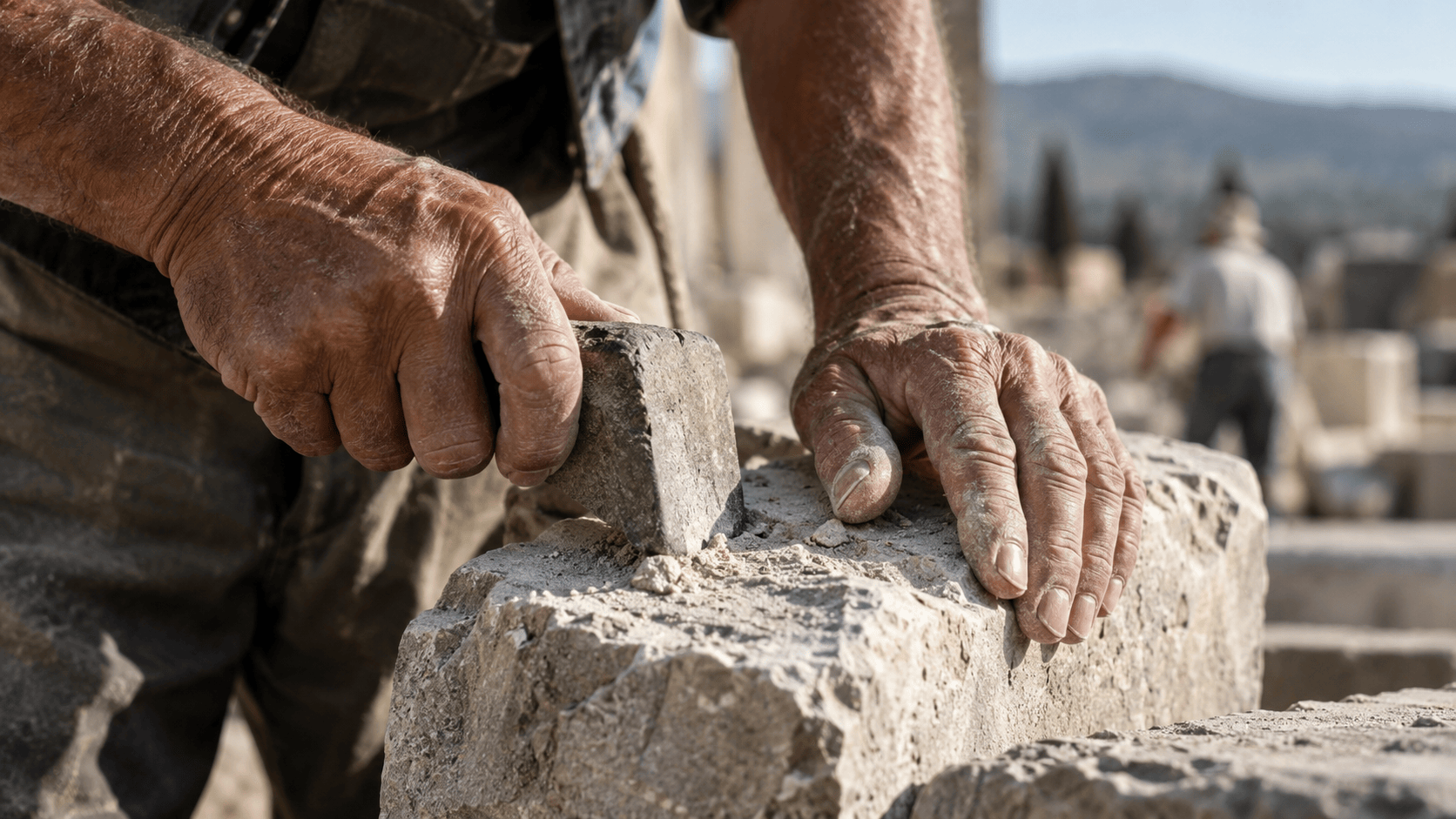
“I am doing a great work and I cannot come down. Why should the work stop while I leave it and come down to you?”
— Nehemiah 6:3 (ESV)
Sometimes the greatest threat to finishing what God has called us to do isn’t an obstacle standing directly in front of us. Sometimes it’s something trying to pull our attention away from the work altogether. Nehemiah had already faced ridicule, threats of violence, exhaustion, and internal injustice. Any one of those challenges could have stopped the rebuilding of Jerusalem’s wall, yet by the beginning of Nehemiah 6, the work was almost finished. The breaches had been closed, and the only major task remaining was setting the doors into the gates.
The finish line was in sight, but the opposition wasn’t finished. Sanballat, Tobiah, Geshem, and the others hadn’t been able to stop the work through mockery, intimidation, or threats. Even the internal crisis of chapter 5 had been confronted. So the strategy changed. Instead of attacking the work directly, they began targeting Nehemiah personally. They tried to distract him. When that failed, they spread rumors and political accusations. When those tactics didn’t work, they turned to spiritual manipulation. Even after the wall was completed, Nehemiah discovered that the influence of his enemies still reached inside the community he was trying to rebuild.
Nehemiah 6–7 reminds us that faithfulness requires more than starting well. It requires staying focused when distractions multiply, discerning truth when deception sounds convincing, finishing what God has entrusted to us, and then faithfully stewarding what has been built. Sometimes one assignment is completed while the larger mission is still unfolding. Finishing the wall didn’t mean Nehemiah’s work was finished. The wall may have been complete, but the mission wasn’t.
The World Behind the Mission
By the time we reach Nehemiah 6, Jerusalem has been living with the consequences of destruction and exile for well over a century. The Babylonians had destroyed the city in 586 BC, tearing down its walls, burning its gates, destroying the temple, and carrying much of the population into exile. When Persia later conquered Babylon, Jewish exiles were permitted to return in stages. The temple was eventually rebuilt, Ezra returned to teach the Law, and then Nehemiah arrived during the reign of Artaxerxes I with authorization to address Jerusalem’s ruined defenses and weakened condition.
That larger story matters because Nehemiah’s work was never simply a construction project. Jerusalem was still part of the Persian Empire, not an independent Jewish kingdom, and in the ancient world a city’s walls represented far more than physical protection. They helped provide security, regulate access, strengthen political and economic stability, and restore a measure of dignity to the people living inside them. For Jerusalem in particular, the condition of the city was also tied to the worship and witness of God’s covenant people. The temple had been rebuilt, but the city surrounding it remained vulnerable.
The restoration of Jerusalem had unfolded in stages. The people had returned from exile, the temple had been rebuilt, the Law had been taught, and now the walls were being restored. Yet the rebuilding of the city was only one part of a much larger work. God was not merely restoring structures. He was restoring a people, and that meant the community itself would need to be ordered around faithfulness, worship, leadership, security, and obedience.
Nehemiah 6–7 stands at the turning point between those two movements. Up to this point, much of the book has centered on getting the wall rebuilt while the people faced ridicule, threats of violence, exhaustion, and internal injustice. By chapter 6, the physical work is nearly complete, but the restoration is not. As the story moves into chapter 7, Jerusalem now has walls and gates, but a protected city still needs trustworthy leaders, organized security, residents, worship, and a community that understands who they are as the people of God.
The focus of the book begins to shift here. The question is no longer simply whether Jerusalem’s walls can be rebuilt. The question becomes what kind of people will live behind them. Nehemiah 6–7 therefore serves as a bridge from physical reconstruction toward the spiritual and communal restoration that will become even more prominent in the chapters ahead.
The wall mattered, but it was never the final goal. God was rebuilding a people.
Staying Faithful When the Strategy Changes
Nehemiah 6 opens with the wall almost complete. The breaches had been closed, and only the doors still needed to be set into the gates. Sanballat, Tobiah, Geshem, and the others had already failed to stop the work through mockery, intimidation, and threats, so their opposition began to take a different shape. Instead of attacking the work head-on, they turned their attention more directly toward Nehemiah.
Sanballat and Geshem invited him to meet them in the plain of Ono. On the surface, the request could have sounded diplomatic, but Nehemiah understood that something more dangerous was behind it: “They intended to do me harm” (Nehemiah 6:2). His response was simple and direct: “I am doing a great work and I cannot come down” (Nehemiah 6:3). Nehemiah wasn’t elevating himself or claiming that his time was too important for others. He understood that the work was great because God had entrusted it to him, and he refused to abandon that assignment for a meeting designed to pull him away from it. Four times the invitation came, and four times his answer remained the same.
When distraction didn’t work, the pressure became more public. Sanballat sent an open letter accusing Nehemiah of planning rebellion and trying to make himself king. It was a serious accusation, especially for someone serving under the authority of the Persian king, but Nehemiah refused to let the rumor consume him. He denied the accusation and immediately recognized what was really happening. His enemies wanted the people to become afraid so that “their hands will drop from the work, and it will not be done” (Nehemiah 6:9). The attack may have been aimed at Nehemiah’s reputation, but the real target was the mission. So rather than becoming consumed with defending himself, Nehemiah prayed, “But now, O God, strengthen my hands.”
The deception became even more subtle when it came through Shemaiah. He warned Nehemiah that people were coming to kill him and urged him to hide inside the temple. This time the pressure sounded spiritual, which could have made it even more convincing. Yet Nehemiah recognized that following the advice would require him to violate God’s command, and he refused. He eventually understood that Shemaiah had been hired by Tobiah and Sanballat. Their goal was to use fear to push Nehemiah into sin, then use that failure to damage his credibility. Nehemiah’s discernment rested on something solid: no message can truly come from God if obeying it requires disobedience to what God has already revealed.
After all of these attempts to stop the work, the wall was finally completed in fifty-two days. The people had worked, guarded, sacrificed, and persevered, but Nehemiah also understood that their success could not be explained by human effort alone. Even the surrounding nations recognized that “this work had been accomplished with the help of our God” (Nehemiah 6:16). God had sustained the work through every form of opposition.
Still, completion didn’t mean every problem disappeared. Tobiah remained connected to influential people within Judah, and some of the nobles continued defending him and reporting Nehemiah’s words back to him. The wall may have closed the physical breaches around Jerusalem, but there were still relational and spiritual vulnerabilities within the community. Visible success did not automatically mean that everything beneath the surface was healthy.
That helps us understand the transition into chapter 7. Nehemiah didn’t finish the wall and assume the work was over. He immediately began thinking about how the restored city would be protected, led, and sustained. He appointed gatekeepers, singers, Levites, and leaders to care for Jerusalem, and Hananiah was specifically described as “a more faithful and God-fearing man than many” (Nehemiah 7:2). That description stands out after everything we’ve just seen in chapter 6. Nehemiah’s enemies repeatedly tried to control him through the fear of people, yet the kind of leader needed for the next stage of the mission was someone marked by the fear of God.
Nehemiah also established practical safeguards for the city’s gates and guards. The wall had been completed, but it still needed to be protected. Once again, his leadership held dependence on God and practical wisdom together. Trusting God never meant ignoring responsibility.
Then the focus moved from the structure itself to the people who would live within it. Jerusalem was large, but its population was still small, so Nehemiah organized the people by genealogy. The long list that follows may feel less dramatic than the events of chapter 6, but it is not an interruption. It preserves family identity, priestly qualification, covenant continuity, and the makeup of the restored community. The wall was never meant to stand around an empty city. God was restoring a people.
By the end of chapter 7, those people are registered and settled in their towns, preparing the way for what happens next. Chapter 8 will turn their attention toward the Word of God. The physical rebuilding has reached completion, but the deeper work of restoring and forming the people is still unfolding.
Staying Faithful Where God Has Placed Us
Nehemiah 6–7 does more than show us how one leader finished a difficult assignment. It presses the same questions into our own lives. What has God actually entrusted to us? What keeps pulling our attention away from it? What voices are shaping our decisions? And once something has been built, are we willing to do the slower work of stewarding it well? Most of us will never rebuild a city wall, but all of us are responsible for something. We’re building families, relationships, ministries, careers, habits, and lives. Faithfulness requires more than enthusiasm at the beginning. It asks us to remain focused when distractions multiply, grounded when fear becomes loud, and responsible when the excitement of building gives way to the quieter work of sustaining.
1. Protect Your Attention from What Pulls You Away
Nehemiah’s response to Sanballat is one of the clearest statements of focus in Scripture: “I am doing a great work and I cannot come down” (Nehemiah 6:3). He knew what God had placed in front of him, and that clarity helped him recognize what didn’t deserve his attention. That distinction is important because distractions are not always obviously wrong. Some can look important, urgent, or even reasonable. Sanballat’s invitation sounded like a meeting, not an attack. Yet Nehemiah understood that accepting it would pull him away from the work God had actually given him to do.
Our distractions often work the same way. There’s always another conversation we could enter, another opinion we could defend ourselves against, another opportunity we could pursue, or another demand asking for our attention. Some of those things may be legitimate, but not every legitimate thing belongs to us. That doesn’t mean we become stubborn or unavailable. Nehemiah had already shown in chapter 5 that he was willing to listen when real concerns needed his attention. Staying focused isn’t the same thing as refusing accountability. It’s learning to discern the difference between something God is asking us to address and something that’s simply pulling us away from what He’s already entrusted to us.
That makes the question personal. What has God placed in front of me in this season, and what keeps pulling me away from it? Maybe it’s the constant pressure to defend myself when I feel misunderstood. Maybe it’s comparison, social media, another person’s expectations, or an opportunity that’s good but simply not mine. Whatever it is, focus sometimes requires the humility to say no without feeling the need to justify myself over and over again. Starting now, I can begin filtering demands through the responsibilities God has actually given me. Sometimes faithfulness simply means staying on the wall.
2. Test the Voices That Use Fear to Move You
Shemaiah’s warning sounded spiritual, and that’s what made it dangerous. He spoke about the temple, warned of a real threat, and offered advice that appeared to provide safety. Yet following it would have required Nehemiah to disobey what God had already revealed. That contradiction exposed the message for what it was.
We need that same kind of discernment. There are countless voices competing to shape the way we think, react, and make decisions. Some come from people around us. Others come through culture, social media, fear, insecurity, or even our own internal dialogue. Some voices may even use Christian language or claim spiritual authority. The question isn’t simply whether something sounds spiritual. The question is whether it agrees with the truth God has already given us.
Fear makes that discernment more difficult because fear creates urgency. It tells us that we need to react now, protect ourselves immediately, or make a decision before we have time to think clearly. It asks, “What if this goes badly?” “What will people think?” or “What if I lose something?” Nehemiah didn’t allow fear to become the authority governing his obedience. He tested the message against God’s Word and refused to let pressure push him into compromise.
That same anchor is available to us. When a voice is driving us toward panic, retaliation, dishonesty, bitterness, or disobedience, we need to slow down long enough to ask whether that voice is actually leading us toward faithfulness. Starting now, I can bring my fear under the authority of God’s truth. I can ask whether the advice I am receiving agrees with Scripture, whether it’s producing obedience or compromise, and whether I’m making a decision because it’s right or simply because I’m afraid. The goal isn’t to never feel fear. The goal is to refuse to let fear lead.
3. Steward What God Has Helped You Build
The wall was finished in fifty-two days, but Nehemiah didn’t treat completion as permission to stop paying attention. He immediately began appointing leaders, establishing safeguards, organizing the people, and preparing the city for the next stage of restoration. That part of the story may be less dramatic, but it’s where lasting leadership is tested.
We tend to celebrate beginnings and finish lines. We celebrate launching something, reaching a goal, completing a project, or finally seeing a prayer answered. Those moments matter, but lasting fruit usually depends on what happens after the celebration. A marriage isn’t sustained by the wedding. A ministry isn’t sustained by the launch. A new habit isn’t sustained by one good week. A church doesn’t become healthy simply because attendance grows, and a vision doesn’t become lasting simply because the original goal was reached. What has been built must be stewarded.
That means asking different questions. Who needs to carry responsibility? What rhythms need to be established? What safeguards need to remain in place? Who needs to be developed? What needs ongoing attention so that what God has entrusted to us doesn’t slowly weaken through neglect? Nehemiah also reminds us that systems are never the final goal. Jerusalem had walls, but the city still needed people. The structures existed to serve the life and worship of the community.
That same principle matters in every area of leadership. Systems can help us organize, protect, and sustain what God is doing, but they must always serve people rather than replace them. The goal is not simply to build something impressive. The goal is to faithfully steward people, responsibilities, and opportunities in a way that honors God. Starting now, I can look beyond completion and ask what faithfulness requires next. I can develop people instead of carrying everything myself, build healthy rhythms instead of depending only on momentum, and protect what God has entrusted to me without assuming that yesterday’s success guarantees tomorrow’s faithfulness. Finishing well means more than reaching the finish line. It means caring for what God has helped us build.
Finishing Faithfully
Nehemiah 6–7 reminds us that faithfulness is tested not only in how we begin, but in whether we stay focused when pressure, fear, and distraction try to pull us away. Nehemiah couldn’t control what others said or did, but he could remain faithful to what God had placed in front of him. The same is true for us. We all have people, responsibilities, and assignments God has entrusted to us, and faithfulness may look different from one season to the next. Sometimes it means pushing through resistance. Other times it means refusing distraction, staying grounded in truth, or caring well for what God has already helped us build. The wall was finished, but the mission was still unfolding.
Jesus gives us the fullest picture of that kind of faithfulness. He remained committed to the work the Father gave Him through rejection, accusation, suffering, and the cross. He didn’t simply begin faithfully; He finished faithfully. That leaves us with a simple but searching question: Am I still faithful to what God has placed in front of me? The next step may not be dramatic. It may simply be staying on the wall, refusing to let fear lead, and continuing to steward what God has entrusted to you.

 Pastor Luke

Recent Comments