
Building What Lasts (Part 8): Revival Through the Word
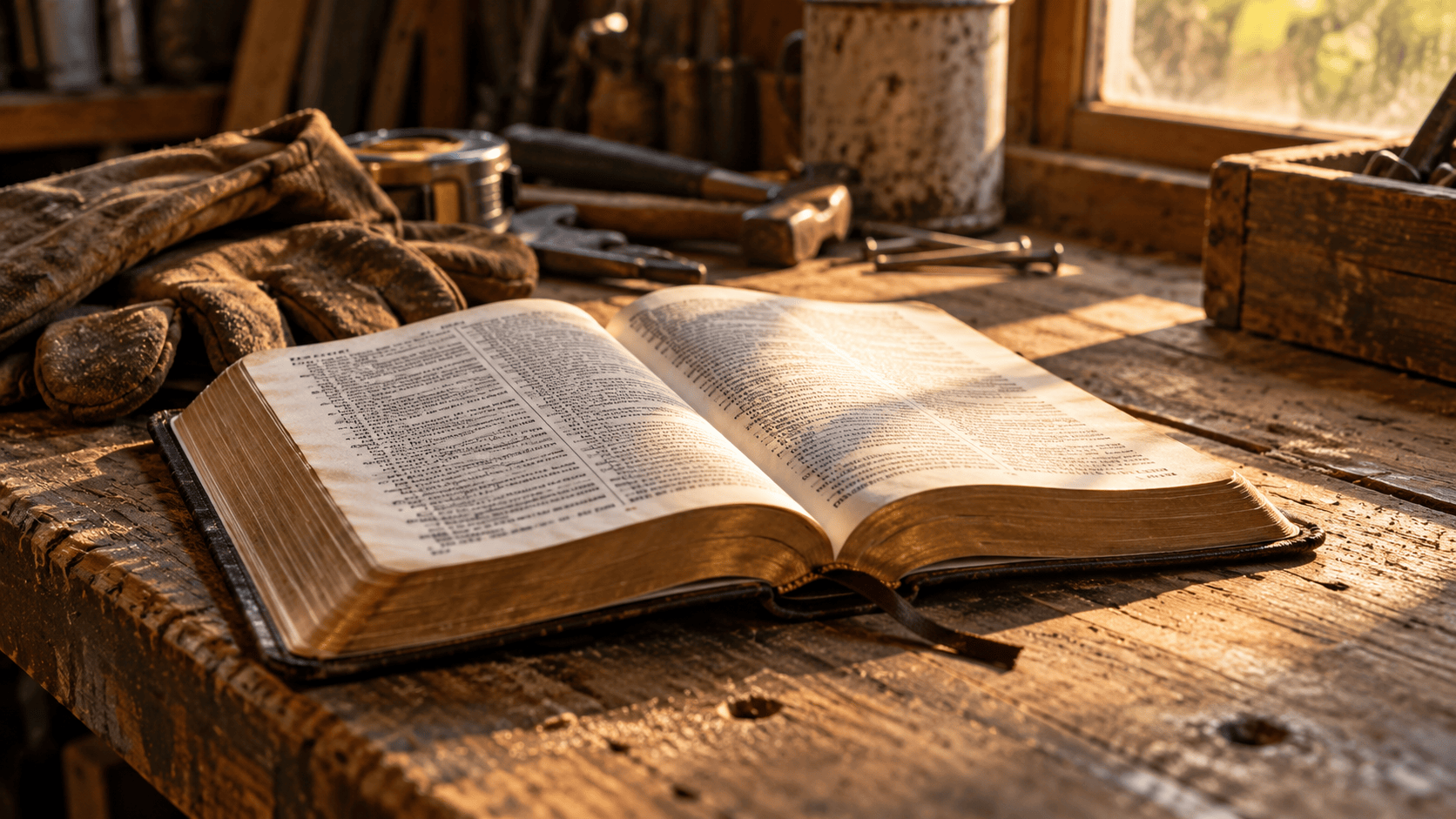
“The ears of all the people were attentive to the Book of the Law.”
— Nehemiah 8:3 (ESV)
Have you ever worked hard to fix something in your life, only to realize that fixing the situation didn’t necessarily fix everything inside of you? Maybe you finally got out of debt, repaired a struggling relationship, changed jobs, broke an unhealthy habit, or made it through a difficult season. There can be real relief when something that’s been broken begins to come back together. But sometimes, once the immediate problem is gone, we discover there’s still deeper work to be done.
That’s where we find the people of Jerusalem in Nehemiah 8. They’d accomplished what once seemed nearly impossible. The wall surrounding Jerusalem had been rebuilt, the gates were back in place, and after intense opposition and struggle, the city had regained a measure of security. It would’ve been easy to look around and think the work was finished. Yet God’s purpose had never been simply to rebuild a wall. He was restoring a people.
A rebuilt city could give them protection, but it couldn’t make them faithful. Strong walls could keep enemies out, but they couldn’t change what was happening in the hearts of the people living inside them. So as Nehemiah 8 begins, the focus shifts. Instead of gathering around another construction project, the people gather around the Word of God. They ask Ezra to bring out the Law, they listen as it’s read, they seek to understand it, and what they hear begins changing the way they respond to God and the way they live.
That’s what makes this chapter so important for us. We can spend enormous amounts of time trying to repair the things around us while giving much less attention to what God wants to do within us. Nehemiah 8 reminds us that lasting renewal isn’t simply about improving our circumstances. God uses His Word to shape His people, and sometimes the deeper rebuilding begins when we allow Him to show us what needs to change in us.
When the Building Was Done
By the time we reach Nehemiah 8, Jerusalem’s restoration has been unfolding for generations. The Babylonians had destroyed the city in 586 BC, burned its gates, torn down its walls, destroyed the temple, and carried much of Judah into exile. Years later, after Persia conquered Babylon, Jewish exiles were allowed to return in stages. The temple was rebuilt, worship was reestablished, Ezra returned with a commitment to study, practice, and teach God’s Law, and Nehemiah eventually arrived with authorization to address Jerusalem’s broken defenses.
Nehemiah’s work was part of a restoration that had already been unfolding for generations. The people had returned to the land, the temple was standing again, and the city had regained a measure of security, but Judah still lived under Persian rule. Jerusalem wasn’t an independent kingdom again, and the return from exile hadn’t erased the consequences of generations of rebellion, judgment, and displacement.
By the end of chapter 7, the wall is finished, the gates are in place, leaders have been appointed, and the people have been organized and settled. That marks a major transition in the book. For several chapters, the central question has been whether the wall could be rebuilt in the face of ridicule, threats, exhaustion, injustice, and political pressure. Now that the physical work is complete, the story begins turning more directly toward the life of the restored community itself.
That shift also helps us understand why chapter 8 shouldn’t be treated as though spiritual life suddenly begins here. Prayer, dependence on God, obedience, sacrifice, reform, and worship have already appeared throughout Nehemiah. Ezra had already been committed and commissioned to study, practice, and teach the Law before this gathering. What changes in chapter 8 is that the whole community now gathers around God’s Word together.
The timing adds another layer. The events begin in the seventh month, an especially significant month in Israel’s worship calendar. The first day was set apart as a sacred assembly, and later in the month the people were to celebrate the Feast of Booths. These observances reminded Israel of what God had done and how He had called them to live.
That would have carried particular weight for a people who had returned from exile. They weren’t simply trying to rebuild a city after a disaster. They were trying to recover life as the covenant people of God after a long history of unfaithfulness and judgment. The walls could help restore security, but walls alone couldn’t restore covenant identity. The community needed to remember again what it meant to belong to the LORD and to live according to His Word.
That’s the setting as Nehemiah 8 opens. The wall has been rebuilt, the city has been organized, and the people have gathered during a sacred season in Israel’s calendar. With the physical work behind them, their attention now turns toward something they still desperately need: the Word of God.
When the Word Took Center Stage
Nehemiah 8 opens with the people gathering together at the Water Gate and asking Ezra to bring out the Book of the Law of Moses. That detail is important because the initiative doesn’t begin with Ezra calling an uninterested crowd to attention. The people themselves want to hear what God has said. Ezra brings the Law before the gathered community, including men, women, and all who were able to understand, and he reads from early morning until midday. Nehemiah tells us that “the ears of all the people were attentive to the Book of the Law” (Nehemiah 8:3).
When Ezra opens the book, the people stand. He blesses the LORD, and they respond, “Amen, Amen,” lifting their hands before bowing their heads and worshiping with their faces toward the ground (Nehemiah 8:6). These physical responses aren’t given as a rule that every church must copy, but they do show the seriousness with which the people received what was being read. Their response shows that this wasn’t simply Ezra sharing his own thoughts. They were receiving the written instruction God had given His people.
Nehemiah then draws our attention to something that becomes one of the strongest themes in the chapter: understanding. The Levites helped the people understand the Law as it was being read. Verse 8 says, “They read from the book, from the Law of God, clearly, and they gave the sense, so that the people understood the reading.” There’s some debate about exactly how this happened. The Levites may have been explaining difficult portions, reading in a way that made the meaning clearer, translating some of the Hebrew into Aramaic, or using a combination of those approaches. The details aren’t completely clear, but the result is. The people weren’t only hearing words; they were being helped to understand what those words meant.
That emphasis matters because the Law wasn’t merely being read aloud. It was being communicated so the people could understand what God had said. Ezra and the Levites served that purpose by helping the people grasp what was being read. The authority remained with God’s Word, while faithful teaching helped make that Word clear.
As the people began to understand what they were hearing, they started to weep. Nehemiah doesn’t tell us everything behind their tears, but the confession that follows in chapter 9 suggests that conviction over their unfaithfulness was likely part of it. Hearing God’s instruction seems to have made the distance between His standard and their own history painfully clear.
Yet their leaders didn’t tell them to remain in sorrow that day. Nehemiah, Ezra, and the Levites told the people, “This day is holy to the LORD your God; do not mourn or weep” (Nehemiah 8:9). Then they were instructed to eat, drink, celebrate, and make sure those without provisions could participate as well. On this holy day, grief wasn’t the only fitting response. God’s instruction called them to rejoice.
That’s the setting for the familiar words, “Do not be grieved, for the joy of the LORD is your strength” (Nehemiah 8:10). This verse isn’t telling us that Christians should always feel happy or that sadness is a sign of weak faith. The next chapter will include real confession and mourning, showing that grief has an appropriate place. Here, however, the people are being reminded that their security isn’t found in remaining crushed beneath sorrow. In this context, their joy is centered on the LORD, and that God-centered joy becomes a source of strength and security for the community.
Their response to that instruction is just as important as the command itself. Nehemiah says the people went away to eat, drink, share portions with others, and celebrate “because they had understood the words that were declared to them” (Nehemiah 8:12). Their joy wasn’t disconnected from truth. Understanding what God had said changed how they responded to Him and how they treated one another.
The next day, the heads of families, priests, and Levites returned to Ezra to study the Law further. As they continued reading, they came across the instructions concerning the Feast of Booths. Israel had been commanded to live temporarily in shelters during the festival as a way of remembering how God had cared for His people after bringing them out of Egypt. The people responded by gathering branches, building booths, and observing the feast together.
Nehemiah says there was “very great rejoicing” as they celebrated (Nehemiah 8:17). That statement shouldn’t be taken to mean the Feast of Booths had never been observed at all since the days of Joshua, because Scripture records other celebrations of the feast. What appears to stand out is the remarkable way this community participated in it together. The exact feature that made this observance so exceptional isn’t explained, but the emphasis is clear: the people were taking what they had discovered in God’s Word and putting it into practice.
Ezra continued reading from the Book of the Law throughout the feast. That final detail keeps us from seeing the chapter as one emotional gathering followed by business as usual. The Word remained at the center of the community as the celebration continued. They didn’t simply hear Scripture, feel something deeply, and move on. They kept listening, kept learning, and began changing the way they lived.
That’s the movement of Nehemiah 8. The people wanted to hear God’s Word, they listened to it, and they were helped to understand it. Their encounter with the Word was expressed through worship, tears, joy, generosity, and obedience. The Word was beginning to reorder the life of the community, and that’s where this chapter becomes deeply personal for us.
Letting the Word Shape Our Lives
What actually has the final say in the way I think, respond, choose, and live? Nehemiah 8 doesn’t leave that question in ancient Jerusalem. It presses it into our own lives.
The people in Nehemiah 8 remind us that spiritual renewal doesn’t happen simply because we know about God or because we’ve experienced His help before. They’d already seen God provide, protect, and help them finish the wall, yet they still needed to gather around His Word and allow it to shape the life of the community. The same is true for us. We don’t outgrow our need for Scripture once life becomes more stable. If anything, stability can make it easier to stop paying attention.
The question isn’t only whether we believe the Bible is true. The question is whether we’re allowing it to direct the way we actually live.
1. Give God’s Word the Loudest Voice
The people gathered and asked Ezra to bring out the Book of the Law. They wanted to hear what God had said, and that desire challenges us because we live in a world filled with competing voices. Every day, someone is telling us what should matter, what we should fear, what success should look like, how we should respond when we’re hurt, and what we should believe about ourselves.
It’s easy to say Scripture is our authority while still allowing other voices to shape us more deeply. We may know what God says about forgiveness, but resentment still controls our response. We may know what Scripture says about contentment, but comparison still determines how we view our lives. We may know what God says about integrity, but pressure still convinces us that compromise is necessary. The issue often isn’t that we don’t know what God has said. It’s that another voice has become louder.
That’s why returning to Scripture has to be intentional. Most of us won’t accidentally develop a life shaped by God’s Word. We need regular rhythms that keep bringing us back to truth. That may look like reading before reaching for our phone in the morning, slowing down to work through a passage instead of rushing through a chapter, writing down what stands out, or asking what God’s Word says before asking what everyone else thinks.
Starting now, I can begin paying attention to which voices are shaping me most. When I feel pressure, fear, anger, insecurity, or confusion, I can slow down and ask, “What does God’s Word actually say about this?” I don’t have to ignore emotions or pretend other perspectives don’t matter, but none of them should carry more authority than Scripture.
2. Slow Down Long Enough to Understand
The people didn’t only hear the Law. They were helped to understand it. That matters because there’s a difference between reading the Bible and actually learning what it says. We can move quickly through a reading plan, recognize familiar stories, or repeat verses we’ve heard for years without ever stopping long enough to understand the meaning of the passage in front of us.
Sometimes our greatest challenge isn’t access to Scripture but pace. We’re used to moving quickly, scrolling quickly, and expecting information to make sense immediately. But Scripture often requires us to slow down. We may need to reread a passage, look at what comes before and after it, ask why something is being said, or seek help from trusted teachers and resources. Understanding takes time, but that time isn’t wasted.
It also takes humility. Sometimes we approach the Bible looking for support for what we already believe instead of allowing Scripture to challenge us. We find a verse that sounds familiar, assume we know what it means, and move on. Yet part of spiritual growth is being willing to discover that we’ve misunderstood something or applied it in a way the passage itself doesn’t support.
That should encourage us rather than intimidate us. We’re not expected to understand everything immediately. The people in Nehemiah 8 needed help understanding too. Learning Scripture is a lifelong process, and faithful teachers, pastors, study tools, and Christian community can all help us grow in that process.
Starting now, I can give myself permission to slow down. Instead of measuring Bible reading only by how much I finish, I can pay attention to what I’m actually understanding. I can ask simple questions like, “What’s happening here?” “What does this show me about God?” “What’s the author actually saying?” and “What response does this passage call for?” Depth often begins when we stop rushing.
3. Let What You Learn Change What You Do
The strongest evidence that the people had truly received the Word came when they acted on what they learned. They discovered what God had commanded regarding the Feast of Booths, and then they obeyed. Their understanding moved beyond the gathering and began affecting the way they lived.
That’s where application becomes personal for us. It’s possible to know a lot of Scripture without allowing Scripture to change much about us. We can hear a message on forgiveness and still hold onto bitterness. We can read about generosity and still live with tightly closed hands. We can study humility while continuing to protect our pride. We can agree with what the Bible says and still resist the very thing Scripture is calling us to obey.
The goal isn’t simply to feel convicted. Conviction is meant to move us toward obedience. Sometimes that obedience will be dramatic, but often it’ll look very ordinary. It may mean apologizing to someone, changing the way we speak at home, becoming more generous, making something right with someone, confessing a hidden sin, forgiving someone who hurt us, or finally obeying something God’s Word has already made clear.
We also need to remember that obedience doesn’t mean instant perfection. The people in Nehemiah would still struggle later. Growth rarely happens in a straight line, and some changes take time. But there should be movement. When God’s Word makes something clear, our lives should begin moving in the direction of what He has said.
Starting now, I can ask one simple question whenever I read Scripture: “What should change because I’ve heard this?” I may not be able to fix everything at once, but I can take one faithful step. I can respond to what God has already made clear instead of waiting for another emotional moment, another message, or another sign. The Word is meant to move from what I know into the way I live.
Rebuilt by the Word
The wall around Jerusalem had been rebuilt, but God’s work among His people was far from finished. They didn’t simply need a safer city. They needed to be a people who knew God’s Word, understood what He had said, and were willing to let that truth shape the way they lived.
That’s an important reminder for us because it’s easy to measure growth by what we can see. We notice the habit we’ve changed, the relationship that’s improving, the goal we’ve reached, or the area of life that finally feels more stable. Those things are worth thanking God for, but visible progress doesn’t always mean the deeper work is finished. Nehemiah 8 shows us renewal taking shape as God’s Word moves beyond something we hear and begins shaping the way we think, worship, respond, and live.
That leaves us with a simple question: What is God’s Word actually changing in me? Not just what have I learned lately, what verse have I highlighted, or what message have I enjoyed, but where is Scripture reshaping the way I think and live? Maybe God is confronting an attitude you’ve excused, reminding you of something you’ve forgotten, or calling you to take a step of obedience you’ve been avoiding. The next step may not be dramatic, but it should be real.
The people in Nehemiah 8 weren’t finished growing, and neither are we. In the chapters ahead, their encounter with God’s Word will move even deeper as they begin confronting sin and renewing their commitment to Him. But it starts here, with a people willing to listen, understand, and respond.
The wall had been rebuilt. God was continuing the deeper work of rebuilding His people through His Word.

 Pastor Luke

Recent Comments