

I’ve done many different things over the last 15 years. Church and para-church ministry, mental health, substance abuse, para-education, medical, otr truck driving and training, and transportation safety and operations. There were many times I didn’t enjoy what I did. I felt incomplete, a lack of joy because I wasn’t doing what I thought I should be. What I believed God was calling me to wasn’t happening quick enough.
It took years for God to open the door and allow me to be in a place I know is fully completing my calling. And it took a very simple realization I believe, before God opened that door.
There are times and seasons God will place you where you don’t want to be. That doesn’t mean there’s not a God-given purpose for you being there.
I remember specifically doing para-education and despising what I did. Deep down, I didn’t enjoy it. It wasn’t the people, but the work. I found no joy in what I was doing. But the bigger problem was that I allowed may lack of joy to influence every other aspect of my life. And in doing so I failed to see and meet the purpose God placed me there for.
I’m reminded of the story of Esther, in which I think we typically attribute lessons to the lives of women. But I think the application can be broader. The reality is she found herself in a position she didn’t want to be in. She wasn’t looking for it, didn’t really want it, but had to accept it. And in that, she realized God placed her there for a reason.
The question then for her was the same for us. What do you do with the opportunity God has given you?
What I had to realize and accept was, that where God placed me wasn’t really about me. Sure, it was a God-given opportunity to learn and grow. But as a follower of Jesus, my life is about serving Him. Honoring Him. It’s all about Him. Often times I fail at that, often because I begin to think it’s all about me.
Esther could have easily done that. And maybe she would have if it wasn’t for her cousin to encourage her, remind her Who’s she was.
For if you keep silent at this time, relief and deliverance will rise for the Jews from another place, but you and your father’s house will perish. And who knows whether you have not come to the kingdom for such a time as this?”
Esther 4:14
Esther had a God-given purpose for being where she was, when she was. Her people, the Jews, were about to be destroyed. She could have done nothing, and possibly faced the same fate. But something about Mordecai’s words helped her discover that purpose and the strength to take action.
Then Esther told them to reply to Mordecai, “Go, gather all the Jews to be found in Susa, and hold a fast on my behalf, and do not eat or drink for three days, night or day. I and my young women will also fast as you do. Then I will go to the king, though it is against the law, and if I perish, I perish.”
Esther 4:15-16
I didn’t face an extermination of my people. Nor did I face the possibility of death for taking a stand. I did however fail to understand my purpose at the time, and take action to fulfill it. The lesson learned from Esther is a late one for me, but it’s one I applied moving forward.
Where God placed me is for a purpose He ordains, it’s not about me. I may be a benefactor of that purpose, but it’s ultimately about Him. But I will never realize that or be able to fulfill it if I can’t find joy in where God has placed me.
Maybe like Esther, you find yourself in a place or position you didn’t expect, maybe you didn’t even want. You might feel stuck in a situation that doesn’t jive with your plans. Maybe, your situation is just tough, and feels unfair. God has you there for a purpose. To grow, to make a difference. The question we each have to wrestle with is will we choose to find joy where we are, or allow bitterness to set in?
One will lead to life, the other to more pain and frustration.
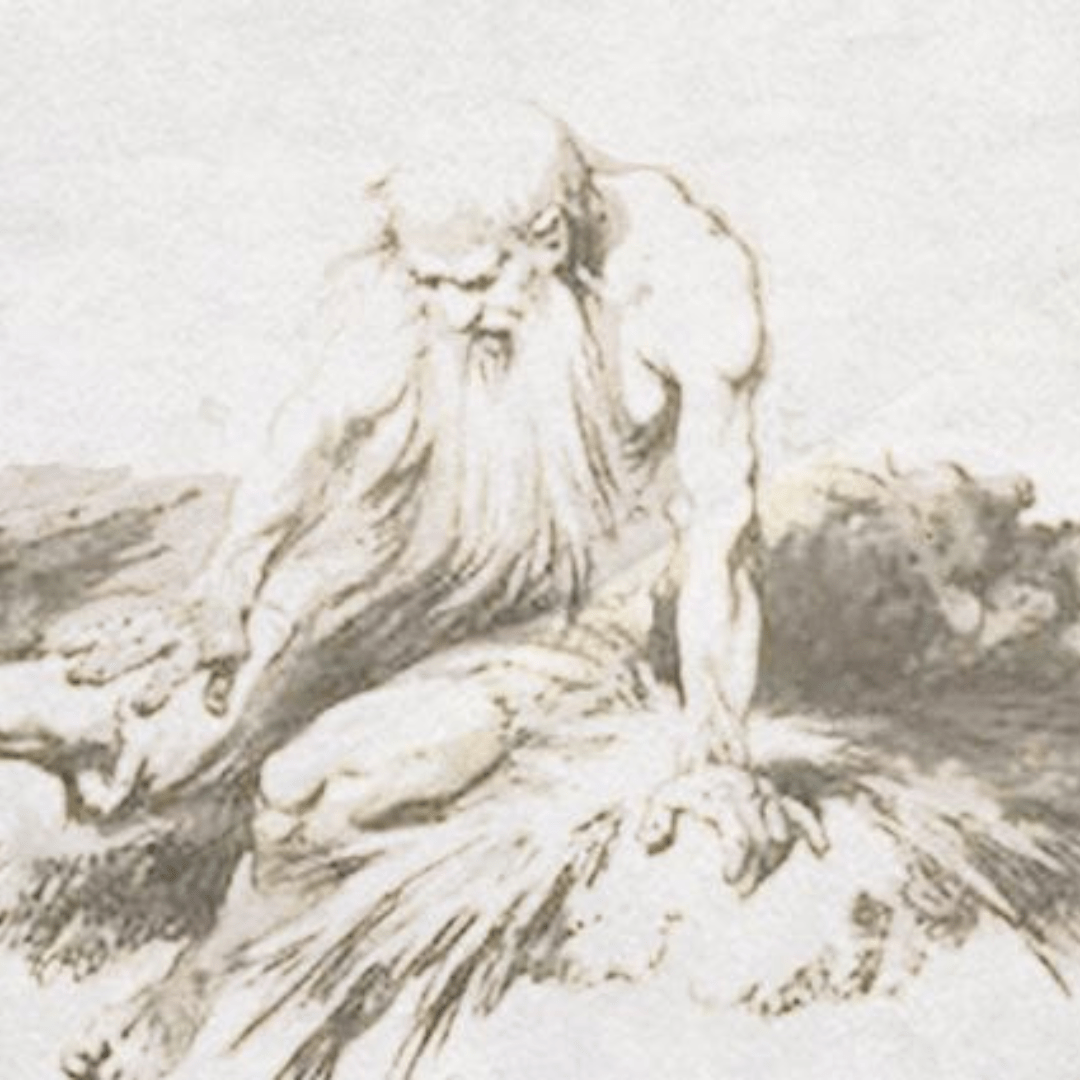
The last two weeks have been long with some really high highs and low lows for our family. We’ve had some great highs with our oldest making the Freshman Volleyball team at school. We’ve had some lows saying goodbye to our dog Harley after 13 1/2 years of life. Seasonal allergies have begun to hit hard making for long nights with the youngest. And on top of it all, I’ve been trying to maintain some routine of working out regularly and eating more healthy.
Life continues to be full of obstacles, and blessings. In the midst of these challenges, I have spent time diving into the story and life of Job in the Old Testament. He was a man not unfamiliar with blessing.
There were born to him seven sons and three daughters. He possessed 7,000 sheep, 3,000 camels, 500 yoke of oxen, and 500 female donkeys, and very many servants, so that this man was the greatest of all the people of the east.
Job 1:2-3
Scripture makes it clear that in his time Job was one of the wealthiest men alive. He had experienced great favor from the Lord. Not only was he blessed with children, but he also had a great number of livestock and servants. Scripture also makes it clear that Job possessed a character and devotion to God. In the verses before we see Job feared God, turned from evil and was blameless and upright. His character and integrity were one of holiness. Of greater importance to him than his possessions though was his faith and commitment to the Lord.
This commitment to God was exactly why he is allowed to be inflicted by Satan not once, but twice. It’s the first time he is attacked by Satan that I find most interesting. Job’s response to four messengers reporting tragic news to him demonstrates how deeply rooted his character and integrity were. After learning of the loss of his livestock and his children at the hand of Satan, Job responds in a way Satan did not expect.
Then Job arose and tore his robe and shaved his head and fell on the ground and worshiped. And he said, “Naked I came from my mother’s womb, and naked shall I return. The Lord gave, and the Lord has taken away; blessed be the name of the Lord.”
Job 1:20-21
Job does four things that strike me as significant in the response to hardship. First, upon hearing the devastating news he arose. There is something powerful about getting up in the midst of hardship. It’s easy to stay where you are, to allow the hurt and the disappointment to take hold and swallow you. It takes fortitude to stand up, physically, mentally, and emotionally. It takes strength to take a step forward in the pain. Job seemed to understand something truly powerful; staying where he was in the midst of the pain would not benefit him in any way. He had to get up, he had to do something.
After rising, we see Job express his agony in a way uncommon to us today. Scripture says Job tore his robe and shaved his head. For us today, this may seem extreme. Maybe even a little odd. In Job’s culture tearing one’s robe was how pain and deep agony was expressed. For Job, his robe was also a symbol of status. Job’s action of destroying a highly valuable and symbolic item of clothing was a significant action. It was not done lightly, and signified an outward expression of the deep sorrow and pain he was experiencing internally. Saving ones head was often a sign of repentance. I imagine Job was now wrestling internally with grief, pain, confusion; the questions that must have been swirling around in his head. Trying to understand why his children died. Job’s action of repentance demonstrates his understanding of God’s holiness and his brokenness. Unsure of the reason for this immense loss, Job is quick to repent before the Lord.
Then Job shifts gears, and I’m sure this is where Satan was really caught off guard. Without skipping a beat, Job falls to the ground in worship! Not anger, not bitterness; Job ultimately responds to the tragedy in his life with worship! How often do I face hurt and tragedy in my life on a much smaller scale, and struggle to respond in worship? My bent is to hold onto the hurt, to allow bitterness to take root and grow. Job demonstrates the product of well-grounded character and integrity, a faith deeply rooted in a sovereign God. It doesn’t mean he doesn’t wrestle with real, intense feelings. It means he knows they don’t control him, and makes a conscious decision to worship God. And the best part?
In all this Job did not sin or charge God with wrong.
Job 1:22
Job faced adversity most of us never will. He lost everything in a single day. Despite his experience, and what the world today would say justified turning his back on God, Job stood firm. In the midst of his hurt, he remained faithful.
I’ve walked away from these last two weeks in my own life with a new perspective. I have a fresh understanding of how I can and should walk through my pain. If Job can walk out of losing everything, worshipping God, and being found without sin in his response, so can I. If Job can worship when it hurts, so can I. And in light of the incredible blessings God has shown me, I should. When I face hardship in the future, when the pain feels greater than I think I can handle, let me remember Job’s words of praise.
And he said, “Naked I came from my mother’s womb, and naked shall I return. The Lord gave, and the Lord has taken away; blessed be the name of the Lord.”
Job 1:21

I like to hear things that sound good. Things that don’t make me question, feel concerned or convicted. I like being in the majority, knowing what’s being said is supported by “the many”.
That’s what I like.
The problem is, often what I like and what God through His Word says is right are in conflict. In other words, what the culture and world say is “good and right” contradicts what Jesus teaches. And if I claim to be a Christian, a follower of Jesus Christ, I have a decision to make.
What has always fascinated me with this issue is, it’s nothing new. Paul dealt with it in his ministry, and addressed it directly in his letter to Timothy.
[3] For the time is coming when people will not endure sound teaching, but having itching ears they will accumulate for themselves teachers to suit their own passions, [4] and will turn away from listening to the truth and wander off into myths.
2 Timothy 4:3-4
Paul had already encountered and combated false teachings within the churches he planted. He even goes as far to name some people specifically. He knew the reality that Timothy would encounter it also.
Our humanness can be one of our biggest foes. We like what sounds “good”. Honestly, who likes to be wrong? Who likes being confronted with conviction? Our humanness, the sin nature we all have, craves being right. And many, even Christians, will turn to whatever will feed their need to be justified in their thinking and actions. It’s nothing new today, we see it within the Church more today than perhaps ever.
It’s easy to get frustrated, I know. To see a brother or sister in Christ, or Church Leadership take a position on an issue Scripture is exceptionally clear about. Today you can jump on social media and start a word-war in seconds. It’s easy to see people run towards the things that feed their own passions and want to lash out with criticism and “facts” and leave a wake of destruction.
With Paul’s warning to Timothy comes instruction, wisdom from his own battles within the Church.
[2] preach the word; be ready in season and out of season; reprove, rebuke, and exhort, with complete patience and teaching.
[5] As for you, always be sober-minded, endure suffering, do the work of an evangelist, fulfill your ministry.
2 Timothy 4:2 & 5
How do I, as a professing follower of Jesus, respond to Paul’s warning? What should I do when everyone around me is turning to the voices that tell us what we want to hear?
I press into Jesus more. I fill my heart and mind with His truth contained in Scripture. I speak truth in love when the opportunity arises. I persevered under attacks. I resist false teaching and what the world says is “right”. I stay faithful to God and love people, even if we disagree.
I do what God has called me to do, and leave the rest to His Spirit.

What matters most to you?
As a follower of Jesus there are many convictions I hold that the world doesn’t. A lot of convictions and beliefs that many will ridicule.
There were many who said they believed in Jesus, but lived in fear of expressing their claimed beliefs. Jesus had some strong words about it.
“…for they loved the glory that comes from man more than the glory that comes from God.
John 12:43
They were more concerned with what the Pharisees thought than God. The opinions of their peers were of greater value than the person they claimed to believe in.
How true is this for many Christians today?
Christians who reject the authenticity and authority of Scripture because the world discredits it.
Christians who reject God’s definition of marriage between one man and one woman because the world says it’s outdated, and you’re bigoted if you agree.
Christians who see a person’s “choice” of greater value than the voiceless life it effects, because culture says it’s a person’s “right” and you must hate women if you don’t agree.
How many Christians today contradict the faith they claim, their claim to follow Jesus by taking stands in opposition to Jesus because they might face some backlash from their peers?
What I see when I look at the life of Jesus is someone who was more concerned with the opinion of His Father than His peers. He expects the same from me as His follower.
So who’s opinion matters most to you?

Father’s Day is here, and among the busyness I find myself convicted and challenged. Convicted that I’ve allowed laziness to influence my role of Dad in my family, a lot more than I want to admit. Challenged to be a better Dad to my children than what I had.
How I model being Dad will forever impact my children. My son will one day be a Dad to his children in a way shaped by me. My daughters will one day look for a man that will be a Dad in a way they envision for their children, shaped by how I was Dad for them.
How I fulfill my calling to be Dad in their lives today directly affects their understanding of what a Dad is in their future family. Being Dad is more than providing. It’s more than protecting.
Being Dad means I take time to play and show them affection. It means I take time to invest in them, teach them, discipline them, encourage them. I make time to be intentionally present, whether that’s a late night conversation when I tuck them into bed or sitting and cheering them on at their game.
Being Dad means you get the good and bad days; you don’t get to check-out! If you’re divorced, separated, and your children are not physically present all the time like me, you don’t get a “pass”. You are still responsible for being Dad.
Sure, it might be a little tougher. The challenges may be different from other Dads. Hard isn’t an excuse. Let me say it again for every dad, in every situation.
Hard isn’t an excuse.
If God blessed you with a child, He has called you to be a Dad. He has called you to lead and influence the life He entrusted you with.
I want my son to desire being a Dad to his children the way I am to him, because I modeled for him what a Godly Dad looks like.
I want my daughters to find a husband who will be the Dad to their children the way I am to them, because I modeled for them what a Godly Dad looks like.
This Father’s Day my prayer is simple. As Dads we honestly answer the question, am I striving to live up to my potential as a Godly Dad? Or have I checked-out of the calling God has given me, in pursuit of my own wants and desires? Studies consistently demonstrate the importance of a Dad’s role in the lives of their children. It shouldn’t surprise us, God designed it that way for a reason.
Dads, let’s make this Father’s Day a turning point in our lives, our children’s lives, our grandchildren’s lives. You and I have the potential to radically change the trajectory of our family for generations.
Let’s strive to live up to the potential God calls us to as a Godly Dad!

We expect the Spirit to operate within our parameters, but we have it backwards. He expects us to operate within His.
When He says move, we move.
When He says wait, we wait.
When He says speak, we speak.
When He says be silent, we close our mouth.
He expects us to be obedient to His leading. To trust His leading. Instead of thinking I know best, trust that He does.
How do I know the Spirits leading in my life?
I spend time in Prayer.
I spend time in His Scripture.
I spend time in Worship.
I invest in my relationship with Him.
I hear His voice the strongest when my relationship is closest.
What does His leading look like in your life?

We have a saying in our church that is more than a saying; it’s one of our Core Convictions. We believe Growing People Change.
As a follower of Jesus, I should be in a constant and consistent pursuit of growth! That means I should be changing. You, as a professing follower of Jesus, should be changing. Growing and changing more and more into the likeness of Jesus.
Paul gives us this very instruction in his letter to the church in Rome.
Do not be conformed to this world, but be transformed by the renewal of your mind, that by testing you may discern what is the will of God, what is good and acceptable and perfect.
Romans 12:2
Paul understood the pull of conformity to the toxic culture. He knew the evil. He walked it before his encounter with Jesus, which brought radical transformation to his life. Paul understood not only the struggle, but also the freedom that comes through transformation in Christ!
The problem is, we often live as if the constant change and growth we are called to is true of God’s character and attributes. If we can change, God must also. We live and think as if He is lacking in areas just like us. You might step back like me and go, that’s not what I believe.
But what do my actions say? What do my interactions with others say? What does my life say?
Does my life show I’m living in awe of a God who is constant in character and attribute?
Does my life reflect my knowledge that He is the Alpha and Omega, beginning and end? That He is totally sovereign, all knowing, all powerful, perfectly just, and eternally gracious. God never changes, He even declares it Himself!
“For I the LORD do not change; therefore you, O children of Jacob, are not consumed.
Malachi 3:6
Even though His people continually turned their backs on Him, God continued to remain constant in who He is. He continued to love, discipline, and call them back to Himself.
Let all the earth fear the LORD; let all the inhabitants of the world stand in awe of him!
Psalm 33:8
The Psalmist knew who God is. And because of this convicting knowledge he lived in awe of Him. But he also understood this expectation wasn’t meant for him alone, it was meant for the entire world. From the animals to the stars; you, me, and everything created is called to live in awe of the constant glory and holiness of God.
The question we each have to answer is whether our life lives up to that call.
Do I live in awe of a constant, never changing God?

To be honest, Christmas isn’t my most favorite holiday. Easter is. But the reality I am reminded of each Christmas is that Easter has no meaning, no true significance, if Christmas never happened.
If Jesus never left His throne in Heaven, born of a virgin, took on flesh as fully God and fully man, He would not have faced the false accusations, the beatings and spitting, the crucifixion.
It’s because of Christmas that as a follower of Jesus I can celebrate Easter.
This year as you gather with family and friends, watch the kids open presents, remember what we are really celebrating at Christmas.
Jesus, leaving heaven. Jesus, taking on flesh like you and me. Jesus, His birth. God’s gift of grace to a hurting, broken world in need of redemption.
Make sure you take time today to reflect on the gift we received, and celebrate how that gift changed eternity.
Celebrate Jesus.

The story of Abraham in Genesis 12 hit me differently today. While finishing my preparations for Life Group tonight I was reading the story of God calling Abraham to leave everything he had known to go somewhere he didn’t know. Talk about a blind faith, Abraham was 75 years old and had what would have been considered a pretty comfy life. He had a lot of possessions and was established, and here God is telling him it’s time to pack it all up and start walking with no indication of where or what was ahead of him!
And he does.
Abraham packs up all his belongings, gets his wife, his nephew Lot, servants, livestock, all of it. And this is the part that struck me. No one hesitated to go with Abraham. Abraham’s faith in God inspired others around him to step forward in faith with him.
That’s powerful. They had no idea what was in store, just like Abraham. Yet they were willing to leave behind their comfort and trust that God had something better in store. It’s interesting to me how Abrahams faith lead him to be obedient to God’s call in his life. And out of that obedience came blessing not only for Abraham, but for his family for generations to come.
Then the Lord appeared to Abram and said, “To your offspring I will give this land.” So he built there an altar to the Lord, who had appeared to him.
Genesis 12:7
Abraham’s obedience opened the door of God’s blessing in the present and the future. His faith in God’s provision inspired those with him to take steps of their own in faith. Abraham’s obedience to the Lord not only brought blessing to him and his family, but that of others like his nephew Lot.
The reality is we all have people around us whose lives we make an impact in. Some even look to us specifically for guidance, counsel, trusting we will help guide them in the right direction. Have you ever though about the impact your obedience to God has on the lives of those around you?
There are people you may not even know who seeing your steps of faith in obedience to God, will be inspired to take steps of their own. I’m sure it could have been easy for Lot to step back and allow doubts and questions about the situation at hand keep him from moving out of his comfort zone. But I can’t help think there was something about Abraham’s faith that inspired Lot. Abraham’s confidence in God’s provision inspired Lot to step forward himself.
But what if Abraham had been disobedient to God’s call? What if instead of stepping forward in faith, he hesitated and just stayed in his father’s house?
We often think if we mess up, it just effects us. But that’s just a lie we tell ourselves to lessen the blow. Truth is, disobedience in our personal lives can have lasting effects on those around us and beyond. If Abraham had stayed home, he wouldn’t have experienced Genesis 12:7. The blessing of the Promise Land would not have been experienced because comfortability in the moment would have been more important.
I don’t know about you, but I don’t want to miss out on the blessing God has for me. But to receive that blessing, I have to first walk in obedience. I have to but my faith to work, get out of my comfort zone, and trust God will provide even when I can’t see or don’t understand. My obedience may also just be the catalyst God uses for someone else stepping out of their comfort zone, putting their faith into action for the first time.
That’s pretty cool to think about if you ask me!

Train up a child in the way he should go;
even when he is old he will not depart from it.
Proverbs 22:6
It’s not a promise, but a principal to practice. This unsuspected picture shines a light for me on the impact our practices in life have on our kids. Good or bad, they notice and imitate. My 2 year old daughter sat at my feet, took my hand, and bowed her little head while we prayed in our Life Group.
I didn’t have to sit her down and explain what prayer was or how we do it. She is learning by observation and experience. It’s the same way she knows what a Bible is from other books, and that Jesus is in the Bible.
As parents, we lay a foundation for our kids through what we say and do. If foul language is commonplace in my personal life, I can’t be surprised when my kids think it’s acceptable for them to use it. If I prioritize my social life over my faith, I shouldn’t be surprised when my kids put youth group and church on the back-burner in their personal life. What I demonstrate with my own life will eventually surface in the lives of my kids as they grow up.
The question as a parent is not will what I say and do take hold in their life.
The question as a parent I have to constantly evaluate is, what do I want to take hold in their life.
I want my kids to understand the importance of a well-grounded faith, and obedience to God’s calling. I want them to have a devotional life that is genuine, born out of a love for Jesus, not just to check boxes. I want my daughters to know and believe that God loves them and has a purpose for their life. I want my son to know God has called him to be a leader in a dark world. I want my kids to lean and press into Jesus when they struggle because they know He is faithful. I want Jesus to be the first one they turn to when they celebrate and mourn.
I want them to have a love for Jesus that is deeper than my own.
But I can’t expect something I don’t model and live out in my own life. It starts with me practicing my own faith in a practical way that they can see. But it’s also holding them accountable to grow in their own faith as they grow older. Encouraging them to pray, to read Scripture and journal about how and what God is speaking to them through a passage. Teaching them songs when they are little that emphasize who Jesus is and what He has and can do.
To train someone you first have to be doing whatever it is you are training them in. That means I can’t be an un-present dad, who is more concerned with myself then the needs and wellbeing of my kids. I have to lead by example.
Training up my children starts with me.

 Pastor Luke
 Eternal Viewpoint
Recent Comments