

A Field at Your Feet
Your life is not a random string of moments. It’s a field—rich with potential, sacred with purpose. And every decision, action, thought, and intention is a seed dropped into that soil. Whether it’s a conversation with your child, a choice made in secret, or a thought you entertain in silence, you are sowing something. Moment by moment, we are cultivating a future harvest—often without even realizing it. The question isn’t whether you’re sowing; the question is what you’re planting and where you’re planting it.
Will the fruit of your life nourish the soul and glorify God, or will it wither under the weight of selfishness and shortsighted choices?
The apostle Paul speaks directly to this in his letter to the Galatians:
“Do not be deceived: God is not mocked, for whatever one sows, that will he also reap. For the one who sows to his own flesh will from the flesh reap corruption, but the one who sows to the Spirit will from the Spirit reap eternal life. And let us not grow weary of doing good, for in due season we will reap, if we do not give up.”
— Galatians 6:7–9
This passage doesn’t offer a helpful tip for better living—it declares a spiritual law etched into the very fabric of creation. Like gravity, it applies to everyone. Our sowing is inevitable. Our harvest is unavoidable. You cannot mock God by sowing one kind of seed and expect a different kind of fruit. The life you are cultivating today—through your habits, your words, your relationships, your quiet choices—will bear fruit. The only question is whether it will be fruit of the flesh or of the Spirit.
This is where we must pause and look closely. What are the fields of our lives revealing? What kind of seeds are we sowing—daily, intentionally or unintentionally?
Let’s walk through the two fields Paul describes—flesh and Spirit—and see how every seed we sow today is shaping not just our tomorrow, but our eternity.
Two Fields, Two Outcomes
Paul presents us with a sobering yet hope-filled dichotomy in Galatians 6: we are all sowing into one of two fields—the field of the flesh or the field of the Spirit. There is no neutral ground. Every thought entertained, every decision made, and every priority established is a seed being sown in one direction or the other. And each field produces a predictable harvest: the flesh reaps corruption, while the Spirit yields eternal life.
But let’s be honest—sowing to the flesh doesn’t always look evil on the surface. It’s rarely a blatant act of rebellion. More often, it’s a slow, quiet drift. It’s choosing comfort over calling. It’s being more concerned with your image than your integrity. It’s allowing convenience to shape your choices instead of conviction. It’s not that we stop believing in God—it’s that we start living like He’s not really relevant to the daily grind.
Living for the flesh is ultimately living for now—the immediate, the visible, the temporary. It’s pouring your best energy into things that won’t matter five years from now, let alone five hundred. We chase recognition, possessions, platforms, and security, thinking they’ll satisfy—yet they never do. That’s the deception of the flesh: it promises fulfillment but delivers emptiness.
In contrast, sowing to the Spirit isn’t about earning God’s love or trying to impress Him with perfect behavior. It’s about living with eternal intention. It’s a life reoriented around Christ—where your decisions, desires, and direction are guided by the Holy Spirit and anchored in Scripture. It’s waking up each day asking not, “What do I want to do?” but “What would honor God today?” Jesus didn’t just model a Spirit-led life—He sowed His very life in obedience, even unto death, so we could reap the life He secured for us. Our sowing isn’t powered by willpower, but by grace.
Jesus called this mindset storing up treasures in heaven (Matthew 6:19–21). It’s a life invested in things that outlive us—like faithfulness, obedience, love, truth, and compassion. These are seeds that never spoil and never return void. The good news? You don’t have to be a pastor, missionary, or theologian to sow to the Spirit. You simply have to walk in step with Him. It’s not about perfection; it’s about direction.
And direction is shaped by daily decisions.
Which brings us to the beauty and power of what happens when small seeds are sown with eternal purpose.
Small Seeds, Eternal Impact
The most transformative moments in life often begin with the smallest seeds—ones that feel insignificant in the moment but carry weight in eternity. A kind word spoken when it wasn’t required. A prayer whispered when no one was watching. A generous gift offered when it wasn’t convenient. A moment of obedience when turning away would’ve been easier.
God’s economy works differently than ours. We often look for instant results—something flashy, measurable, or celebrated. But the Spirit works like a seed: hidden, slow-growing, and sometimes seemingly silent. That’s why Paul exhorts us,
“Let us not grow weary of doing good, for in due season we will reap, if we do not give up”
– Galatians 6:9
Faithfulness today leads to fruitfulness tomorrow.
But let’s be real—it’s easy to get discouraged when we don’t see the harvest right away. You show up, serve, give, pray, forgive—and it can feel like nothing’s changing. That’s why we need to remember: God never wastes a seed sown in the Spirit. Every act of obedience, no matter how small, is building something in the unseen that will one day be revealed. Sometimes, the harvest isn’t for you—it’s for the generation coming after you.
Jesus said that the kingdom of God is like a mustard seed—
“the smallest of all seeds, but when it has grown it is larger than all the garden plants and becomes a tree”
– Matthew 13:31–32
The seed seems small, but its potential is staggering. In the same way, the things you sow today in faith can become spiritual shelter and nourishment for others tomorrow.
So don’t overlook the power of small, Spirit-led decisions. A consistent time in God’s Word. Choosing to forgive instead of hold a grudge. Taking time to listen instead of rushing through a conversation. Prioritizing your family when it would be easier to numb out. These are the seeds that shape legacies.
What you plant in the soil of today will grow into the fruit of your tomorrow—and into someone else’s eternity.
Don’t Give Up—The Harvest Is Coming
Paul’s words are both a challenge and a comfort:
“Let us not grow weary of doing good, for in due season we will reap, if we do not give up.”
– Galatians 6:9
This implies something we all face: weariness. Sowing to the Spirit isn’t always exciting. It can feel thankless, unnoticed, and even unrewarded—especially when others around you seem to be reaping a different kind of reward by sowing to the flesh.
But Paul reminds us: the harvest doesn’t come overnight. Just because we don’t see immediate fruit doesn’t mean our obedience is in vain. God operates on His own timeline, and He is never late. The “due season” will come—not by chance, but by promise. Our job isn’t to force the harvest; it’s to remain faithful in the planting.
Think of Noah, who built an ark for years with no rain in sight. Or Joseph, who honored God in obscurity long before he saw the fulfillment of his dreams. Or Jesus Himself, who sowed His very life in suffering before the resurrection came. The pattern of the kingdom is perseverance before reward, planting before reaping, dying to self before life springs forth.
And sometimes, the harvest is spiritual maturity. Sometimes, it’s peace that surpasses understanding. Sometimes, it’s seeing someone else’s life transformed because of your quiet faithfulness. But always, it’s worth it.
So if you’re tired—don’t quit. If you feel unseen—God sees. If the fruit seems slow—trust the root is growing deep. The Spirit’s work is never wasted, and your labor in the Lord is never in vain (1 Corinthians 15:58). Keep showing up. Keep planting. Keep trusting.
Because the soil may be quiet, but the harvest is on its way.
What Are You Planting Today?
The real issue isn’t whether you’re planting—it’s what kind of seeds you’re choosing, and into which field. Every moment, every decision, every attitude is a seed sown. And every seed carries the DNA of its future. The harvest you’ll reap tomorrow is rooted in what you’re planting today.
Galatians 6:7–9 isn’t meant to scare us; it’s meant to sober us—to awaken us to the reality that this life matters more than we think. We are eternal beings, and our choices carry eternal weight. The seeds we sow with our time, our words, our relationships, and our resources are either building a legacy of faith or feeding the desires of the flesh.
Here’s the good news: it’s never too late to start sowing differently. God’s grace meets us right where we are and invites us to live with new intention. You may have spent years scattering seeds that bore regret—but today, you can begin to sow to the Spirit. No matter what’s grown in your field before, today the soil is soft again—ready for new seeds, new growth, new life. Today, you can plant what will lead to life.
So let this be your challenge:
Live in such a way that your life outlives you.
Sow seeds of faith that will bloom in the lives of your children, your church, your community, and generations to come. Speak words that build. Make sacrifices that reflect Christ. Invest your time in things that matter. Plant gospel seeds that someone else might harvest years from now.
Sow seeds of faith that point others to Jesus, that make disciples, and that pass down a living faith to generations you may never meet.
Because legacy isn’t built in a moment—it’s built in the quiet, faithful planting of one seed at a time.
Let’s not waste our lives planting what withers. Let’s be people who sow into things that outlive us—things that glorify God, bless others, and bear fruit that remains.
Your life is a seed.
Plant it in faith.
Water it with obedience.
And trust God for a harvest that reaches into eternity.

It’s a strange emptiness—when you get the recognition you craved, only to wonder why you still feel unfulfilled.
If you’re anything like me, you’ve felt the subtle pull of wanting to be seen, appreciated, and affirmed by those around you. Maybe it’s the number of likes on a post, the quiet approval of friends, or even the respect we hope to earn in our church or workplace. In today’s world, where comparison is almost unavoidable, it’s easy—even for Christians—to start living for the applause of others instead of the eternal purpose God has placed on our lives.
This struggle is real. I’ve wrestled with it myself—wondering if I’m measuring up, feeling the weight of insecurity, and battling that nagging emptiness when approval fades. The culture around us distorts what it means to be successful and valuable, leading us away from the deep, lasting identity found only in Christ.
That’s why Paul’s words in Galatians 1:10 hit home for me:
“For am I now seeking the approval of man, or of God? Or am I trying to please man? If I were still trying to please man, I would not be a servant of Christ.”
This question cuts through all the noise—who are we really living to please? Man’s applause is fleeting and fragile, but God’s approval brings true freedom and purpose.
If you’re sensing that you might be caught up in living for applause rather than purpose, you’re not alone. Let’s take a closer look at three signs of this struggle and how we can reorient our hearts toward God’s eternal calling.
Sign #1: You Measure Your Worth by Comparison
Comparison is a silent thief of joy and peace. In our culture, it’s easy to fall into the habit of measuring ourselves against others—whether it’s in career achievements, ministry influence, appearance, or social media presence. But Scripture calls us to a profoundly different standard, one rooted not in performance or approval, but in our identity as God’s beloved workmanship.
Paul reminds us in Ephesians 2:10 that,
“we are his workmanship, created in Christ Jesus for good works, which God prepared beforehand, that we should walk in them.”
Your worth is not found in outdoing someone else or trying to keep up with a worldly standard, but in embracing the unique calling God has designed just for you. When you fall into the comparison trap, it’s easy to doubt God’s perfect design for your life and lose sight of His purpose.
Consider Moses—God’s chosen leader who wrestled with feelings of inadequacy and fear (Exodus 3-4). He didn’t succeed because he measured up to others but because he trusted God’s call and obeyed despite his doubts. Like Moses, your path is uniquely yours, prepared by God in advance.
The Bible offers a sober warning in 2 Corinthians 10:12:
“When they measure themselves by themselves and compare themselves with themselves, they are without understanding.”
Comparison breeds envy, discouragement, and a distorted view of success—all of which can hinder your spiritual growth.
Take time to reflect honestly: Where are you tempted to compare yourself to others? Ask God to help you see yourself through His eyes, to embrace your unique calling, and to find your worth firmly in Christ alone. Remember, your value is not in how you stack up but in who you are in Him.
Sign #2: You Fear Being Overlooked More Than Being Faithful
There is a deep desire in all of us to be seen and valued. But when this desire becomes a driving force, it can lead to anxiety, exhaustion, and a faith shaped more by human applause than by God’s approval. The fear of being overlooked tempts us into performing for others or avoiding faithful service when it doesn’t bring recognition.
Jesus clearly warns us in Matthew 6:1-4:
“Beware of practicing your righteousness before other people in order to be seen by them… But when you give to the needy, do not let your left hand know what your right hand is doing.”
Faithfulness often happens in quiet, unseen ways that the world overlooks—but God notices.
Jesus’ own ministry was marked by this truth. Though He attracted crowds, much of His work happened in private prayer, humble service, and enduring rejection (John 5:41-44). His example invites us to fix our eyes on pleasing the Father rather than seeking fleeting human praise.
When fear of being unseen grips your heart, it reveals an idol—the need for human approval. This fear can cause you to chase popularity, shy away from difficult tasks, or even give up prematurely.
Ask God to reveal where you might be serving for applause rather than obedience. Practice faithfulness in small, unseen acts—whether at home, church, or work—and trust that God watches over every act of obedience (Psalm 121:4). Let His steadfast love be your security, not the fleeting gaze of others.
Sign #3: You Feel Empty After the Applause Dies
The applause of the world is intoxicating, but it’s also temporary. Many have chased recognition only to discover a hollow place afterward. This emptiness is a spiritual signal—applause can never replace the deep satisfaction found in God’s purpose.
King Solomon, who experienced all worldly success and acclaim, confesses this in Ecclesiastes 2:11:
“Then I considered all that my hands had done and the toil I had expended in doing it, and behold, all was vanity and a striving after wind, and there was nothing to be gained under the sun.”
Without God, even our greatest achievements leave us empty.
True joy and lasting satisfaction come only when we align our lives with God’s eternal purpose. Paul, despite suffering and imprisonment, declares in Philippians 3:8:
“Indeed, I count everything as loss because of the surpassing worth of knowing Christ Jesus my Lord.”
When our lives are grounded in knowing and serving Christ, the applause of this world fades in comparison to the eternal joy that fills our souls.
Reflect honestly on where you turn when recognition fades. Are you clinging to temporary validation or rooted in the presence of Christ? Daily surrender your achievements and accolades to God, asking Him to fill the emptiness applause can’t touch. Let your heart be anchored in His eternal promises.
Eternal Applause: Choosing What Lasts
Comparison culture may be loud and persistent, but its voice pales in comparison to the quiet call of Christ—beckoning us to a better way. The applause of man is fleeting; it fades as quickly as it comes. But the affirmation of the Father is eternal, unshakable, and full of peace.
Living for God’s glory is not about grand gestures or public recognition—it’s about daily faithfulness in unseen spaces, where your heart beats in rhythm with His. The world may never notice, but heaven rejoices.
Jesus asked in Mark 8:36,
“For what does it profit a man to gain the whole world and forfeit his soul?”
The applause of the crowd may feel satisfying for a moment, but it cannot nourish your soul. Only the approval of Christ—the One who gave Himself for you—can fill the deep hunger for significance.
You were never meant to carry the burden of performing for others. You were created for intimacy with God and impact through obedience. Ephesians 2:10 doesn’t just describe what you do—it defines who you are: His workmanship, His masterpiece.
So trade the stage for the secret place. Surrender the pressure to be impressive and choose instead to be faithful. Let your life resound with eternal purpose—whether anyone sees or not.
One day, the applause of earth will go silent. But there is a coming moment when those who walked humbly and lived obediently will hear the only words that truly matter:
Well done, good and faithful servant.
– Matthew 25:23
Live for that moment. That applause. That reward.
This week, ask God to reveal where applause may be driving your choices. Meditate on John 12:43 and ask yourself—whose approval are you living for?
In a culture obsessed with platforms and performance, it’s easy to forget that real legacy isn’t built in a day—it’s forged through decades of trust, trials, and sometimes tears. We live in a world that measures success by how visible, viral, or validated we are. But fatherhood doesn’t thrive in the spotlight. It grows in the quiet, unseen moments—prayers whispered over sleeping children, sacrifices made without applause, and faithful choices no one but God sees.
Fatherhood isn’t about perfection; it’s about perseverance. It’s about showing up when you’re tired, choosing patience when you’re provoked, and keeping your heart tender in a world that tries to harden it. It’s about continuing to lead—even when you’re unsure of the next step—because you trust the One who called you to lead in the first place.
The truth is, every dad carries both the weight of his own expectations and the wounds of his own experience. We wonder if we’re doing enough. We fear we’re getting it wrong. And some days, we feel more like we’re surviving than leading. But the call of a father isn’t to be flawless—it’s to be faithful.
Few biblical figures model this kind of enduring, gritty, imperfect faith like Abraham.
His story is more than an origin story of a great nation. It’s a story of a man who stumbled forward into the promises of God. A father who waited, wandered, wept, and worshiped. A husband who got it wrong and still found grace. A patriarch who discovered that the weight of legacy rests not on human strength but on divine faithfulness.
And when we look closely, we see that Abraham’s journey as a father speaks directly into ours.
Abraham: A Father in a Foreign Land
Long before he was called the father of many nations, Abraham was just a man with a past, trying to follow a God he didn’t fully understand, toward a future he couldn’t fully see.
He was raised in Ur of the Chaldeans, a bustling, idolatrous city where gods were made of stone and life revolved around earthly security and ancestral tradition. His world was comfortable, predictable, and deeply rooted in cultural norms that elevated status, male heirs, and tribal preservation. In many ways, Abraham had every reason to stay—roots, reputation, rhythm.
But then God interrupted everything.
“Go,” He said. “Leave your country, your people, your father’s household—and go to the land I will show you” (Gen. 12:1). God was asking Abraham to loosen his grip on everything familiar, to trade security for surrender. And Abraham obeyed. Not because the details made sense, but because the voice of God was louder than the pull of comfort.
That was the beginning of a journey that would stretch his faith and shape his fatherhood.
But the promise of becoming a “great nation” didn’t come quickly—or cleanly. Abraham and Sarah endured decades of infertility in a culture where childlessness was seen as shameful. Out of desperation, they took matters into their own hands—leading to the birth of Ishmael through Sarah’s servant, Hagar. Eventually, Isaac, the promised son, was born in their old age. And after Sarah’s death, Abraham fathered six more sons through Keturah.
One man. Three women. Eight sons. And an ocean of tension.
This wasn’t a tidy family tree—it was a portrait of real, raw, and often fractured family life. There were jealousies, divisions, cultural pressures, and heart-wrenching choices. Abraham wasn’t leading a fairy tale. He was navigating a complicated home with competing interests and spiritual weight.
And yet—God was in it.
Through every failure and misstep, God was faithful. Through every unexpected turn, God continued to shape Abraham—not into a perfect man, but into a man of persevering faith. A man whose legacy would outlive his lifespan. A father whose trust in God became more impactful than his control over circumstances.
The Struggles Fathers Face Today
We live in a world that looks vastly different from Abraham’s—our schedules are packed, our families are often spread out or blended, and the pressures of modern life come from every direction. But the core challenges of fatherhood? They haven’t changed much.
Many dads today find themselves carrying quiet burdens—some visible, some buried under the surface. There’s the strain that builds in marriage when expectations go unmet or communication begins to crack. There’s the complexity of raising children in a blended family—navigating loyalties, balancing love, and trying to lead without stepping on emotional landmines.
There’s the pressure to provide—financially, emotionally, spiritually. The world tells fathers to be strong and stable, yet many wrestle with feeling stretched thin, wondering if they’re actually holding anything together at all. Some dads feel like strangers to their own kids. Others feel the ache of never really knowing their own father—and carry that gap into the way they parent now.
And for many, spiritual fatigue is real. In a culture that often mocks or misunderstands godly masculinity, it can feel like walking upstream just to live with conviction, humility, and purpose. Some men are raising kids alone, trying to be both protector and nurturer, disciplinarian and comforter, leader and safe place—all without much support. Others are parenting through pain—the pain of prodigal children, of fractured relationships, or of loss that words can’t touch.
There are fathers who feel disqualified because of past failures. Fathers who feel invisible because their efforts go unnoticed. Fathers who wonder if their quiet faithfulness is doing any good. And yet, even in the weariness, even in the wondering—there’s a deeper truth:
You are not alone.
You’re not the first to walk this road with trembling hands and a tired heart. Abraham walked it too. He knew what it was to wait for a promise, to try and force outcomes, to make painful decisions, to fail and find grace, to love imperfectly, and to lead without all the answers.
He was flawed. He was human. And yet—God didn’t remove His hand from Abraham’s life. In fact, God used every part of Abraham’s journey—not just the highlights, but the hard seasons—to shape a legacy that would bless generations.
And He can do the same with you.
So what does Abraham’s story actually teach us? What does his life show us about being a father—not just in ancient times, but right here, right now, in our own messy, modern world?
Let’s take a closer look at the practical, powerful lessons from the life of a father who learned that legacy isn’t something you leave behind—it’s something you live every day.
Key Lessons from Abraham: How Fathers Can Lead with Faith
Abraham wasn’t a perfect father. But he was a present one. He made mistakes, doubted God, and misstepped in his leadership. Yet God still used his life to show us that fatherhood, at its core, is a journey of faith—a long obedience in the same direction. And through that journey, we find lessons that meet us in the reality of raising children today.
1. Faithful Fatherhood Begins with Personal Obedience
The journey of fatherhood doesn’t begin in the delivery room—it begins in the heart of a man who chooses to follow God before he ever leads a child. Long before Abraham became a father, he became a follower.
“By faith Abraham obeyed when he was called to go… not knowing where he was going.” – Hebrews 11:8
His legacy didn’t start with a son in his arms, but with a quiet, courageous “yes” to God. He walked away from what was secure and familiar, trusting not in a roadmap but in the character of the One who called him.
That same kind of obedience is the foundation for faithful fatherhood today. The psalmist wrote,
“Blessed is the man who fears the Lord, who walks in His ways… Your children will be like olive shoots around your table.” – Psalm 128:1,3
In other words, the spiritual climate of the home is shaped not by the size of the father’s platform, but by the strength of his walk with God. Your kids don’t need you to have all the answers—they need to see you anchored in the One who does.
Jesus said,
“The Son can do nothing of his own accord, but only what he sees the Father doing.” – John 5:19
What a model—not just of Christ’s relationship with the Father, but of the powerful influence of a dad’s example. Your children are watching what you do when no one else sees. They’re learning how to handle pressure, how to treat people, how to worship, and how to seek God—not from your advice alone, but from your steps.
So let them catch you praying—not just in crisis, but in everyday moments. Let them see you open your Bible, not to prepare a lesson, but to pursue the Lord. Let them hear you say, “I don’t know the answer, but let’s trust God together.” Because the legacy you’re building doesn’t start with your parenting strategies—it starts with your surrendered, personal walk with God. That’s what Abraham modeled. And that’s what will speak long after you’re gone.
2. God’s Promises Require Patience, Not Performance
There’s a weight to waiting that every father will feel at some point. You pour out prayers. You show up day after day. You try to lead with wisdom, consistency, and love—and yet it seems like nothing is changing. Your child still struggles. Your marriage still feels strained. Your home still feels more like a battlefield than a sanctuary. It’s in these seasons that we’re tempted to shift from faithfulness to performance—from trust to control. Abraham knew that temptation well.
God had promised Abraham a son, but decades passed with no sign of fulfillment. The longing grew heavy, and eventually, Abraham and Sarah did what many of us do when we grow tired of waiting—they tried to help God along. Sarah offered her servant Hagar, and Abraham agreed. In their culture, surrogacy through a servant wasn’t unusual. But what was culturally acceptable wasn’t spiritually aligned. Ishmael was born—not as the son of the promise, but as the product of impatience. And that one decision created a ripple of conflict that would echo through generations.
Still, God didn’t revoke His promise. Instead, He came to Abraham again and asked a pointed, powerful question:
“Is anything too hard for the Lord?” – Genesis 18:14
It was a reminder that God’s faithfulness isn’t controlled by our timelines. His promises are not dependent on our performance—they are anchored in His power.
As fathers, we need that same reminder. There will be seasons when your efforts seem invisible—when your young child resists your teaching, when your teenager pulls away, or when your prodigal walks further. It’s tempting to push harder, to try to manufacture change or manipulate outcomes. But Scripture calls us to a different path. Paul encourages us:
“Let us not grow weary in doing good, for at the proper time we will reap a harvest if we do not give up.” – Galatians 6:9
The father who sows in faith may not see fruit immediately. But that doesn’t mean the seed is wasted. God is working in the waiting, often in ways we can’t yet see. Your gentle correction, your faithful prayer, your consistent example—it’s all forming roots beneath the surface.
So stay steady. Stay prayerful. Stay patient. What God begins, He finishes (Philippians 1:6). And what He promises, He fulfills—not on your schedule, but always on time.
3. Being a Father Sometimes Means Making Painful Choices
There are moments in a father’s journey that don’t come with clean answers or easy outcomes—just deep, aching choices that test both your obedience to God and your love for your family. Abraham faced one of those moments in Genesis 21, when Sarah asked him to send Hagar and Ishmael away. It wasn’t a petty request born from insecurity—it was a plea for clarity in a home torn by tension. Ishmael had begun to mock Isaac, and the future of peace in the household hung in the balance.
To Abraham, this wasn’t a small matter. Ishmael was his son—his firstborn. He had held him, named him, loved him. And now, he was being asked to let him go.
“But God said to Abraham, ‘Do not be distressed about the boy… listen to whatever Sarah tells you, because it is through Isaac that your offspring will be reckoned’.”
– Genesis 21:12
It’s easy to gloss over the emotional weight of this verse, but for any father who has had to make a hard call—for the sake of what’s right, not what’s easy—you know how heavy that obedience can feel. Abraham wasn’t choosing between love and legacy. He was choosing to trust that God would care for Ishmael while he stayed faithful to what had been entrusted to him through Isaac.
That kind of decision still hits home for fathers today. Sometimes doing what’s best for your family spiritually means making painful adjustments—saying no when it would be easier to say yes, confronting a behavior that’s causing harm, creating boundaries that may be misunderstood, or letting go of something you wish you could keep. It’s the tension of leading with both tenderness and truth.
Scripture never promises that obedience will always feel good—but it does promise that God honors those who walk by faith. Solomon reminds us,
“Trust in the Lord with all your heart and lean not on your own understanding; in all your ways submit to him, and he will make your paths straight.”
– Proverbs 3:5–6
Abraham trusted that, even in heartbreak, God would provide—and He did. God cared for Ishmael. He kept His word. And He honored Abraham’s painful obedience as part of a much bigger redemptive plan.
So, Dad—don’t shy away from the hard things. The difficult decisions you make today may be the very ones that set the spiritual direction of your family tomorrow. And when it hurts, when you’re unsure, when obedience costs you something—remember this: God sees. God cares. And God never wastes a surrendered choice.
4. Your Trust in God Will Shape Your Children’s Trust in You
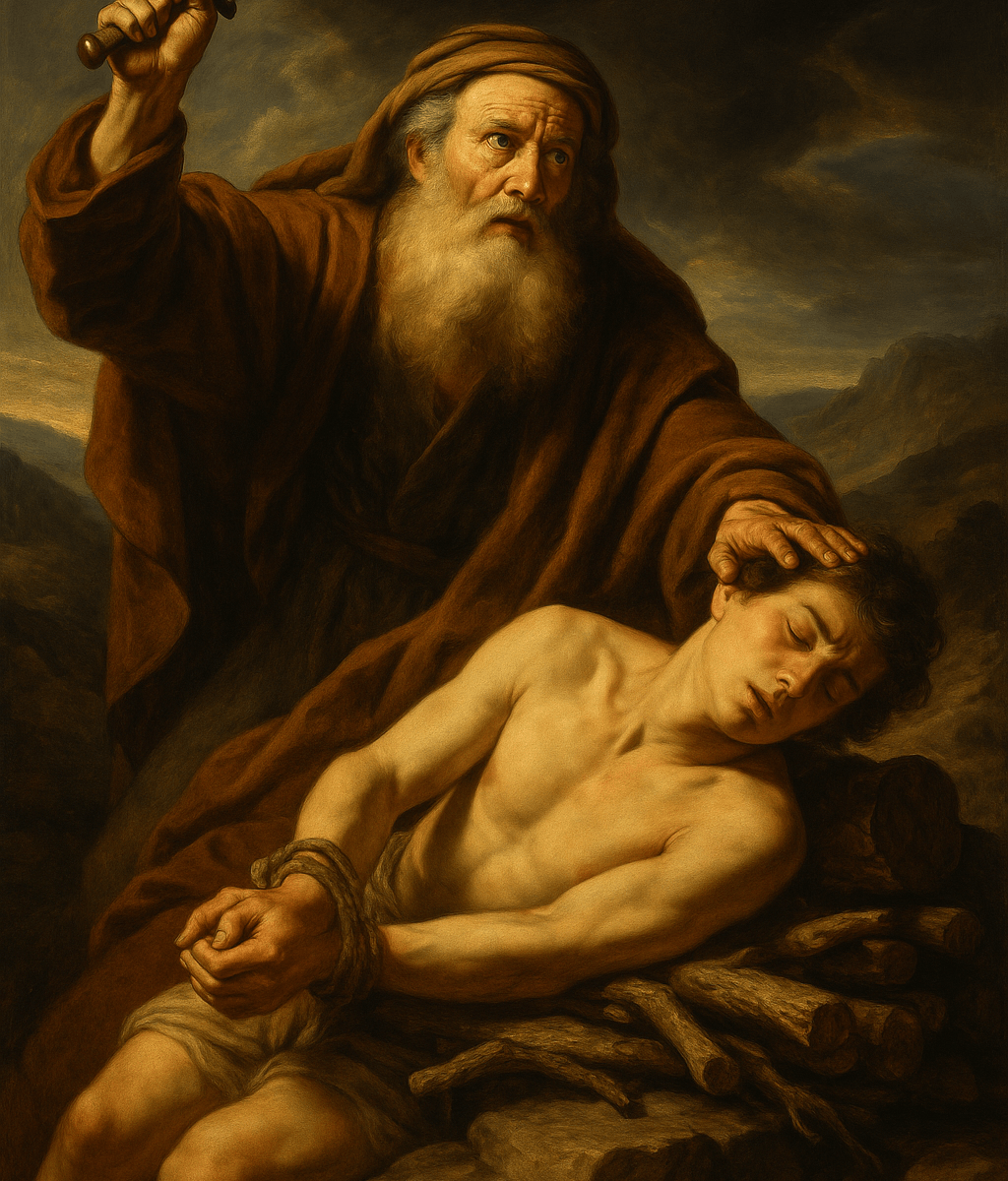
There’s a moment in Abraham’s story that stops us in our tracks—not because it’s neat and inspiring, but because it’s raw and deeply human. God asked Abraham to do the unthinkable: offer up Isaac, the son of promise, as a sacrifice on Mount Moriah. It defied every instinct of a father’s heart and shattered every cultural and moral expectation. And yet, Abraham obeyed. Not because he understood—but because he trusted.
As he and Isaac walked up that mountain together, Isaac asked,
“’Father… where is the lamb for the burnt offering?‘ And Abraham replied, ‘God himself will provide the lamb.’” – Genesis 22:8
That answer wasn’t just for Isaac—it was a declaration of faith to God. Abraham was saying, “I don’t see the way forward, but I believe You’ll make one.”
What’s easy to overlook is that Isaac was old enough to remember this moment. He wasn’t a baby—he was carrying the wood, asking questions, watching his father. And what he witnessed wasn’t just his dad’s willingness to sacrifice—it was his dad’s unwavering trust in God’s provision. That day on the mountain wasn’t just a test of Abraham’s faith. It was a training ground of trust for his son.
Fathers, your children are watching how you respond when life gets hard—when money is tight, when health is threatened, when your plans fall apart. They may not remember every lesson you teach, but they’ll never forget how you leaned into God when things didn’t make sense. When they see you seek the Lord in prayer instead of spiraling in worry, when they hear you say, “Let’s trust God together,” they’re learning that faith isn’t just something we say—it’s something we live.
This is how we pass on legacy. Not simply through instruction, but through example. Solomon says,
“Whoever fears the Lord has a secure fortress, and for their children it will be a refuge.” – Proverbs 14:26
When your life is anchored in the character of God, it becomes a shelter for your children’s faith—even when they go through their own trials.
So when you face the unknown, don’t shield your children from your process. Let them see your dependence on God. Let them walk up the mountain with you and hear your voice declare, “God will provide.” Because the moment you choose trust over control, you’re teaching them something they’ll carry for the rest of their lives: that God can be trusted—even when you can’t see the ram in the thicket yet.
5. Legacy Is Built One Surrendered Day at a Time
Legacy is one of those words we often associate with the end of life—but in truth, it’s being written right now, in the ordinary days and unseen choices of fatherhood. Abraham understood this. As his life neared its final chapter, he had fathered many sons—Isaac, Ishmael, and six more through Keturah. But when it came time to pass on the inheritance, Scripture tells us,
“Abraham gave all he had to Isaac.” – Genesis 25:5
That decision wasn’t rooted in favoritism—it was rooted in faith. Abraham remembered what God had spoken. He didn’t leave his legacy up to sentiment, tradition, or ease. He chose intentionality. He structured his family’s future around what God had promised, ensuring that Isaac—the son of the covenant—would carry the torch forward. It was a quiet but profound act of stewardship.
For fathers today, the call is no different. You are building legacy—not with grand gestures or public accolades, but through daily choices to prioritize what matters most. It’s found in the way you treat your spouse, the way you listen to your children, the way you respond when you’re tired, interrupted, or tested. Legacy is etched into the rhythm of bedtime prayers, gentle correction, weekend breakfasts, and unexpected “I’m proud of you” moments.
Psalm 78 reminds us of the generational weight we carry:
“We will not hide them from their children, but tell to the coming generation the glorious deeds of the Lord… so that they should set their hope in God.”
– Psalm 78:4, 7
What you live today becomes the lens through which your children learn who God is.
You’re not just managing behavior—you’re shaping souls. You’re not raising kids for culture’s applause—you’re preparing them for kingdom purpose. And while the world celebrates instant success, God honors steady surrender.
So start now. Write the note. Speak the blessing. Make the time. Ask God not just for patience in parenting, but for vision—vision to see who your child is becoming, and how you can help point them to the One who holds their future. Because legacy isn’t a someday idea—it’s a today decision, lived out one surrendered day at a time.
Final Thought: Faithful Fathers Leave Eternal Footprints
Abraham didn’t get it all right. He doubted. He feared. He stumbled more than once. But God never defined him by his failures—He remembered him for his faith. As Paul tells us,
“Yet he did not waver through unbelief regarding the promise of God… being fully persuaded that God had power to do what he had promised.” – Romans 4:20–21
That’s what God honors. Not perfection. Not performance. But belief. Trust. Obedience in the midst of uncertainty.
And that’s the heart of fatherhood.
You’re not called to be the hero of your family’s story—you’re called to point your children to the One who is. The Father who is steady when you’re shaken. Faithful when you fall short. Present when you feel alone. The One who never fails, never leaves, and never breaks His promises. Every moment you lead with humility, love with intention, and walk by faith, you’re laying down eternal footprints your children can follow.
So if you’re feeling discouraged today—if the weight of fatherhood feels too heavy, or the road ahead feels unclear—take heart. God doesn’t ask you to carry it alone. He walks with you. He strengthens you. And He takes every imperfect offering of love, every unseen act of obedience, and uses it to build something far greater than you can imagine.
Keep walking, Dad. Even when it’s hard. Keep trusting, even when the outcome isn’t visible. Keep showing up, even when you’re not sure it’s making a difference. Because the legacy you’re shaping isn’t measured by applause or ease—it’s being built in the quiet, faithful steps of everyday surrender. And one day, your children won’t just remember what you taught them. They’ll remember the kind of man you were when no one else was looking. And through your life, they just might learn to trust the Father who never lets go.
This Father’s Day, may you be reminded: you are seen, you are called, and you are being used by God—one surrendered step at a time.

There’s a sacred weight that comes with the realization that you and I are actively building something that will outlast us. Every conversation, every reaction, every decision—intentional or not—is writing a chapter in the legacy we’ll leave behind.
This truth hit me hardest the morning I lost my father.
I was 23 years old. It was a Thursday morning—July 29, 2010. I’ll never forget waking up just before 5:30 AM, lying in bed, heart heavy with anticipation. I had felt it coming for months. When the call came and I heard the pain in my stepmom’s voice, I knew—he was gone.
My dad had battled for years with COPD and emphysema. In and out of hospitals since I was a teenager, I spent a lot of time at his bedside wondering if that visit would be the last. Watching him decline taught me that legacy isn’t just about what you say—it’s about what you model over a lifetime.
My father left me with a legacy full of lessons. Some came from the pain of his absence. Others came from glimpses of his wisdom, patience, and restraint. I’ve spent years learning what to carry forward… and what to leave behind.
His life, with all its flaws and fragments, shaped mine. It’s part of what drives me to be present for my children, to discipline with grace, to mean what I say and follow through. And now as a dad, a husband, a pastor, and a man trying to walk faithfully with Jesus, I find myself asking often:
What am I building?
What will my life echo after I’m gone?
What will I leave for my kids, my church, my community?
Scripture doesn’t leave us in the dark on this. In fact, it gives us powerful examples of legacy lived well. And one of the clearest comes from a man named Noah.
Noah’s Legacy: Building Obedience in a Broken World
Noah’s story is one we usually hear with animals and rainbows. But behind the children’s book version is a man who faced darkness, ridicule, and decades of silence with unwavering trust in God.
Genesis 6 paints the picture: The world had become corrupt—twisted beyond repair. Violence reigned. Evil saturated every corner of society. It was spiritual decay on a global scale.
And in the middle of it, one man stood out.
“Noah was a righteous man, the only blameless person living on earth at the time, and he walked in close fellowship with God.”
– Genesis 6:9 NLT
Think about that. When God looked at the earth, He saw one man walking with Him. One. And yet, that one man was enough for God to rewrite humanity’s future.
Noah’s obedience began long before the rain came. Before the skies turned dark. Before anyone believed. For 120 years he built a boat in a desert, trusting the voice of God over the volume of the crowd.
Imagine the whispers. The mockery. The sideways glances from neighbors. The laughter of those who couldn’t see what he saw.
Still… he built. He stayed faithful. He believed that what God said was coming—even when there was no evidence of it.
That’s what legacy looks like. It’s not flashy. It’s not always applauded. But it’s grounded in something deeper than circumstance—it’s anchored in obedience.
How to Leave a God-Honoring Legacy: 3 Biblical Anchors
Noah’s story gives us a blueprint—a framework for building a life that matters long after we’re gone. And it all hinges on three core commitments:
1. Obedience Over Outcome
Legacy doesn’t begin with applause. It begins with surrender.
Genesis 6:22 tells us,
“So Noah did everything exactly as God had commanded him.”
He didn’t ask for signs. He didn’t wait for the skies to turn. He didn’t delay obedience for convenience. He simply acted.
In today’s world, we’re tempted to base our faithfulness on results. We want a return on investment—preferably with 2-day shipping. But that’s not how God measures obedience.
We want clarity before we commit. We want control before we obey. But legacy is about planting seeds of obedience even when we don’t know when or where the fruit will grow.
Your quiet faithfulness in parenting…
Your unnoticed generosity…
Your prayers when no one else shows up…
That’s where legacy is forged.
Obedience won’t always feel rewarding in the moment. But decades from now, it may be the very thing your family, your church, or your community points back to and says, “That’s where it all started.”
2. Set Apart and Faithful
In a culture obsessed with fitting in, Noah chose to stand out—not for fame, but for faith.
Genesis 6:9 again reminds us:
“He was the only blameless person… and he walked in close fellowship with God.”
Being “set apart” doesn’t mean being self-righteous or weird. It means walking differently because we follow a different King.
Paul echoes this in Romans 12:2:
“Don’t copy the behavior and customs of this world, but let God transform you into a new person by changing the way you think…”
Living set apart might mean leaving the party early. Saying no when everyone else says yes. Refusing to compromise, even if it costs you popularity or position.
Noah’s holiness preserved humanity. And our faithfulness today has ripple effects beyond what we can see. When we walk in integrity, we give our kids, our church, and our neighbors a front-row seat to God’s faithfulness.
Legacy begins when we stop blending in and start walking boldly.
3. Sacrifice for Legacy
Every legacy worth remembering was built on sacrifice.
Hebrews 11:7 puts it beautifully:
“It was by faith that Noah built a large boat to save his family from the flood… By his faith… he received the righteousness that comes by faith.”
Noah gave up 120 years of his life building something no one else believed in. He laid down his comfort, his reputation, and likely his social standing—all to obey the call of God.
And it saved his family.
In a world chasing instant results, sacrifice sounds outdated. But true legacy always costs something. Maybe it’s your time. Maybe it’s your pride. Maybe it’s your comfort. But what you give up today can become someone else’s salvation tomorrow.
Jesus modeled this perfectly.
“There is no greater love than to lay down one’s life for one’s friends.”
– John 15:13
That’s not just a verse to memorize—it’s a life to live.
So… What Are You Building?
One day, someone will remember you. They’ll sit across a table or stand at a memorial or read a story about who you were.
And they’ll ask: What did this person leave behind?
Noah’s legacy wasn’t about the boat. It was about the life he lived while the world fell apart. He chose obedience. He walked with God. He sacrificed for others. And through his faithfulness, the future was preserved.
You and I are given the same opportunity today.
Not to be famous.
Not to be perfect.
But to be faithful.
Legacy doesn’t start someday.
It starts today.
In the decisions we make.
The words we choose.
The time we give.
The faith we live.
So let me ask you:
What are you building?
Who will be blessed because you lived beyond yourself?
If you want to dig deeper into this message and hear the full sermon that inspired this post, I encourage you to watch it here:
👉 Watch the full message on YouTube
Let’s be a people who don’t just survive the flood…
Let’s build legacies that endure long after the storm.
Because what you live… is what you leave.

There are moments in life when God interrupts our plans with a simple but weighty word: Go. It’s not just a call to change our location, but to realign our loyalty—to loosen our grip on what’s familiar and walk by faith into the unknown. These moments often come without full explanations or clear outcomes, but they come with a choice: stay in what’s safe, or step into what’s sacred.
This was the crossroads where Abraham stood. God’s call demanded more than physical movement; it required a radical shift in trust, identity, and direction. Leaving behind his homeland meant releasing comfort, security, and legacy. But in doing so, Abraham laid hold of something far greater: a life shaped by divine promise rather than human predictability.
When God told Abraham to go, He wasn’t just leading him to a new location. He was calling him to forsake a deeply rooted way of life—to walk away from comfort, familiarity, and culture in pursuit of a promise that had no visible guarantee.
And still, Abraham went.
But to fully appreciate the weight of Abraham’s obedience, we have to understand what he was leaving behind.
A World of Comfort and Idolatry
Ur of the Chaldeans wasn’t a primitive outpost on the edge of civilization—it was a marvel of the ancient world. Situated along the Euphrates River in what is now southern Iraq, Ur was a beacon of progress, prosperity, and religious devotion. Its broad streets were paved, its homes spacious and well-constructed, and its public buildings meticulously planned. It was, by all worldly standards, an enviable place to live.
At the heart of the city stood a massive ziggurat—a man-made mountain of bricks ascending toward the heavens, crowned by a temple devoted to Nanna, the moon god. This structure wasn’t just architectural; it was spiritual. It embodied the soul of the city: a people consumed with ritual, astrology, and the pursuit of divine favor through false gods. The city’s religious life was woven into its governance, economy, and culture. Priests held tremendous sway, and temples functioned not only as places of worship but also as centers of economic power and social control.
This was Abraham’s context. He wasn’t called out of wilderness or obscurity—he was called out of one of the most advanced and influential cultures of his time. It was a world steeped in wealth and complexity, but also in deep spiritual darkness. Its gods were many. Its rituals were elaborate. Its promises were false. And yet, it was comfortable. Predictable. Secure.
And still, Abraham walked away.
“And Joshua said to all the people, ‘Thus says the LORD, the God of Israel, “Long ago, your fathers lived beyond the Euphrates… and they served other gods. Then I took your father Abraham…”’”
– Joshua 24:2–3a (ESV)
God’s call didn’t just break Abraham’s routine—it broke his ties to a society built on idolatry and self-reliance. It was a summons to turn from the familiar to the faithful, from the seen to the unseen. And that brings us to the deeper significance of his response.
The Weight of the Call
God’s call to Abraham was not a gentle nudge or an open-ended suggestion—it was a decisive break from the life he knew. It came with no roadmap, no timeline, no visible guarantee of what lay ahead. Yet it required everything: his land, his lineage, and his legacy. God was not just asking Abraham to move from one location to another; He was inviting him into a covenant that would redefine his identity and reshape the future of the world.
“Go from your country and your kindred and your father’s house to the land that I will show you.”
– Genesis 12:1 (ESV)
This divine instruction cut across every thread of cultural and personal security. In Abraham’s world, everything—inheritance, identity, security—was tied to family and place. To leave his father’s house was to surrender his inheritance. To leave his people was to forsake the safety of communal belonging. To leave his country was to abandon every worldly source of provision and protection. It was, in human terms, irrational.
But Abraham obeyed.
“By faith Abraham obeyed when he was called to go out to a place… And he went out, not knowing where he was going.”
– Hebrews 11:8 (ESV)
This is the defining mark of biblical faith—not certainty about the path ahead, but confidence in the One who calls. Abraham didn’t have the details, but he trusted the character of God. He didn’t demand clarity—he chose obedience.
And that’s where many of us wrestle.
God’s call in our own lives may not involve physical relocation, but it almost always includes spiritual movement. He calls us to let go of things that feel essential: habits that comfort us, relationships that define us, careers that secure us, or ideologies that shape us. When God calls us to follow Him more deeply, He often invites us to leave something we once thought we couldn’t live without.
The question is never just about where we are going—it’s about what we’re willing to leave behind.
Abraham teaches us that real faith begins where comfort ends. He teaches us that the blessing is not in clinging to what we know, but in trusting the God who knows where He’s leading us.
And as we’ll see next, the journey of faith isn’t just about going—it’s about what we’re truly seeking.
The Modern Parallel
Abraham’s story may feel ancient, but his obedience still speaks into our present struggles. We may not be called to leave a physical homeland, but the essence of God’s invitation remains the same: Will you trust Me enough to follow Me into the unknown?
Today, the “Ur” we’re called to leave might be a lifestyle of comfort, a toxic relationship, a secure but spiritually stagnant job, or even a mindset rooted in fear and control. It’s whatever we’ve built our lives around that God is asking us to release—not because He wants to take from us, but because He wants to lead us to something better.
For some, God’s call may involve a significant transition—moving cities, changing careers, entering ministry, or stepping away from a familiar environment for the sake of the gospel. For others, it may be a more internal journey—leaving behind bitterness, pride, compromise, or control. Whether external or internal, the principle remains: God calls us not merely to move but to trust.
And trust always costs something.
“Whoever finds his life will lose it, and whoever loses his life for my sake will find it.”
– Matthew 10:39 (ESV)
Following Jesus means surrendering the illusion that we’re in charge. It means holding our plans with open hands and saying, “Wherever You lead, Lord, I will follow.” That’s not a passive posture—it’s an active declaration of faith. Like Abraham, we’re not just stepping away from something—we’re stepping toward Someone.
The journey of faith isn’t always mapped out, but it is always meaningful. It shapes us, tests us, grows us. And every step we take in obedience becomes part of a larger story—one that God is writing for His glory and our good.
So where is God calling you to go? What is He asking you to release? What step of faith is He putting in front of you right now?
You may not have all the answers. You may not know where the road leads. But like Abraham, you can trust the One who does.
Tents Over Towers
When Abraham left Ur, he exchanged a skyline of stone towers for the simplicity of a tent. In Ur, the ziggurat dedicated to the moon god Nanna rose like a mountain above the city—a permanent structure built to last, symbolizing power, permanence, and self-made significance. But Abraham left all of that behind to follow a promise that led him into a wilderness life. There were no palaces or temples waiting for him in Canaan. Only tents. Only trust.
This contrast isn’t just geographical—it’s theological.
“By faith he went to live in the land of promise, as in a foreign land, living in tents with Isaac and Jacob… For he was looking forward to the city that has foundations, whose designer and builder is God.”
– Hebrews 11:9–10 (ESV)
Abraham’s journey was not about establishing his own kingdom—it was about waiting for God’s. He could have stayed in Ur and built something lasting by human standards. Instead, he lived as a sojourner in the land of promise, trusting that what God was building was far better than anything he could build for himself.
Tents, by nature, are temporary. They speak of movement, dependence, and a willingness to be led. Towers, on the other hand, speak of permanence, control, and a desire to make a name for oneself—just like the Tower of Babel a few chapters earlier in Genesis. The choice between tents and towers is a choice between self-reliance and surrender, between the seen and the unseen.
Abraham chose tents.
Not because they were comfortable, but because he was confident in a greater city—a future rooted not in brick and mortar, but in God’s faithfulness. He wasn’t living for the here and now. He was living for what was yet to come.
We often find ourselves facing that same choice. Will we build our own version of security and success, or will we follow God into the unknown, even if it means dwelling in a “tent” for a while? Will we stake our lives on temporary comfort, or will we trust in eternal reward?
Faith is willing to live lightly in the world because it believes deeply in the world to come.
Where Is God Calling You?
Abraham’s story is not just a narrative from ancient history—it’s a mirror. His call is a pattern for every believer who dares to say yes to God’s voice. Though the landscapes may look different, the essence of the journey remains the same: leave what is known, trust what is promised, and follow the One who leads.
God is still calling His people out of “Ur”—out of the familiar, the comfortable, the culturally approved, and the spiritually stagnant. He is still asking us to let go of our towers and pitch our tents in obedience. Not because He wants to take from us, but because He has something greater in store. His promises often lie on the other side of surrender.
“And he believed the LORD, and he counted it to him as righteousness.”
– Genesis 15:6 (ESV)
That’s where legacy begins. Not in staying, but in stepping out. Not in building our own empires, but in walking with God toward a future only He can see.
So what about you?
Where is God asking you to step out in faith? What “tower” are you being asked to leave behind? What “tent” is He asking you to pitch in dependence on Him?
You may not know all the details. You may feel like the next step is foggy or frightening. But you can trust this: the God who called Abraham is the same God who calls you. He is faithful. He is good. And He will be with you every step of the way.
Don’t wait for certainty. Walk in obedience. And like Abraham, you’ll find that the journey of faith becomes the very place where God writes His promise into your life.

Prologue: Before You Dive In
Let’s be honest—there are a thousand things competing for your attention right now.
You could scroll past this post and move on with your day. You could check out a highlight reel, a quick quote, or a 60-second reel and feel like you got your “spiritual fix.” But something deeper brought you here.
Maybe you’re tired of the cycle, asking why you keep returning to what breaks you, or finally ready to confront a sin pattern that’s held you captive too long.
Whatever the reason, this blog series is for you.
This isn’t a quick devotional or motivational pep talk. It’s a raw, biblical, Spirit-led look into the reality of our brokenness—and the hope of transformation.
You’ll be challenged to:
- See sin the way God sees it.
- Identify why you keep returning to what you should be running from.
- Discover the freedom Jesus offers, not just from sin’s punishment, but from sin’s power.
You’ll also be reminded that you’re not alone. That you’re not crazy. That grace is real. And that God is far more committed to your freedom than you are.
So thank you for investing your time here.
Thank you for caring enough about your spiritual growth to go deeper.
And thank you for being open to conviction, comfort, and change.
It won’t always be easy to read—but I promise it will be worth it.
Let’s begin.
Why We Return: The Tug-of-War Between Old Sin and New Life
Like a dog that returns to his vomit is a fool who repeats his folly.
– Proverbs 26:11
There’s a certain kind of verse that doesn’t just make us pause—it makes us flinch. Proverbs 26:11 is one of those verses.
It’s graphic. It’s uncomfortable. And it’s also true.
Most of us don’t need a Hebrew degree to understand what the writer is saying: when we go back to the very sin that once poisoned us, we’re playing the fool. But that’s what makes this proverb so painfully relatable. Because no matter how much we love the Lord, most of us have still found ourselves going back to behaviors, habits, or attitudes we swore we left behind.
So why do we return? And more importantly—how do we stop?
Let’s unpack the biblical and cultural reasons we struggle, examine the personal fallout, and walk through three practical, Spirit-filled steps toward lasting transformation.
The Internal Struggle: A Biblical Reality
The Bible never pretends that following Jesus is easy. One of the most exhausting aspects of the Christian life is the inner war we fight daily—a battle between who we were and who we are becoming in Christ. We don’t just wrestle with temptation out there in the world; we battle with the brokenness in here—in our own minds, emotions, and flesh.
Maybe you’ve promised yourself a thousand times to quit a particular habit—only to find the same temptation catching you unprepared. You’re not alone in this. Even Paul wrestled with the tension between desire and action with painful honesty:
“I do not understand what I do. For what I want to do I do not do, but what I hate I do.” – Romans 7:15
This isn’t a new believer talking. This is a seasoned apostle—someone who had seen Jesus, planted churches, and endured persecution for the gospel. And yet even as a redeemed, Spirit-filled man, Paul was honest about his struggle with sin. This isn’t a license to sin. It’s a recognition of the battle we all face.
And we feel it, don’t we?
The flesh remembers what it used to enjoy. Even when our spirit is made new (2 Corinthians 5:17), our minds and bodies still carry memories, attachments, and patterns. Scripture refers to this tension often (Galatians 5:16–17), calling believers to a life of intentional transformation.
When we’re born again, we receive a new heart (Ezekiel 36:26) and a new spirit. But we still live in an old body and a fallen world. The flesh doesn’t get saved—it gets crucified, daily (Luke 9:23). And every morning, it tries to crawl back off the cross.
“For the flesh desires what is contrary to the Spirit, and the Spirit what is contrary to the flesh. They are in conflict with each other…”
– Galatians 5:17
This is why returning to sin feels so natural—it’s the muscle memory of our old man. It’s the residue of a former life still being washed away in the sanctifying work of the Spirit.
But while the struggle is real, the power to overcome is even more real.
Paul goes on to ask, “Who will rescue me from this body that is subject to death?” And he answers his own question with a declaration we all need to cling to:
“Thanks be to God, who delivers me through Jesus Christ our Lord!”
– Romans 7:24-25
The Christian life isn’t the absence of struggle. It’s the presence of Christ in the midst of it.
And if you’re in the fight—if you feel that tension, that frustration, that battle—you’re not failing. You’re fighting. And fighters fall, but they don’t stay down. They get up again by grace.
“Though the righteous fall seven times, they rise again.”
– Proverbs 24:16
So don’t lose heart. The struggle is proof that the Spirit is working. And He who began a good work in you will carry it on to completion (Philippians 1:6).
The Cultural Current: The World’s Invitation to Return
The battle within is real—but it’s not the only one we face. While our flesh whispers temptation from the inside, the world shouts it from the outside.
And often, it doesn’t sound evil. It sounds enticing, comforting, even virtuous.
We live in a culture that doesn’t just permit sin—it celebrates it. Consider how social media often glorifies instant gratification or how popular culture elevates self-expression above obedience to God’s commands.
Rebellion is repackaged as freedom. Self-gratification is sold as self-care. Phrases like “Follow your heart,” “Live your truth,” and “You do you” may sound empowering, but at their core, they promote one dangerous idea: you are your own god.
But the prophet Jeremiah pulls the mask off this lie:
“The heart is deceitful above all things and beyond cure. Who can understand it?”
– Jeremiah 17:9
That’s a sobering truth in a world where feelings have become moral law and personal preference is elevated above Scripture. When culture becomes our compass, we will always drift toward what is easy—not what is holy.
Paul makes this clear in Ephesians 2, reminding us that before Christ, we were:
“…following the course of this world, following the prince of the power of the air… carrying out the desires of the body and the mind, and were by nature children of wrath…” – Ephesians 2:2–3
In other words, we were born swimming downstream, carried along by a current of sin, selfishness, and spiritual blindness. And unless we intentionally fight against it—by the power of the Holy Spirit—we will be swept right back into it.
This is why returning to sin often feels so effortless. It’s the gravitational pull of a world that hates righteousness and idolizes comfort, pleasure, and autonomy. And make no mistake—the culture around us will never encourage a return to holiness. It will always call us back to Egypt, back to bondage, back to the very things Christ died to set us free from.
So if you’re feeling that pull—toward compromise, toward comfort, toward control—you’re not imagining it. The current is real. But so is your anchor.
“Do not be conformed to this world, but be transformed by the renewing of your mind…”
– Romans 12:2
God has given us the power, through His Spirit and His Word, to resist the current and walk in truth—even when it costs us comfort, popularity, or ease.
But we must count the cost. Because when we return to sin, the damage doesn’t stay private. It affects more than just us.
It spills over—into our families, our friendships, our calling. That’s where we must go next.
The Consequence of Returning: More Than Just Personal
When we fall back into sin, it often feels like a private failure—something between us and God. But sin is never self-contained. Like a stone tossed into water, the effects ripple outward—touching lives, relationships, and legacies we may never even realize.
Our culture preaches a hyper-individualized faith: “My choices, my truth, my journey.” But Scripture presents a different picture—one where our choices are deeply communal. What we return to doesn’t just affect us; it touches everyone connected to us.
It affects our families. A husband returning to pornography doesn’t just wound his own soul—he damages the trust and intimacy of his marriage. A mother returning to bitterness doesn’t just internalize pain—she models unforgiveness for her children. Our kids notice when our lives don’t match our lips. They watch what we return to.
It affects our communities. When believers live in cycles of hidden sin, our testimony becomes confusing. We proclaim grace but live in guilt. We preach freedom but return to chains. Jesus called us “the light of the world” (Matthew 5:14), but sin dims that light until it flickers and fades in the eyes of those around us.
And yes, it affects our relationship with God. While God’s love remains unchanging, returning to sin damages our intimacy with Him, dulling our spiritual sensitivity and joy. David understood this well after his moral failure. In his gut-wrenching prayer of repentance, he pleaded:
“Restore to me the joy of your salvation and grant me a willing spirit, to sustain me.”
– Psalm 51:12
He didn’t ask God to restore his salvation—because God hadn’t taken it. He asked for the restoration of joy, of willingness, of that inner flame that once burned bright but had grown cold under the weight of sin.
When we return to sin, we don’t just lose purity—we lose joy. We lose peace, clarity, and the sense of purpose God designed us to walk in. That’s the real consequence. Not just guilt—but distance. Not just shame—but spiritual deafness. Sin clouds our clarity and dulls our discernment until we don’t even realize how far we’ve drifted.
But—praise God—it doesn’t end there.
We serve a Redeemer who doesn’t leave prodigals in the pigpen. We serve a Savior who runs to meet us on the road, robe and ring in hand. No matter how many times we’ve returned to sin, He invites us to return to Him.
“Return to me, and I will return to you,” says the Lord Almighty.
– Malachi 3:7
And that’s where we go next: not just identifying the struggle, not just understanding the consequences, but stepping into the solution—real, Spirit-empowered change that leads to lasting transformation.
Three Steps to Freedom: Walking Forward Without Turning Back
The weight of returning to sin is heavy—and it should be. Not to crush us under shame, but to awaken us to the seriousness of what’s at stake. But conviction is never meant to leave us paralyzed. In Christ, conviction is always an invitation—not to despair, but to change.
God never exposes the patterns of our past to shame us, but to free us. His call is not just to turn away from sin—but to turn toward something better. A life of wholeness. A walk of intimacy. A purpose anchored in righteousness.
So how do we begin to break the cycle? How do we stop living like the dog that returns to its vomit (Proverbs 26:11) and start walking like sons and daughters of the King?
Here are three Spirit-led steps to help us move from repeated relapse to lasting renewal:
1. Name the Sin and Nail It to the Cross
Don’t excuse, downplay, or rename sin.
Call it what it is—sin.
Transformation always begins with truth.
Confession is the first crack of light into a dark heart (1 John 1:9). If we want to break free from the cycle of returning to sin, we must first stop justifying, renaming, or minimizing it. We cannot overcome what we still excuse. And we cannot heal from what we continue to hide.
God calls His people to walk in the light—not to shame us, but to free us. As John says:
“But if we walk in the light, as he is in the light, we have fellowship with one another, and the blood of Jesus his Son cleanses us from all sin.”
– 1 John 1:7
That journey into the light begins with naming sin for what it is—not merely a struggle or a flaw, but rebellion against a holy God. Scripture doesn’t soften the language of sin, and neither should we. Proverbs speaks with clarity and grace:
“Whoever conceals his transgressions will not prosper, but he who confesses and forsakes them will obtain mercy.”
– Proverbs 28:13
That word “forsakes” is critical. Repentance is more than regret—it is a Spirit-empowered change of mind that leads to a change in direction. It is choosing to agree with God about the gravity of our sin and turning away from it with the help of His Spirit.
This kind of repentance begins with raw, honest prayer. Like David in Psalm 51, we must come to God with hearts that are broken over our sin—not merely afraid of consequences, but genuinely grieved by how we’ve grieved the heart of God. David declares:
“The sacrifices of God are a broken spirit; a broken and contrite heart, O God, you will not despise.”
– Psalm 51:17
Sometimes that confession also needs to happen with others. James calls us to a deeper level of accountability:
“Therefore, confess your sins to one another and pray for one another, that you may be healed.”
– James 5:16
God often uses godly community to bring the healing we’ve been too afraid to pursue alone. We weren’t meant to fight sin in isolation. Repentance deepens when we invite others into the battle with us.
Repentance may also require radical, practical changes. Jesus made this point in no uncertain terms during His Sermon on the Mount:
“And if your right hand causes you to sin, cut it off and throw it away. For it is better that you lose one of your members than that your whole body go into hell.”
– Matthew 5:30
The message is clear: whatever feeds our sin must be removed, even if it costs us comfort, convenience, or control. Whether it’s deleting an app, walking away from a toxic relationship, or restructuring our habits, these are not extreme actions—they’re faithful ones.
Repentance is not a one-time event but a daily posture. It’s the humble acknowledgment that we are not the masters of our own lives, and that sin is never a harmless detour—it’s a threat to our joy, peace, and closeness with God.
If the goal is freedom, then repentance is the first step toward it. And thanks be to God—He doesn’t just call us to repent. He meets us there with mercy, restoration, and the power to walk in newness of life.
2. Renew Your Mind: Replace the Lie with the Truth
If repentance is the starting point of freedom, then renewing the mind is the path we walk daily to stay there.
Sin always begins with a lie. It whispers falsehoods about God—“He won’t really help you,” or “He’s holding out on you.” It distorts your identity—“You’ll never change,” “You’re already too far gone.” And it sugarcoats its own nature—“This will make you feel better,” or “No one’s getting hurt.”
That’s why Scripture places such high importance on the mind. Paul commands:
“Do not be conformed to this world, but be transformed by the renewal of your mind, that by testing you may discern what is the will of God, what is good and acceptable and perfect.”
– Romans 12:2
Notice Paul doesn’t say “try harder” or “just feel differently.” He calls for transformation, and it happens by the renewal of your mind—a reshaping of your thoughts, desires, and beliefs to align with the truth of God’s Word.
This isn’t a passive process. We are called to actively engage in filtering our thoughts and replacing the world’s narrative with God’s. That’s how Jesus responded to temptation in the wilderness (Matthew 4:1–11). Each time Satan twisted truth to appeal to fleshly desires, Jesus answered decisively with Scripture: “It is written…”
That’s our model. The Word of God is both our defense and our weapon (Ephesians 6:17). So when the enemy whispers that you’re too weak to resist, you answer with Paul’s instructions:
“No temptation has overtaken you that is not common to man. God is faithful, and he will not let you be tempted beyond your ability, but with the temptation he will also provide the way of escape, that you may be able to endure it.”
– 1 Corinthians 10:13
When you feel like you’ll never be free, cling to Paul’s words to the church in Philippi:
“And I am sure of this, that he who began a good work in you will bring it to completion at the day of Jesus Christ.”
– Philippians 1:6
And when guilt tells you God has given up on you, declare what Romans 8:1 says:
“There is therefore now no condemnation for those who are in Christ Jesus.”
– Romans 8:1
Renewing your mind is not a one-time reset—it’s a daily discipline. It may mean starting your day in the Word before the world gets a voice. It may mean writing verses on sticky notes or setting reminders on your phone. It might look like memorizing key Scriptures and declaring them aloud in moments of weakness.
And it’s not just about stopping sinful thoughts—it’s about building a new internal reality rooted in truth. As Paul also says:
“Set your minds on things that are above, not on things that are on earth.”
– Colossians 3:2
Because what occupies your mind will eventually steer your life.
The longer we renew our minds with God’s Word, the more clearly we see sin for what it really is: not freedom, but bondage; not joy, but emptiness; not harmless, but destructive. And the more we begin to love what God loves—we hate what He hates.
3. Walk by the Spirit: Depend Daily on God’s Power
Repentance and mind renewal are essential—but without the power of the Holy Spirit, even our best intentions will falter. If we try to fight sin in our own strength, we’ll quickly find ourselves back in the cycle we long to escape.
That’s why Paul writes:
“But I say, walk by the Spirit, and you will not gratify the desires of the flesh.”
– Galatians 5:16
This isn’t a mystical idea—it’s immensely practical. Walking by the Spirit means living in daily dependence on the presence, guidance, and strength of God, trusting Him to produce in us what we could never manufacture on our own.
The Christian life isn’t just difficult—it’s impossible without the Spirit. Jesus Himself told His disciples:
“Apart from me you can do nothing.”
– John 15:5
And yet, this same Jesus has given us His Spirit—the same power that raised Him from the dead now lives in us (Romans 8:11). That’s not poetic language. That’s reality for the believer.
Walking by the Spirit begins with surrender, not striving. Each day, we wake up and invite the Spirit to lead. We pray, “Lord, I can’t do this without You. Strengthen me. Guard my heart. Keep me close.” And we yield to His promptings, especially in moments of temptation.
Paul describes what this looks like in Galatians:
“And those who belong to Christ Jesus have crucified the flesh with its passions and desires. If we live by the Spirit, let us also keep in step with the Spirit.”
– Galatians 5:24-25
That phrase “keep in step” speaks to intentional alignment—matching our pace, our priorities, and our posture with His. It’s a relational rhythm, not a religious checklist.
Walking by the Spirit also means staying connected to the means of grace God has provided: Scripture, prayer, worship, fellowship, and accountability. These aren’t just spiritual habits—they are lifelines that keep us rooted when temptation rises. Sin grows strongest in isolation, but the Spirit moves powerfully in community.
Sometimes, the Spirit will prompt us to flee. Like Joseph with Potiphar’s wife (Genesis 39:12), there are moments when the most Spirit-led thing we can do is run. Other times, He will prompt us to stand firm and declare truth. In both cases, the victory is not ours—it’s His.
And when we do fall—which we still will at times—the Spirit does not condemn us. He convicts us to return, reminds us of grace, and empowers us to get back up. As Paul reminds us again:
“There is therefore now no condemnation for those who are in Christ Jesus.”
– Romans 8:1
Walking by the Spirit is how we stop simply trying to manage our sin and start bearing fruit that glorifies God. In Galatians Paul describes the result:
“But the fruit of the Spirit is love, joy, peace, patience, kindness, goodness, faithfulness, gentleness, self-control…”
– Galatians 5:22-23
When the Spirit rules our hearts, these qualities begin to replace the cravings that once ruled our flesh.
This is not about behavior modification—it’s about transformation. It’s about trading self-reliance for surrender, and empty striving for empowered obedience.
Final Word: You’re Not a Dog. You’re a Child of God.
We’ve walked through the battle—the pull to return, the weight of shame, the slow erosion of compromise. And we’ve named it for what it is: a lie. Now comes the truth.
The enemy wants you to believe that going back is inevitable. That you’re too weak, too messed up, too far gone. That the sin you keep returning to is just “who you are.” But that is not who you are.
In Christ, you are not a slave. You are not a fool. You are not a dog.
You are a child of God.
You are a new creation. The old has gone. The new has come (2 Corinthians 5:17). Your identity is not defined by your past or your pattern, but by the One who paid for your freedom with His blood.
You don’t have to return to the vomit. You don’t have to live in the shadows. You don’t have to stay stuck in cycles that Jesus already broke.
So rise.
Repent.
Renew your mind with truth.
And walk forward—not in fear, not in defeat, but in the freedom Christ secured for you.
“It is for freedom that Christ has set us free.”
—Galatians 5:1
Run to the Father. Stay near to the Vine. And remember this: The same Spirit that raised Jesus from the dead lives in you.
That means your cycle can be broken. Your story can be rewritten. And your legacy can be changed.
Don’t return. Remain in Christ.
And when you do, you’ll find that the freedom you long for isn’t just possible—it’s already been paid for. Now walk in it.
You’re not a dog. You’re a child of God.
One of the boldest moments we find in the Bible is Elijah’s confrontation on Mount Carmel. It’s more than just a story of fire from heaven; it’s a vivid illustration of Elijah’s unwavering faith in the face of overwhelming opposition. In 1st Kings 18, we find the Prophet Elijah taking a stand — not just against 450 false prophets of Baal, but against the entire tide of a culture that had turned its back on God. In a time of compromise, Elijah was courageous.
“Elijah came near to all the people and said, ‘How long will you go limping between two different opinions? If the Lord is God, follow him; but if Baal, then follow him.’ And the people did not answer him a word.”
—1 Kings 18:21 (ESV)
Elijah, standing alone, calls out 450 prophets of Baal to a divine duel. The terms are simple: whichever god answers with fire is the true God. The prophets of Baal chant, dance, cut themselves—desperate to get their false god to respond. Nothing.
Then comes Elijah’s turn. With boldness, he rebuilds the Lord’s altar, soaks the sacrifice with water three times, and prays a simple prayer. Fire falls. The people fall to the ground in awe. The Lord is God.
It’s an epic moment of victory. But it’s more than that—it’s a model for us.
His boldness wasn’t rooted in self-confidence but in a deep trust in the Lord.
In a time of idolatry, he was immovable. In a time of fear, he stood with faith.
The question we have to wrestle with is: How do we do the same today? How can we, as Christians, stand firm in our faith amidst a culture that is increasingly anti-Jesus?
Elijah’s Challenge: A Culture at War with Truth
1st Kings 18: 21, that one verse captures the spiritual climate of Elijah’s day: indecision, compromise, and silence. Elijah didn’t live in a vacuum, he stood against a culture steeped in idolatry. Israel had fallen under the leadership of Ahab and Jezebel, who actively promoted Baal worship and silenced the prophets of Yahweh (1 Kings 18:4). The people were caught in the middle—too afraid to oppose the culture, but too convicted to fully abandon God.
Sound familiar?
Today, we live in a culture that often exalts self over sacrifice, tolerance over truth, and pleasure over purpose. Many people are “limping between two opinions.” The pressure to conform is subtle but strong. Truth is often redefined, and biblical conviction is labeled as judgmental or outdated. It’s easy to stay quiet to keep the peace. But silence can be a form of surrender.
Elijah didn’t stay quiet. He didn’t rage or retaliate either. He stood firm—anchored not in arrogance, but in faith. His confidence wasn’t in his charisma, his strategy, or even the outcome. It was in the God who answers by fire. Like Elijah, we are called to take a stand. Not in arrogance or self-righteousness, but in truth, love, and confidence in the living God.
How Do We Stand Firm Today?
Let’s walk through four biblical principles we learn from Elijah’s story, and how they apply to living faithfully in today’s culture.
1. Be Rooted in Truth, Not Trends
Elijah wasn’t swayed by public opinion or cultural momentum. He wasn’t led by trends. He stood on what he knew to be true: the Lord is God. While the masses worshiped Baal, Elijah knew the Lord alone was God. That confidence came from knowing the Word and character of God.
“The grass withers, the flower fades, but the word of our God will stand forever.”
—Isaiah 40:8 (ESV)
The world is full of noise, opinions, and shifting values, and truth is often seen as relative. Anchoring ourselves in Scripture is crucial. It’s not about winning debates but about knowing the foundation upon which we stand. If we don’t know the Word, we’ll be swayed by the world. Our convictions shouldn’t come from opinion polls, social media feeds, or personal feelings—but from Scripture.
We don’t need louder Christians—we need rooted ones.
“Sanctify them in the truth; your word is truth.”
—John 17:17 (ESV)
Spend time in Scripture. Meditate on it. Memorize it. Teach it to your children. Let it form your worldview. Let it shape your convictions. Know what you believe and why. When culture pushes, you won’t fall if you’re firmly planted.
2. Stand Boldly, Speak Graciously
Elijah didn’t hesitate to call out sin, but he didn’t mock or hate the people. His boldness wasn’t arrogance—it was obedience. He confronted falsehood for the sake of truth, not to win arguments.
“And Elijah said to the prophets of Baal, ‘Choose for yourselves one bull and prepare it first, for you are many, and call upon the name of your god, but put no fire to it.’”
—1 Kings 18:25 (ESV)
The world doesn’t need more anger from the Church—it needs more authenticity. We can hold biblical convictions without compromising compassion. Jesus was full of both grace and truth (John 1:14). Like Elijah, we’re called to be bold in conviction and gentle in spirit.
“Let your speech always be gracious, seasoned with salt, so that you may know how you ought to answer each person.”
—Colossians 4:6 (ESV)
Don’t be afraid to speak truth—but always check your tone. Elijah didn’t mince words, but his aim was falsehood, not people. Boldness without love becomes noise; love without truth becomes compromise. Balancing both is essential for authentic Christian witness.
Speak truth in love—not to win arguments, but to win hearts.
Boldness with grace isn’t weakness—it’s the way of Jesus.
3. Be the Altar, Not the Fire
Elijah didn’t light the fire—God did. Elijah prepared the altar, prayed, and trusted. Then he stepped back.
Perhaps the most powerful moment on Mount Carmel is when Elijah rebuilds the altar of the Lord, drenches it with water, and simply prays:
“Answer me, O Lord, answer me, that this people may know that you, O Lord, are God, and that you have turned their hearts back.”
—1 Kings 18:37 (ESV)
Often times, we want to be the fire instead of the altar. But the altar is the place of sacrifice, surrender, and dependence. That’s where God shows up. In trying to be the fire—arguing people into belief, striving to change hearts—we get in the way of God doing what He does best. Transformation isn’t our job. Obedience is. We are called to build the altar of our lives—lives marked by holiness, surrender, and worship—and let God show up.
“Not by might, nor by power, but by my Spirit, says the Lord of hosts.”
—Zechariah 4:6 (ESV)
We aren’t responsible for the results. Our job is obedience. Share the gospel. Stand for what’s right. Love your neighbor. But let God be God. He’s the one who transforms hearts and makes the impossible possible. Live faithfully and leave the results to God. Trust Him with the hearts of your children, your coworkers, your friends. You don’t need to manipulate. You just need to prepare the altar.
4. Expect Opposition, but Don’t Retreat
After Mount Carmel, Elijah faced intense backlash. Jezebel wanted him dead. After his victory, Elijah fled in fear. Even the most faithful can feel overwhelmed. Standing firm in your faith may cost you—friendships, comfort, reputation. It might mean standing alone at times.
“Indeed, all who desire to live a godly life in Christ Jesus will be persecuted.”
—2 Timothy 3:12 (ESV)
But you’re never truly alone. The same God who stood with Elijah stands with you. God sees, God honors, and God sustains those who stand for Him.
We’re not called to be popular. We’re called to be faithful.
After the fire fell and the people declared, “The Lord, he is God!” (1 Kings 18:39), you would expect a happily-ever-after. But Jezebel still wanted Elijah dead. Bold faith invites resistance.
Jesus told us to expect this:
“If the world hates you, know that it has hated me before it hated you.”
—John 15:18 (ESV)
Don’t be discouraged when standing for Christ feels lonely. He never promised ease—He promised His presence. Standing firm doesn’t mean we won’t face challenges. It means we trust God amidst them, knowing He’s our strength.
Final Thoughts: Will You Be The One?
Elijah’s story isn’t just about a prophet’s victory; it’s about God’s power working through a willing vessel. Elijah wasn’t alone as he stood on that mountain.
“Do not fear, for I am with you; be not dismayed, for I am your God; I will strengthen you, I will help you, I will uphold you with my righteous right hand.”
—Isaiah 41:10 (ESV)
In your workplace, your school, your family, your church—even if you’re the only one standing—you’re never standing alone. In a world that’s increasingly hostile to biblical truth, we must remember: our confidence is not in cultural acceptance but in Christ’s approval. When you live with a clear conscience, anchored in truth and fueled by love, you will be a light—just like Elijah on that mountain.
The world is watching—not for perfection, but for authenticity. Let your life be the altar. Let your faith be the fire that draws others to the truth. Let your love be the invitation. You don’t need to shout to be heard. You just need to be faithful.
And when culture says “stay silent,” echo Elijah:
“If the Lord is God, follow Him.”

Mother’s Day is a time of joy for many—but for others, it’s complicated. It stirs a deep gratitude, yes, but also grief, longing, or even questions that don’t have easy answers. In Scripture, we meet two women whose stories help us hold both ends of that emotional spectrum: Hannah, the mother of Samuel, and Mary, the mother of Jesus.
These women knew the indescribable joy of receiving a child—and the unspeakable ache of releasing them back into God’s hands.
As I reflect on their stories, I am deeply aware that their experience is not confined to the pages of Scripture. It’s lived out every day by mothers all around us—women who carry both fierce love and deep sacrifice in their hearts.
Whether it’s the sleepless nights of infancy, the quiet worry that comes with every new stage of independence, or the unimaginable sorrow of saying goodbye too soon—motherhood is not for the faint of heart. It demands everything, often in silence and without recognition. Yet, day after day, mothers keep showing up—giving, nurturing, praying, letting go.
This writing is my way of honoring that strength. Of acknowledging the hidden heartbreaks and holy resilience that define so many mothers’ lives. I want this to be more than a reflection—it’s a tribute. A way of rising up, as Proverbs 31 says, to call mothers blessed—not just for what they do, but for who they are.
Because the journey of motherhood is sacred. And today, I see you.
Hannah: A Mother Who Gave Her Miracle Back
In 1 Samuel 1, we find Hannah, a woman barren for years, weeping before the Lord in bitter anguish. She prays for a son and makes a vow:
“If you will… give your servant a son, then I will give him to the Lord all the days of his life.”
– 1 Samuel 1:11 (ESV)
Her longing is raw and desperate—a heartache only a mother can fully understand. And God, in His mercy, answers.
But what strikes me most is not just that God gave her Samuel, but that Hannah kept her vow. After weaning him—likely around three or four years old—she brought Samuel to the temple and left him there to serve the Lord.
She let go. Not because she didn’t love her child, but because she trusted God more.
What mother wouldn’t ache at such a moment? It wasn’t just a dedication—it was a surrender. And yet, in her surrender, there was worship:
“My heart exults in the Lord… There is none holy like the Lord: for there is none besides you; there is no rock like our God.”
– 1 Samuel 2:1–2 (ESV)
Hannah models a faith that does not cling to the gift more than the Giver.
Mary: A Mother Who Watched Her Son Die
Centuries later, another young woman would say yes to a child she never expected. Mary’s story begins with surrender:
“Behold, I am the servant of the Lord; let it be to me according to your word.”
– Luke 1:38 (ESV)
She carried Jesus into a world that would one day crucify Him. She mothered the Savior of the world, and from His first breath to His final one, she bore the silent weight of watching Him fulfill a purpose that pierced her own soul.
Simeon had warned her:
“… and a sword will pierce through your own soul also.”
– Luke 2:35 (ESV)
That sword struck deepest at the foot of the cross.
“But standing by the cross of Jesus were his mother…”
– John 19:25 (ESV)
What kind of mother watches her innocent son beaten, mocked, and murdered—and does not collapse under the weight of it?
Mary did. She stood, silent and steady, witnessing the agony of redemption. She held Him once as a baby. She would never hold Him again this side of the resurrection. Her motherhood was always shadowed by sacrifice.
The Holy Ache of Letting Go
Whether it’s dropping a child off at kindergarten, watching them graduate, saying goodbye as they move out, or losing them far too soon, motherhood always involves release. It is a holy ache—an act of trust that often goes unseen, but never unnoticed by God.
We see in both Hannah and Mary that motherhood is not just about the joy of having a child—it’s about the courage of letting them go.
This surrender isn’t easy. Sometimes, it comes with tears on a temple floor. Sometimes, with a sword to the soul. But always, it comes with God.
When Our Children Rise
“Her children rise up and call her blessed; her husband also, and he praises her: ‘Many women have done excellently, but you surpass them all.’”
– Proverbs 31:28–29 (ESV)
These words were never meant to applaud a perfect woman, but a faithful one. One who loves deeply, prays fiercely, and surrenders daily. A woman like Hannah. A woman like Mary. A woman like you.
To the mothers who have waited long for a child…
To the ones who’ve had to let them go sooner than expected…
To those who raise them with trembling hands and prayerful hearts…
You are seen. You are blessed. You are held by the same sovereign hand that held Hannah and Mary.
A Final Blessing
This Mother’s Day, we honor not just the beauty of motherhood, but the bravery of it. The part that isn’t wrapped in flowers or cards, but soaked in prayer and faith. The part forged in hospital rooms, at kitchen tables, and on long drives to and from practices or appointments. The part that quietly surrenders, again and again, even when it aches to hold on.
Let us celebrate the unseen sacrifices: the strength it takes to keep loving when your heart is worn thin, the faith it takes to release when your arms long to cling, and the hope it takes to believe that every seed sown in love and truth will bear fruit in God’s time.
To every mother—biological, adoptive, foster, spiritual, or grieving—know this: your labor is not in vain. Your love echoes into eternity. The Lord sees you. He is with you. And He is faithful.
Because the God who gave you your child…
Is the same God who holds them still.
And He holds you, too.

Over the last several weeks, our Life Group has been taking a deep dive into the book of Titus. We have spent each week examining chunks of verses, working through the book from start to finish. It’s a study method I love, as you actively examine the text with historical and cultural context in mind, then making application of it to your life today.
Last week we examined Titus 2:1-10, and it’s a passage I have continued to reflect on and find challenging.
But as for you, teach what accords with sound doctrine. Older men are to be sober-minded, dignified, self-controlled, sound in faith, in love, and in steadfastness. Older women likewise are to be reverent in behavior, not slanderers or slaves to much wine. They are to teach what is good, and so train the young women to love their husbands and children, to be self-controlled, pure, working at home, kind, and submissive to their own husbands, that the word of God may not be reviled. Likewise, urge the younger men to be self-controlled. Show yourself in all respects to be a model of good works, and in your teaching show integrity, dignity, and sound speech that cannot be condemned, so that an opponent may be put to shame, having nothing evil to say about us. Bondservants are to be submissive to their own masters in everything; they are to be well-pleasing, not argumentative, not pilfering, but showing all good faith, so that in everything they may adorn the doctrine of God our Savior.
Titus 2:1-10
While it can be easy to get caught up in the differences culturally and historically, when we dig below the surface this passage of Scripture offers valuable insights into how believers can grow in spiritual maturity. Titus 2:1-10 presents practical instructions for various groups within the church community, emphasizing the significance of godly living, mentorship, and mutual support. This passage serves as a timeless guide for Christians seeking to deepen their faith and mature in their walk with God. Let’s explore some key insights we can draw from these verses, and how they can impact our personal growth as followers of Jesus.
The Importance of Sound Doctrine
Paul begins this section of Scripture with an exhortation to teach sound doctrine. The foundation of our spiritual growth lies in embracing sound doctrine. As verse 1 suggests, believers are encouraged to speak and teach in accordance with the truth of God’s Word. Maturing in faith requires a firm understanding of biblical principles and a commitment to living by them. Regularly engaging with Scripture and being under solid, biblical teaching helps establish a sturdy spiritual foundation.
In a world that is falling deeper and deeper into progressive secularism, grounding ourselves in sound doctrine and teaching it to others has become increasingly challenging. In today’s society, the prevailing worldview often emphasizes individualism, relativism, and the rejection of absolute truths. As a believer seeking to mature in faith, there are challenges at every turn. You don’t have to look far to find the promotion of a relativistic view of truth, suggesting that all beliefs are equally valid and subjective. Your truth is your truth, and it is equally valid to mine. This mindset often leads to skepticism about the authenticity and authority of biblical principles. The prevailing cultural norms often prioritize personal desires and moral relativism over biblical ethics. Emphasizing the importance of living by biblical principles directly challenges societal norms, leading to potential conflicts between Christian values and secular values.
Add to this a growing issue of Bible illiteracy. In a secular society, more and more individuals have little to no exposure to the Bible or biblical teachings. Foundational Bible stories of Noah and the flood, or Moses leading the Israelites out of Egypt are completely foreign to them. This lack of familiarity with Scripture can hinder the understanding and appreciation of its significance in spiritual growth.
Perhaps the biggest issue within the secular culture is that of pluralism and tolerance. Tolerance opens the door to pluralism and inclusivity, blurring the lines between biblical truths and other belief systems. It’s a problem that has infiltrated the lives of many who claim to be a Christian, but have allowed themselves to water down or compromise biblical teachings to be more palatable to a diverse audience.
As believers seeking to mature in faith, it is critical that we learn, understand, hold to, and teach sound biblical doctrine. Just as a strong building requires a solid foundation, our faith needs a sturdy base to withstand challenges and doubts. Sound biblical doctrine provides this unshakable foundation, ensuring that our beliefs are rooted in the truth of God’s Word rather than personal opinions or cultural trends. When you face criticism, and false teaching, you will have the discernment and wisdom from God to defend biblical faith rooted in Scripture and in pursuit of Jesus.
Pursuit of Christ-like Character
While sound doctrine is essential, it is only the beginning. Sound doctrine means nothing in the life of a follower of Jesus if our life is not transformed and reflective of it. Paul continues in this passage outlining different people groups and listing specific characteristics of each. Again, it would be easy to stop at a surface reading, maybe even get caught up with our personal views of the roles of women and men, and how some might think these passages display an “archaic” view. I would argue to do so is an immature approach, and reflective of our feelings instead of God’s perspective and truth.
What sticks out to me is Paul’s specificity to the traits he lists. Take a moment and look at them here.
Older Men
- sober-minded
- dignified
- self-controlled
- sound in faith, in love, and in steadfastness
Older Women
- reverent in behavior
- not slanderers
- not slaves to much wine
- teach what is good
Young Women
- love their husbands and children
- self-controlled
- pure
- Working at home
- Kind
- Submissive to their own husbands
Young Men
- self-controlled
- a model of good works
- show integrity
- dignity
- sound speech
Bondservants
- submissive to their own masters in everything
- be well-pleasing
- not argumentative
- not pilfering
- showing all good faith
If you find yourself getting caught up in roles instead of character, that’s a sign you are missing a valuable point. Paul’s focus wasn’t on a man or woman fulfilling a particular role, but rather emulating and showing the character of Jesus throughout their life by their behavior. Paul was communicating what spiritual maturity looked like. How does an older man demonstrate spiritual maturity? How does a young woman demonstrate spiritual maturity? How does a slave or employee demonstrate spiritual maturity?
As we seek to grow in spiritual maturity, these character traits become essential benchmarks for our progress. Perfection is not the goal, progress however is. Continual growth in our walk with Jesus should be evident. Cultivating godly character involves intentional effort and surrendering to the Holy Spirit’s work in our lives.
Capitalize on Intergenerational Relationships
Paul highlights the importance of intergenerational relationships within the church. He gives clear vision of how intergenerational relationships contribute to the growth and vitality of the church. Older men and women are called to model righteous living for the younger generations. Likewise, young men and women are encouraged to receive guidance and wisdom from their elders. The mutual support, guidance, and encouragement across different age groups fosters a community where the wisdom of the older members shapes the younger ones, and the enthusiasm of the young invigorates the older ones. Together, they create a vibrant and enduring faith community that reflects the beauty of God’s diverse family. As believers, we are called to value and nurture these relationships, recognizing that each generation has a unique role to play in God’s kingdom. In nurturing these relationships, the church creates an environment where the wisdom and experiences of the older members benefit and shape the younger ones.
Older men and women are called to be examples of godly living for the younger generation. Their wisdom, maturity, and life experiences provide valuable insights into how to navigate the challenges of life while remaining faithful to God’s Word. As they model righteous living, they inspire and encourage the younger members to follow in their footsteps. Any new parent can see the wisdom and value in this. Learning from other parents who have already raised children can be a valuable asset. Young men and women are encouraged to be receptive to the guidance and wisdom offered by their elders. In a rapidly changing world, the perspectives and life lessons shared by older believers are invaluable in making informed decisions and growing in faith. I don’t know how many poor life choices were, and how many more could have been prevented by simply listening to the wisdom and guidance of the elders in my life.
Not only are intergenerational relationships beneficial for the spiritual development of individuals, they greatly enhance the growth of the church from within. Nurturing intergenerational relationships within the church is instrumental in developing strong leaders. As young believers receive guidance and mentoring from experienced leaders, they, in turn, are better equipped to become leaders themselves in the future. Intergenerational relationships provide a natural setting for mentoring and discipleship. Seasoned leaders can take on mentoring roles, investing time, wisdom, and personal experience in the lives of younger believers. This intentional discipleship empowers young leaders to grow spiritually, develop their gifts, and discern their calling.
Young believers also benefit from observing experienced leaders in action. They witness how mature leaders handle conflicts, make decisions, and care for the church community. These real-life examples provide invaluable lessons in leadership that go beyond theoretical teachings. Experienced leaders have accumulated a wealth of knowledge and practical skills over the years. By passing down this valuable information to the next generation by teaching and observation, they equip them to navigate various challenges and responsibilities that come with leadership roles.
Effective leaders understand the importance of developing a pipeline of future leaders. Nurturing intergenerational relationships ensures a continuous cycle of leadership development, passing on the torch of leadership to the next generation as experienced leaders step back or retire. Raising up leaders within the church that are grounded in sound doctrine and exhibit Christ-like character should be a goal of every church, and it starts with relationship.
Make Following Jesus Attractive
Paul finishes this passage with an interesting instruction. He concludes by emphasizing the importance of adorning the doctrine of God in verse 10. As we grow in maturity, our lives should become living testimonies of God’s truth and grace. Our actions and attitudes should align with the teachings of Christ, drawing others to Him through our transformed lives.
Our lives serve as living testimonies of what we believe and value. As we mature in our faith, our actions, attitudes, and character should reflect the transformative power of God’s truth and grace. Our words and deeds should be consistent with the teachings of Christ, demonstrating the reality of His presence in our lives. It’s not about putting on a show; it’s about genuine transformation from the inside out. People are more likely to be drawn to Christ when they see authenticity and consistency in our lives. Our witness becomes powerful when others can observe how God’s Word shapes our choices and responses.
As believers, our ultimate purpose is to glorify God in all that we do. Adorning the doctrine of God means bringing honor and praise to Him through our everyday conduct. Our lives become a reflection of His goodness, mercy, and love, pointing others towards the source of our transformation. Your transformed life has the potential to draw others to Christ. It invites questions and conversations about your faith. Your transformed life become a compelling invitation to encounter Christ themselves, as they observe the impact of God’s Word and truth in your life. Your pursuit of Jesus will drive their curiosity and desire to know more about the faith that motivates you, and lead to meaningful conversations about faith and God’s love.
There is nothing worse than someone who calls themselves a Christian, and fails to holistically live a life in pursuit of Jesus. Jesus calls us to live with integrity. It means that our public and private lives align, and there is consistency in our character. This authenticity fosters trust among others and demonstrates the power of God’s Word to bring about genuine change. Hypocrisy within the church can be a stumbling block for non-believers. Adorning the doctrine of God requires us to be honest about our shortcomings while actively seeking God’s grace and forgiveness. Demonstrating humility in our walk with Christ helps counteract the perception of hypocrisy and reveals the transformative work of God in our lives.
Adorning the doctrine of God is not just a lofty ideal but a practical and transformative way to live out our faith. As we grow in spiritual maturity, our lives should become living testimonies of God’s truth and grace, drawing others to Christ through the authenticity of our transformed lives. By living with integrity, humility, and a commitment to glorifying God, we participate in the ongoing work of the Holy Spirit in shaping us into His image and impacting the world around us for His glory. That kind of life is attractive to those trying to fill the void in their life, nothing but God can.
As I reflect on my own life, I know it hasn’t always been attractive. I know I’ve failed at times, not always prioritizing growth in my faith. I’ve ignored the wisdom and insight of those older and wiser than me because I was full of myself. I have lacked integrity, making decisions and living my life in a way that felt good in the moment. I think we have all been there, and to some degree may still find ourselves there still. Following Jesus isn’t about perfection. It’s about progress. It’s about growing in our relationship with Jesus, and allowing His transformative power to reflect through us. I want to be a man who is grounded in sound doctrine, full of wisdom and integrity, drawing others to Jesus because my life reflects the radical love, grace, and power of my Savior Jesus Christ. That’s Paul’s message to Titus and us today.

Now when Jesus learned that the Pharisees had heard that Jesus was making and baptizing more disciples than John (although Jesus himself did not baptize, but only his disciples), he left Judea and departed again for Galilee. And he had to pass through Samaria. So he came to a town of Samaria called Sychar, near the field that Jacob had given to his son Joseph. Jacob’s well was there; so Jesus, wearied as he was from his journey, was sitting beside the well. It was about the sixth hour. A woman from Samaria came to draw water. Jesus said to her, “Give me a drink.” (For his disciples had gone away into the city to buy food.) The Samaritan woman said to him, “How is it that you, a Jew, ask for a drink from me, a woman of Samaria?” (For Jews have no dealings with Samaritans.) Jesus answered her, “If you knew the gift of God, and who it is that is saying to you, ‘Give me a drink,’ you would have asked him, and he would have given you living water.” The woman said to him, “Sir, you have nothing to draw water with, and the well is deep. Where do you get that living water? Are you greater than our father Jacob? He gave us the well and drank from it himself, as did his sons and his livestock.” Jesus said to her, “Everyone who drinks of this water will be thirsty again, but whoever drinks of the water that I will give him will never be thirsty again. The water that I will give him will become in him a spring of water welling up to eternal life.” The woman said to him, “Sir, give me this water, so that I will not be thirsty or have to come here to draw water.”
Jesus said to her, “Go, call your husband, and come here.” The woman answered him, “I have no husband.” Jesus said to her, “You are right in saying, ‘I have no husband’; for you have had five husbands, and the one you now have is not your husband. What you have said is true.” The woman said to him, “Sir, I perceive that you are a prophet. Our fathers worshiped on this mountain, but you say that in Jerusalem is the place where people ought to worship.” Jesus said to her, “Woman, believe me, the hour is coming when neither on this mountain nor in Jerusalem will you worship the Father. You worship what you do not know; we worship what we know, for salvation is from the Jews. But the hour is coming, and is now here, when the true worshipers will worship the Father in spirit and truth, for the Father is seeking such people to worship him. God is spirit, and those who worship him must worship in spirit and truth.” The woman said to him, “I know that Messiah is coming (he who is called Christ). When he comes, he will tell us all things.” Jesus said to her, “I who speak to you am he.”
John 4:1-26
The story of Jesus and the Woman at the well has always fascinated me. I think it’s an invaluable story from Jesus’ earthly ministry that demonstrates for us some profound truths. Recorded in John chapter 4, we witness a beautiful demonstration of Jesus’ love and grace combined with His call to a life of holiness. This remarkable interaction provides valuable insights into how Jesus simultaneously embraces individuals with love and compassion while inviting them to walk in righteousness.
To fully understand the significance of what Jesus did here, it’s important to understand the historical and cultural background. It’s multi-faceted and carries several key implications that help us understand this story and its lessons at a deeper level. See, this was no ordinary woman but a Samaritan woman. During Jesus’ time, there was a deep-seated hostility between Jews and Samaritans. This animosity stemmed from the division between the Northern Kingdom of Israel (which included Samaria) and the Southern Kingdom of Judah during the Old Testament period, post-King David rule. The Samaritans had their own version of the Torah and their own place of worship on Mount Gerizim, which further exacerbated the tensions between the two people groups. By engaging in conversation with a Samaritan woman, Jesus crossed cultural and religious boundaries, challenging the prevailing prejudices and biases of the time.
There was also the issue of gender and social norms at play. In the first-century Jewish culture, it was highly uncommon for a man to initiate a conversation with a woman who was not a family member or his wife. Women, especially those of questionable moral reputation as the one in the story, were often looked down upon and marginalized. They were outcasts and considered of lesser value than unclean animals. Jesus’ decision to speak with the Samaritan woman, both as a Jew and a man, shattered the societal norms and demonstrated a radical departure from the cultural expectations of that day. It underscored Jesus’ commitment to elevating the status and dignity of women and affirmed their importance in His ministry.
At the end of their conversation, Jesus does something remarkably significant. Jesus revealed Himself to the Samaritan woman as the Messiah, the long-awaited Savior. This revelation was significant, as it demonstrated that the Messiah was not limited to the Jewish people but came to bring salvation to all. It challenged the prevailing understanding that the Messiah’s work was exclusively for the Jews and provided a glimpse into the universal scope of Jesus’ redemptive mission.
There were significant cultural and historical implications from Jesus’ actions with the Woman at the well. It challenged ethnic and religious divisions, shattered gender norms, and revealed Jesus’ inclusive mission to offer salvation to all people. This encounter demonstrated the transformative power of encountering Jesus personally and the potential for individuals to become agents of evangelism and community transformation. And while all of this is important, we would be foolish to miss the manner in which Jesus interacted with her, and what that also means for us today.
Jesus’ Love Transcends Boundaries
Perhaps the thing about Jesus’ encounter with the Woman at the well that strikes me the greatest is the way He shows His love. Despite cultural and religious barriers, Jesus engaged in conversation with her, showing kindness, respect, and genuine interest. His love transcended societal norms and prejudices, challenging us to see past external differences and extend love to all people, regardless of their background or circumstances. In a time when Samaritans were looked down upon by Jews, and men rarely engaged in conversations with women in public, Jesus defied these expectations.
There is neither Jew nor Greek, there is neither slave nor free, there is no male and female, for you are all one in Christ Jesus.
Galatians 3:28
Jesus wasn’t swayed by the cultural norms surrounding Him. When society said this Woman was unworthy, Jesus said she was. Jesus saw beyond the external differences and truly engaged with her, recognizing her inherent worth and value as a human being. This aspect of Jesus’ love challenges us to examine our own hearts and attitudes towards others. It calls us to extend love and kindness to people who may be different from us, whether in terms of culture, religion, or any other aspect. Jesus’ example reminds us that every person is deserving of love and respect, regardless of their background or circumstances. When we see people the way Jesus does, we can cultivate a more Christ-like world by showing compassion.
Jesus Acknowledged the Reality of Sin
While Jesus demonstrated love, He didn’t overlook the Woman’s sinful behavior. He addressed her multiple failed marriages and her current living arrangement, highlighting the need for repentance and a transformed life. Jesus’ interaction with the Woman demonstrates the perfect balance of love and truth. He didn’t ignore or condone her sin but rather addressed it in a compassionate and non-condemning manner. By acknowledging her sinful behavior, Jesus revealed the need for repentance—a turning away from the path of sin and embracing a transformed life in Him. This is a balance I think we often miss.
In our own lives, this approach teaches us the significance of addressing sin with love and humility. It reminds us that genuine love does not ignore or gloss over wrongdoing but calls for accountability and change. We are called to follow Jesus’ example by extending grace to others while also encouraging them to recognize the need for repentance and to pursue a life of righteousness.
Acknowledging sin in a loving manner involves speaking the truth with gentleness, compassion, and a desire for the other person’s well-being. It requires a humble attitude that recognizes our shared humanity and our own need for redemption.
Rather, speaking the truth in love, we are to grow up in every way into him who is the head, into Christ
Ephesians 4:15
When we speak in love, showing gentleness and compassion, we create an environment where people can experience the transformative power of God’s love and be encouraged to embrace a life of holiness.
Jesus wasn’t trying to shame or condemn the Woman, but instead offer her forgiveness, redemption, and the opportunity for a fresh start. His approach serves as a model for us as we seek to help others experience the life-changing power of God’s love and grace by acknowledging sin in a loving manner, recognizing the need for redemption and the call to turn away from sinful patterns in our lives.
Jesus Offers Forgiveness and Redemption
Jesus didn’t condemn or shame the Woman for her past mistakes. Instead, He offered her forgiveness, grace, and the opportunity for a fresh start. His love, and the manner in which He expressed it to her, compelled her to recognize her great need for repentance and embrace the transformative power of God’s grace. Jesus’ response to the Woman is a powerful example of the redemptive nature of His love. Instead of dwelling on her past or focusing on her failures, He chose to emphasize the present moment and the possibility of a new beginning. Jesus saw beyond her brokenness and offered her a way to experience healing and restoration.
This aspect of Jesus’ love is a profound reminder for us as well. It teaches us the importance of extending forgiveness and grace to others, just as we have received from Him.
Put on then, as God’s chosen ones, holy and beloved, compassionate hearts, kindness, humility, meekness, and patience, bearing with one another and, if one has a complaint against another, forgiving each other; as the Lord has forgiven you, so you also must forgive.
Colossians 3:12-13
Rather than condemning and shaming people for their past mistakes, we are called to emulate Jesus’ love by offering them the opportunity for redemption and a fresh start. Jesus’ approach with the Woman challenges us to see beyond people’s failures and recognize their inherent worth and potential. It compels us to be agents of God’s grace, extending forgiveness, and providing a supportive environment for others to experience transformation and healing.
In our own lives, we can embrace the transformative power of God’s grace and extend it to those around us. We can offer forgiveness, encouragement, and support, pointing others to the hope and redemption found in Christ. By demonstrating love in this way, we become vessels of God’s grace, helping others recognize their need for repentance and embrace the transformative power of His love. No matter our past, Jesus offers forgiveness and redemption, enabling us to walk in newness of life.
Jesus Challenges us to a Life of Holiness
Jesus’ love was not devoid of a call to holiness. In His conversation with the Woman, Jesus gently but firmly guided her towards a transformed life. He didn’t tolerate or dismiss her sinful behavior but invited her to a holy standard, aligning her life with God’s perfect will. By inviting the Woman to a transformed life, Jesus revealed that His love goes beyond acceptance and forgiveness—it also involves the call to a new way of living. He extended an invitation to a life marked by holiness and obedience to God’s commands.
As followers of Christ, we are called to embrace this same invitation. Jesus’ love compels us to pursue holiness, turning away from sinful patterns and striving to live in accordance with God’s will. It involves continually aligning our lives with the teachings of Jesus and allowing His transforming power to shape us from within.
And he said to all, “If anyone would come after me, let him deny himself and take up his cross daily and follow me. For whoever would save his life will lose it, but whoever loses his life for my sake will save it.
Luke 9:23-24
Jesus calls all of us to something greater than the world offers. His love compels us to pursue righteousness and live in accordance with His teachings. It calls us to embrace a life of holiness, which involves aligning our actions, thoughts, and desires with God’s perfect standards. It means letting go of what I want in exchange for what He wants for me.
Living a life of holiness requires intentionality and reliance on the Holy Spirit. It involves cultivating a deep relationship with God by studying His Word, and allowing His truth to guide our thoughts, decisions, and actions. It also means pursuing accountability by seeking the support and encouragement of fellow believers who share our desire to grow in holiness.
Jesus challenged the Woman at the well and likewise, He challenges us to embrace a life of holiness, aligning our actions, thoughts, and desires with God’s perfect will. His love should compel us to pursue righteousness and live in accordance with His teachings.
Empowerment through the Holy Spirit
Jesus beautifully used the physical water of the well to illustrate and help the Woman understand a powerful truth. Jesus promised the Woman living water that would quench her spiritual thirst forever. This living water symbolizes the Holy Spirit, who empowers believers to walk in holiness and righteousness. As we receive and embrace the Holy Spirit’s work in our lives, we are equipped to live out the call to holiness, relying on His strength to overcome sin and grow in Christ-likeness.
The Holy Spirit, received through faith in Jesus, not only quenches our spiritual thirst but also empowers us to live in accordance with God’s will. He brings about a radical transformation within us, enabling us to overcome sin and grow in Christ-likeness. He convicts us of wrongdoing, guides us in truth, and empowers us to live out the call to holiness. Through the indwelling of the Holy Spirit, we receive the strength and grace to align our thoughts, actions, and desires with God’s perfect will.
But the Helper, the Holy Spirit, whom the Father will send in my name, he will teach you all things and bring to your remembrance all that I have said to you.
John 14:26
Living in the power of the Holy Spirit involves an ongoing relationship with Him. It requires our active participation, surrender, and dependence on Him in every aspect of our lives. As we yield to the Holy Spirit’s work within us, He begins to produce the fruit of the Spirit—love, joy, peace, patience, kindness, goodness, faithfulness, gentleness, and self-control. These qualities manifest in our lives as we grow in holiness and righteousness. We must remember however, that our pursuit of holiness is not in our own strength but in reliance on the Holy Spirit. As we yield to Him and cooperate with His work, we experience transformation and are empowered to live a life that reflects the character of Christ.
Embracing the work of the Holy Spirit in our lives is a continual process of growth and surrender. It involves seeking His guidance, allowing Him to expose areas of sin and weakness in our life, and relying on His strength to overcome them. As we walk in step with the Holy Spirit, we will experience the transformative power of His presence, enabling us to live out the call to holiness in every area of our lives.
The encounter between Jesus and the Woman at the well beautifully exemplifies the perfect balance of love and holiness. Jesus showed compassion, acceptance, and forgiveness while also calling her to a transformed life. We, too, can learn from this example as we navigate our relationships and interactions. Let us embrace Jesus’ love, acknowledging our own sinfulness, and responding to His call to live a life of holiness. By relying on the power of the Holy Spirit, we can walk in righteousness, reflecting the love and character of Christ to a world in need of His transformative grace.

 Pastor Luke
 Eternal Viewpoint
Recent Comments