
Letters to a Young Leader (Part 1): Foundations of Legacy
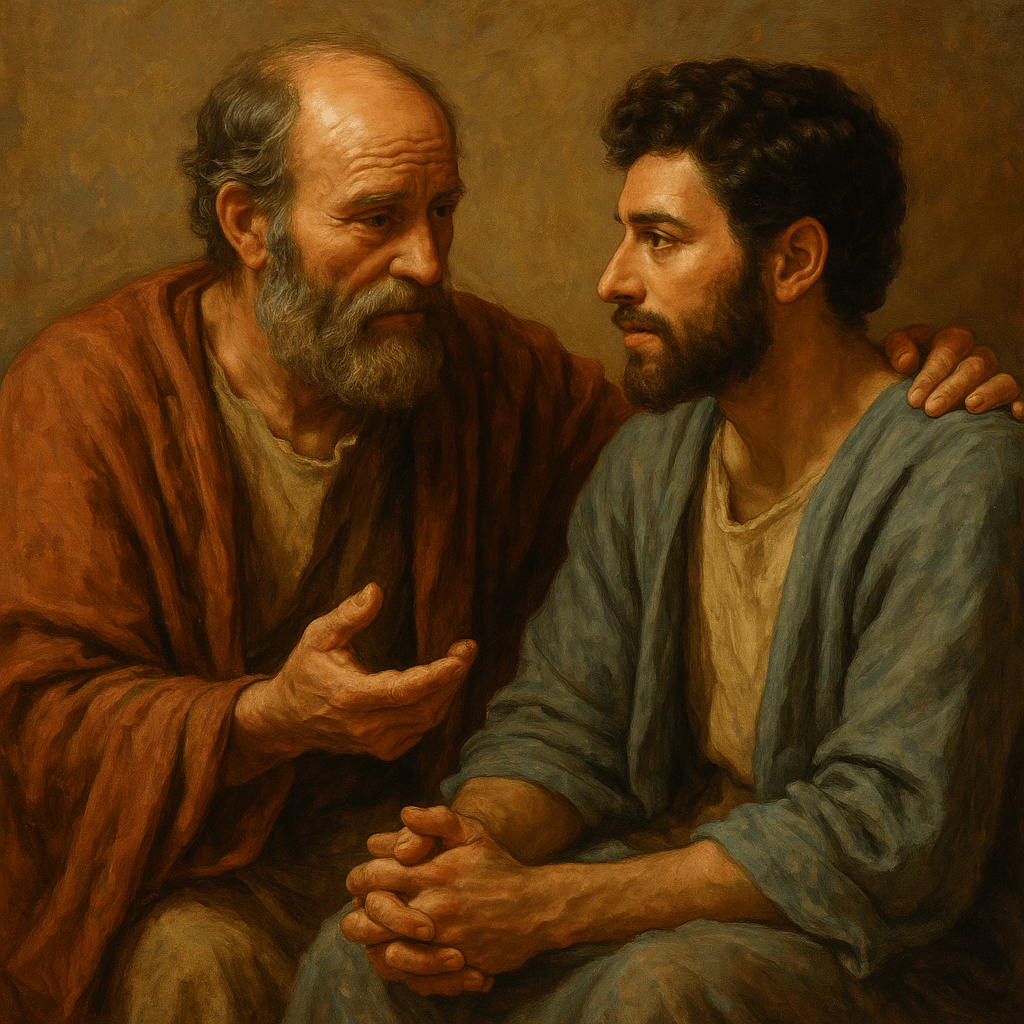
Legacy Begins in Relationship, Not the Spotlight
There’s a moment in every leader’s life when they realize that legacy doesn’t begin at the end of life—it begins in the lives we invest in today.
Before Paul ever instructed Timothy on doctrine, church leadership, or godliness, he wrote to him with the heart of a spiritual father. The opening verses of 1 Timothy aren’t just a formal greeting; they are a window into the kind of relationship that births legacy—one built on trust, truth, and time.
Too often we think of legacy as something we leave behind. But in the Kingdom of God, legacy is something we build daily—through words spoken in private, prayers whispered in faith, and the intentional investment we make in others. Paul didn’t wait until his ministry was finished to begin pouring into the next generation. He saw Timothy not as a project to manage, but as a son to nurture.
This short greeting—just two verses—tells us volumes about the way Paul saw his calling. His influence wasn’t measured by how many churches he planted or sermons he preached, but by how well he passed on the faith. And Timothy? He wasn’t just another young leader; he was the living evidence of Paul’s spiritual investment.
Real leadership doesn’t begin on a platform. It begins in proximity. With someone who knows your voice, feels your encouragement, and trusts your correction. That’s the kind of legacy that endures.
As we step into this series, let’s remember: You don’t need a title to lead, and you don’t need a stage to influence. You just need to be faithful with the lives God’s already placed around you. Because before God multiplies your reach, He always deepens your relationships.
The Power of Spiritual Fatherhood
Paul didn’t simply mentor Timothy—he claimed him as his “true child in the faith.” That language tells us something important: Paul saw Timothy not just as a protégé, but as family. He had watched this young man grow in faith, struggle in leadership, and rise to the calling God placed on his life. Paul’s letters weren’t cold instructions; they were filled with the warmth of a father’s heart and the urgency of someone passing on the torch.
This wasn’t leadership from a distance. It was discipleship forged in real-life proximity—walks between towns, conversations over meals, shared tears and victories. Paul wasn’t grooming Timothy for a position; he was forming him for a purpose. That kind of spiritual fatherhood doesn’t happen by accident. It’s slow, intentional, and deeply relational.
In a world chasing titles and platforms, Paul reminds us that leadership begins with relationship. Before influence comes investment.
And this principle still stands. Today’s young leaders aren’t looking for perfection—they’re looking for someone who will walk with them, speak truth with love, and stay when things get hard. They don’t need celebrity voices; they need faithful guides.
So pause for a moment and ask yourself:
Who has poured into your life—not just with content, but with character?
Who’s believed in you when you felt disqualified or discouraged?
And just as importantly—who are you investing in?
Legacy lives in the lives we touch. Spiritual fatherhood isn’t reserved for pastors or seasoned saints—it’s the invitation to every believer who’s known the grace of God and is willing to pass it on. Whether you’re twenty-five or sixty-five, God’s kingdom grows when we multiply what we’ve been given into someone else.
And maybe the most lasting thing you’ll ever do for the Kingdom isn’t what you build—but who you build.
Mentorship Matters
If you’ve ever been in a season where you felt called but unprepared, you’re in good company. Timothy knew that feeling well. He wasn’t Paul. He wasn’t the loudest, oldest, or most seasoned voice in the room. He was a young man with a big assignment—to help lead the church in a time of doctrinal confusion and cultural pressure. Can you imagine the weight of that responsibility?
But Timothy didn’t carry that weight alone. He had Paul. And that made all the difference.
Paul modeled mentorship that was both personal and powerful. He didn’t just give Timothy a list of expectations; he gave him presence. He gave him access to his life, his wisdom, and his encouragement. And because of that, Timothy stepped into his calling with a confidence rooted not in himself—but in the Lord.
We all need a Paul. Someone who sees what God is doing in us, even when we can’t yet see it ourselves. Someone who knows when to offer a challenge and when to offer comfort. Someone who reminds us that our purpose is bigger than our fear.
But the call doesn’t stop there—we’re also meant to be a Paul to someone else.
You don’t have to be a Bible scholar to be a mentor. You don’t have to have a perfect track record, just a surrendered heart and a willingness to show up. There’s someone younger in the faith, someone newer to the journey, who’s navigating questions you’ve already wrestled with—and they need your voice.
Mentorship isn’t about having all the answers. It’s about offering your availability, your authenticity, and your example.
You may not see the fruit immediately, but seeds planted in relationship will always grow with time. And often, the very things God has walked you through become the very things He uses to guide someone else.
So who’s your Timothy?
It could be the young adult in your small group who’s just learning to lead.
It could be a student, a co-worker, or even your own child.
It could be someone who’s looking at you and thinking, “I wonder if they’d care enough to show me the way.”
God’s design for leadership has always been generational—one life shaping another, one step at a time.
Embracing Spiritual Legacy
“Paul, an apostle of Christ Jesus by command of God our Savior and of Christ Jesus our hope,
To Timothy, my true child in the faith:
Grace, mercy, and peace from God the Father and Christ Jesus our Lord.”
— 1 Timothy 1:1–2 (ESV)
At first glance, Paul’s opening words to Timothy might seem like a standard introduction—but in the ancient world, how a letter began was never random. Every word carried weight. And in this brief greeting, Paul sets the tone for everything to follow. It’s a snapshot of spiritual authority, familial love, and divine empowerment.
To appreciate the richness of this passage, we need to understand the world in which Paul and Timothy lived.
Paul refers to himself as “an apostle of Christ Jesus by command of God.” This isn’t just a title—it’s a declaration of divine commissioning. In the Greco-Roman world, letters were often sent by emissaries on behalf of rulers or patrons. Paul adopts that model, asserting that he is a sent one, not self-appointed, but called by the direct order of God the Father and Christ Jesus.
This is especially important given the context of the early church. False teachers, many promoting legalistic distortions of the Mosaic Law or speculative myths, were undermining the Gospel’s purity and Paul’s authority. This makes Paul’s opening not just relational, but also a pre-emptive strike to establish spiritual clarity. So Paul’s words serve as both reassurance to Timothy and a public defense of his God-given leadership.
Timothy was a young man of mixed heritage—his mother was a Jewish believer and his father a Greek. Acts 16 tells us that he was well spoken of by the believers in Lystra and Iconium, and that Paul chose him as a traveling companion. Over time, Timothy became more than just an assistant; he became a spiritual son.
In Jewish culture, lineage and mentorship were tightly bound. A rabbi would often take on students (disciples), and those relationships were deeply formative. Paul uses similar language here, calling Timothy his “true child in the faith”. This is more than affectionate language—it’s covenantal. Paul is passing on not just information, but impartation. He sees himself in the role of a spiritual father—responsible for nurturing, correcting, and preparing Timothy for ministry.
Paul’s signature blessing—“grace, mercy, and peace”—was a unique combination not often found together outside of the Pastoral Epistles. While Greek letters typically began with a word of grace (charis), and Jewish greetings often invoked peace (shalom), Paul adds mercy into the mix—perhaps intentionally.
Why? Because ministry requires more than just favor and peace—it requires mercy. For the leader who falls short. For the flock that stumbles. For the times when strength fails and self-doubt sets in. Paul knew firsthand the weight of ministry and wanted Timothy to carry that tri-fold blessing into every challenge he’d face.
So what does this ancient greeting mean for us today?
These opening verses quietly but powerfully remind us that calling is not self-determined—it’s God-ordained. Like Paul, we are not leaders by preference or popularity, but by the command of the Lord. Our service flows from surrender, not self-promotion.
They also remind us that mentorship is sacred. Whether you’re in a season of being a Paul or a Timothy, God often does His deepest work through spiritual relationships. Leadership isn’t meant to be a solo pursuit—it’s meant to be shared, multiplied, and passed on.
And finally, we’re reminded that we lead with grace, mercy, and peace—not pressure. These aren’t just poetic blessings; they’re essential supplies for the road ahead. When leadership feels heavy, when criticism comes, or when failure stings—these are the gifts that sustain us.
In a world still infatuated with credentials, platforms, and influence, Paul’s words flip the narrative. Legacy isn’t built through resume lines—it’s built through relationships. And true authority? It isn’t seized. It’s entrusted by God and stewarded with humility.
Living It Out: Building a Legacy Through Intentional Relationship
If there’s one truth that rises from these opening verses, it’s this: legacy begins with relationship, not recognition. Paul’s words to Timothy weren’t crafted for applause—they were born out of authentic investment in someone he believed in.
So take a moment to pause and reflect.
Who has been your Paul? Who has poured into your life—not just with teaching, but with presence? Maybe it was a parent, a pastor, a small group leader, or a friend who walked with you through doubt and helped you grow in your faith. If they’re still around, reach out. Say thank you. Let them know their investment mattered.
And then ask: who’s your Timothy? Is there someone in your life who could benefit from the lessons you’ve learned—the struggles you’ve faced, the grace you’ve received? They don’t need someone perfect; they need someone present.
Legacy doesn’t demand a platform. It starts with small, sacred steps.
A text message to your mentor.
A coffee date with someone younger in the faith.
A simple invitation to walk together through Scripture or prayer.
These everyday moments—often unseen and uncelebrated—are where legacy is quietly forged. Influence that lasts isn’t flashy; it’s faithful. And the greatest investment you can make for the Kingdom might not be what you build, but who you build.
So don’t chase influence. Cultivate it—one relationship at a time.

 Pastor Luke
 Eternal Viewpoint
Recent Comments