
The Surprise of Peace at Christmas
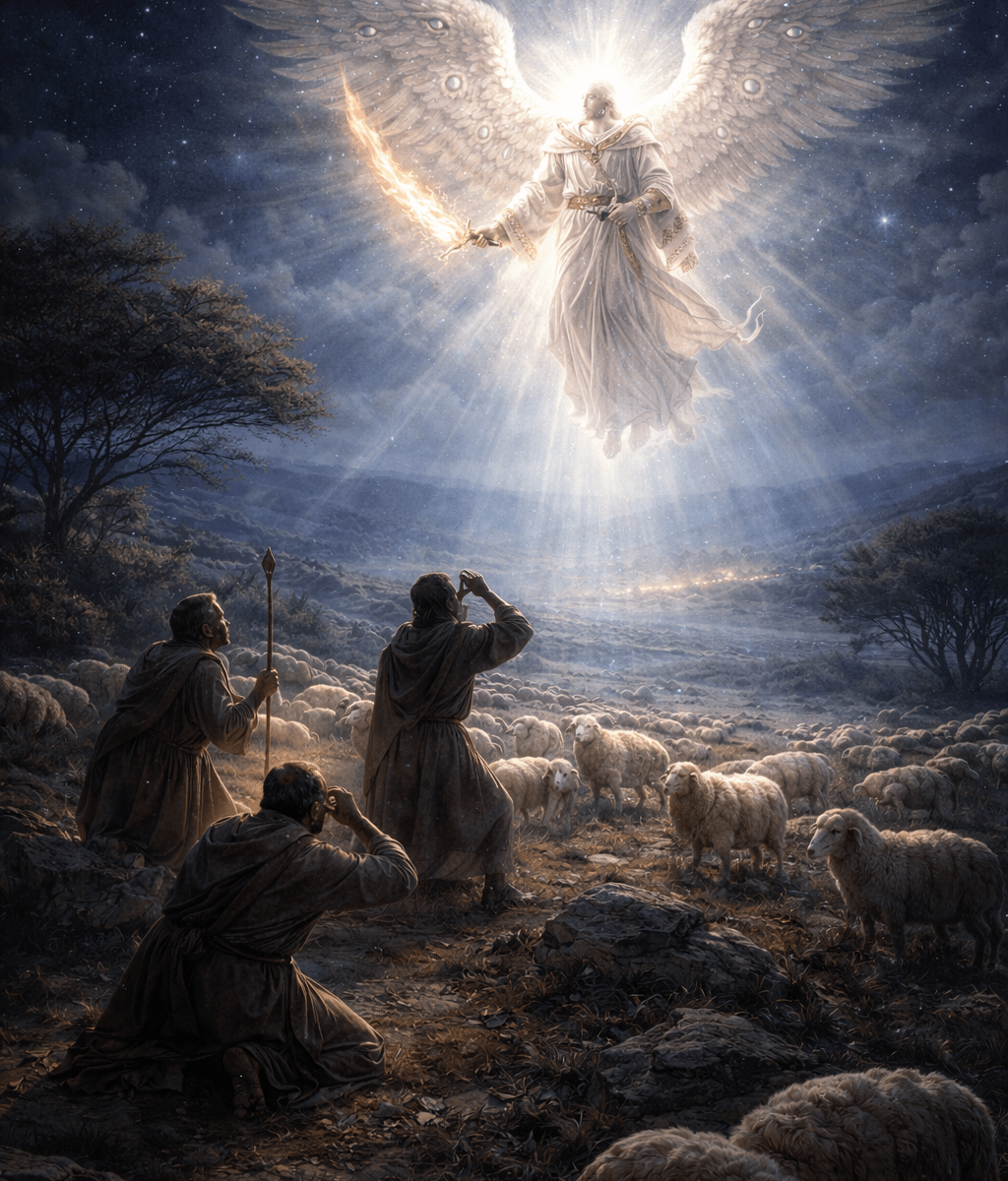
“Glory to God in the highest, and on earth peace among those with whom he is pleased!”
— Luke 2:14 (ESV)
There’s something about Christmas that promises peace and rarely delivers it the way we expect. We talk about calm, but the calendar fills faster than ever. We sing about joy, but the weight of the year still sits heavy on our shoulders. Grief doesn’t take a holiday. Fatigue doesn’t wait its turn. Unfinished conversations, strained relationships, and quiet disappointments don’t politely pause just because the lights are up and the music is familiar.
For many, December doesn’t feel peaceful.
It feels demanding.
And yet, right into that kind of world—restless, weary, and unresolved—Scripture announces peace as the defining note of Christ’s arrival.
Not the peace of ideal circumstances.
Not the peace of everything finally working out.
Not the peace of emotional numbness or forced cheer.
But the peace of God stepping into human history.
Uninvited by comfort.
Unhindered by chaos.
Christmas doesn’t deny the disorder of our lives. It does something far more surprising.
It interrupts it.
Peace Begins in the Night, Not the Calm
Luke is intentional with his details. When he tells us the shepherds were “keeping watch over their flock by night” (Luke 2:8), he’s not setting a quiet scene for atmosphere. He’s anchoring theology in history.
Shepherding in the first century was demanding, isolating work. These men lived outdoors for extended periods, exposed to the elements, responsible for animals that represented real economic value to others. They worked while the rest of society slept. Night watch meant vulnerability because of predators, thieves, exhaustion, and constant alertness. It was not a romantic occupation. It was necessary, unglamorous labor.
Socially, shepherds occupied the margins. Their work regularly kept them from the strict adherence to ceremonial purity laws, making them often viewed as socially insignificant and sometimes regarded as religiously ‘unclean’ because of their work and separation from regular worship rhythms. They were not the kind of people expected to receive divine revelation. If God were going to announce peace through respectable channels, shepherds wouldn’t have been the obvious choice.
And yet, that is precisely Luke’s point.
God chooses the overlooked.
He speaks first to the uncelebrated.
He announces peace where it seems least likely to take root.
Luke also emphasizes the night. Throughout Scripture, night often symbolizes exposure, uncertainty, and fear. Darkness is where vision is limited and control feels fragile. It’s where threats feel closer and reassurance feels distant. The shepherds aren’t gathered in a sanctuary or prepared in prayer. They’re simply doing their jobs, alert but weary, when heaven breaks in.
When the angel of the Lord appears and “the glory of the Lord shone around them,” Luke tells us their response plainly: “they were filled with great fear.”
This is a consistent biblical reaction to divine glory. God’s manifested presence—His weight, His holiness, His otherness—doesn’t produce casual comfort. It produces awe and trembling. Fear here isn’t moral failure. It’s human limitation encountering divine reality.
Before peace is announced, fear is acknowledged.
That order matters.
God doesn’t demand emotional readiness before He speaks peace. He doesn’t wait for calm hearts, stable circumstances, or resolved lives. He enters the night as it is and addresses people where they stand.
The shepherds are afraid.
They’re unprepared.
They are ordinary.
And into that exact space, God declares peace.
This reframes how we understand Christmas. The peace of Luke 2:14 isn’t a reward for spiritual composure or emotional strength. It’s not reserved for those who have life figured out or grief resolved.
It is a gift delivered into human fragility.
Peace doesn’t come after the fear subsides.
It comes while the fear is still present.
That is why this announcement still speaks so powerfully today. Christmas peace isn’t fragile or circumstantial. It’s sturdy enough to stand in the dark. It’s spoken into fear, not postponed until fear disappears.
And that changes everything about how we hear the angels’ song.
What the Angels Actually Announce
When the angels speak in Luke 2:14, they’re not reacting emotionally to the scene below. They’re declaring what God is doing cosmically through the birth of Jesus. God is putting the world back in order, beginning with hearts reconciled to Him.
This moment is not primarily about shepherds, or fear, or even Bethlehem. It’s about alignment, heaven and earth being brought back into proper order.
The angels begin with God, not humanity:
“Glory to God in the highest…”
That phrase tells us something essential about Christmas. The incarnation isn’t first about our peace. It’s about God’s glory being revealed rightly. Sin disordered the world by turning humanity inward, away from God. Christmas marks the beginning of that order being restored.
God is glorified not by remaining distant, but by drawing near.
Not by demanding ascent, but by choosing descent.
This is Luke’s quiet but consistent message: God’s greatness is displayed through humility. The birth of Jesus doesn’t reduce God’s glory. It reveals it.
Only once God’s glory is named does the announcement turn toward earth.
“…and on earth peace…”
That order matters.
Peace, in Scripture, is never self-generated. It flows from God being rightly known, rightly trusted, and rightly worshiped. The angels are not offering peace as a feeling to chase, but as a reality made possible because God is acting decisively in Christ.
And this peace isn’t abstract. It’s relational. It’s the healing of what has been fractured between God and humanity. The angels are announcing that the long separation is being addressed, not symbolically, but personally, through a Savior who has entered the world.
And then the line that slows us down:
“…among those with whom he is pleased.”
This is where Christmas often confronts us rather than comforts us, if we misunderstand it.
The angels are not dividing humanity into worthy and unworthy groups. They’re anchoring peace to grace, not effort. God’s pleasure doesn’t rest on human performance here. It rests on His Son. Jesus is the One in whom the Father’s pleasure rests, and peace flows to us through our union with Him. As Paul later writes, “we have peace with God through our Lord Jesus Christ” (Romans 5:1).
This is why Christmas peace cannot be earned or maintained by willpower. It’s received, not achieved. It’s given through relationship, not behavior management.
The angels are announcing something that will take decades, and ultimately a cross, to fully unfold. They’re declaring that reconciliation has begun. That peace is now possible because God Himself has stepped into the story.
Christmas, then, is not the conclusion of redemption.
It’s the arrival of the Redeemer.
And that reframes everything.
Peace is no longer dependent on life calming down.
Peace is now anchored to a Person who has come near.
When Peace Moves from Proclamation to Practice
Luke records the angels’ song so we will understand where peace comes from. But he doesn’t stop there. He wants us to see what happens after peace is announced.
The shepherds don’t stay in the field analyzing the message. They move. They go, they see, and then they return. Not to a different life, but to the same one, now shaped by a deeper truth.
That’s often how Christ’s peace works. It doesn’t remove us from ordinary life. It meets us within it and begins to reframe how we live, respond, and carry ourselves forward.
When peace is no longer tied to circumstances, when it flows from God’s glory and grace rather than our need for control, it begins to reshape how we live. Christmas peace doesn’t ask us to fix everything or hold it all together. It invites us to trust Someone who already has.
And that kind of peace calls for a different way of living not just in December, but long after the season has passed.
Here are three ways the surprise of Christmas peace is meant to take shape in our lives.
1. Receive Peace Before You Try to Reproduce It
One of the quiet pressures many of us carry, especially around Christmas, is the sense that we should be more peaceful than we are. More grateful. More settled. More composed. We tell ourselves that if we just planned better, prayed harder, or managed our emotions more carefully, peace would finally arrive.
But that isn’t how peace enters the story of Christmas.
The shepherds didn’t create a peaceful moment. They didn’t steady themselves before the angels appeared. They didn’t prepare their hearts or manage their fear. Peace was spoken to them while they were still startled, uncertain, and standing in the dark.
That detail matters because it exposes a common misunderstanding. Peace is not something we manufacture for God. It’s something we receive from Him.
The peace announced in Luke 2:14 flows from God’s favor, not human readiness. It doesn’t wait for emotional stability or spiritual composure. It meets us where we are and invites us to rest in what God has already done through Christ.
For many of us, the greatest barrier to peace is not our circumstances. It’s our striving. We try to control outcomes, manage impressions, or hold ourselves together long enough to feel okay. But the peace of Christ doesn’t grow stronger through effort. It deepens through surrender.
Receiving peace means letting go of the belief that everything must be resolved before rest is allowed. It means trusting that God’s grace in Christ is sufficient even when answers are incomplete and emotions remain tender.
So pause here for a moment and ask yourself honestly: Where am I trying to produce peace instead of receive it?
Christmas reminds us that peace doesn’t begin with our ability to cope. It begins with God’s decision to come near and with our willingness to rest in that truth.
2. Anchor Peace in Truth
Nothing about the shepherds’ world changed after the angels finished speaking. Rome still ruled. The night remained dark. Their work still waited for them in the fields. Peace didn’t arrive because conditions improved. It arrived because God had spoken.
That distinction shapes how Scripture consistently talks about peace.
We often assume peace will come once life settles down, when the conflict is resolved, the grief softens, or the uncertainty clears. But Christmas challenges that assumption. Peace was announced while the shepherds were still standing in the same place, facing the same realities, carrying the same responsibilities.
This tells us something important. Peace that depends on circumstances will always feel fragile. It rises and falls with our sense of control. The moment life shifts, it wavers. But peace anchored in truth remains steady even when circumstances refuse to cooperate.
Anchoring peace in truth means choosing, again and again, to return to what God has revealed rather than what we’re currently feeling. Scripture gives us language when emotions feel overwhelming. Prayer reorients us when anxiety pulls our focus inward. Remembering God’s faithfulness anchors us when the future feels unclear.
This kind of peace doesn’t ignore reality. It faces it honestly. It acknowledges fear, loss, and uncertainty without letting them have the final word.
When the noise of life grows louder, peace is often sustained not by finding answers, but by rehearsing what is true. God is present. God is faithful. God is at work even when we cannot yet see how.
So consider this question carefully: Where am I allowing circumstances to define my peace instead of anchoring it in God’s truth?
Christmas peace invites us to stand on what God has spoken, even when life remains unresolved. It reminds us that truth is a firmer foundation than feelings, and God’s promises are more stable than our changing situations.
3. Carry Peace Into the Lives of Others
Luke tells us that after seeing the child, the shepherds made known what had been told to them. Then they returned to their fields. Their circumstances did not change, but their posture did. Peace didn’t remove them from ordinary life. It reshaped how they reentered it.
That detail is easy to miss, but it matters.
The peace Christ brings is never meant to remain private. It’s personal, but it’s not isolated. It settles the heart, and then it moves outward through presence, words, and faithfulness in everyday spaces.
In a world marked by tension and exhaustion, peace is one of the most countercultural things a believer can carry. Not loud peace. Not performative peace. But the quiet steadiness of someone anchored in Christ.
Carrying peace doesn’t mean fixing people or offering answers too quickly. Often it looks like listening without rushing, staying present when others pull away, or responding with grace when the moment invites reaction. Peace shows up in how we speak, how we wait, and how we remain faithful in small, unseen ways.
This is how Christmas peace multiplies. Not through spectacle, but through consistency.
The shepherds didn’t preach sermons. They told the story they had encountered. And their ordinary obedience became a conduit for extraordinary truth.
So ask yourself this question with openness and courage: Who around me is living in the dark right now and needs the steady presence of Christ’s peace?
It might be someone grieving quietly. Someone overwhelmed. Someone who feels unseen. God often uses peaceful presence long before He uses persuasive words.
When peace has taken root in us, it begins to bear fruit through us. And in that way, Christmas becomes more than a moment we remember. It becomes a witness we carry.
The Interruption That Changes Everything
The angels didn’t wait for the world to be ready before they announced peace. They didn’t pause until fear subsided or circumstances improved. They spoke because God had already stepped into the story.
That’s what makes Christmas different.
Peace didn’t arrive after the night passed. It arrived in the middle of it. The shepherds were still standing in the dark. Rome still ruled. Life still carried the same demands. And yet something had shifted, not around them, but within them. God had come near.
That same interruption still meets us now.
For some, this season will not bring resolution. Grief may still feel close. Questions may remain unanswered. The pace of life may not slow the way we hoped it would. Christmas doesn’t pretend otherwise. Instead, it reminds us that peace does not depend on everything settling down. It rests on the presence of Christ, right where we are.
The peace He brings is steady enough to hold us when we feel worn thin. It’s patient enough to meet us before we feel ready. And it is generous enough to move outward, shaping how we live among others who are still carrying their own quiet burdens.
So perhaps the invitation of Christmas is simpler than we expect.
To stop striving and receive what God has already given.
To return again to what is true when life feels unsettled.
To carry Christ’s peace gently into the ordinary places we return to when the season passes.
Peace was never meant to end at the manger.
It was meant to travel, quietly and faithfully, through ordinary lives shaped by the nearness of God.
And maybe that is how Christmas continues to speak long after the lights come down. Not through spectacle, but through steady presence. Not through perfect circumstances, but through people who have been interrupted by peace and now carry it with them.
This Christmas, let peace interrupt you.
And as you return to your own fields, let it remain with you.

 Pastor Luke
 Eternal Viewpoint
Recent Comments