
Faithful in the Fire: Building a Legacy Through Hard Seasons
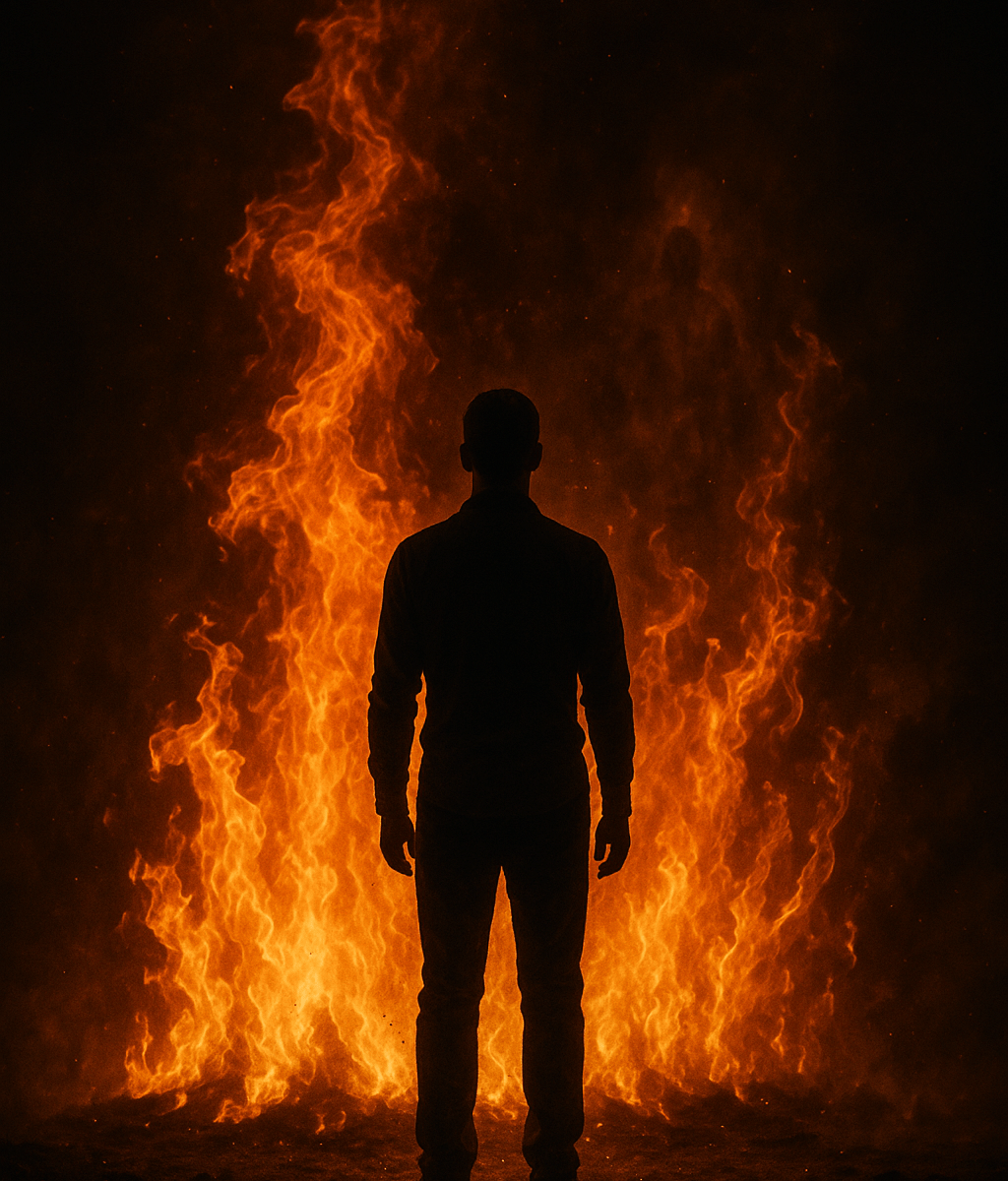
“But if not… that we will not serve your gods or worship the golden image that you have set up.” — Daniel 3:18
Leadership forged in comfort rarely leaves a lasting legacy. It’s the fires—the unseen, uncelebrated, and often unrelenting trials—that form the kind of faith that carries weight beyond the moment. The kind of faith that echoes through generations. Legacy, in the kingdom of God, isn’t measured in monuments—it’s measured in faithfulness passed from one soul to another.
Daniel 3 is more than a Sunday school story—it’s a masterclass in spiritual endurance and courageous obedience. Set in a culture obsessed with image and power, the story of Shadrach, Meshach, and Abednego reveals what it looks like to stand firm when everything—and everyone—pressures you to bow. In a world that demands conformity and comfort, these three young men stood out not because they had power or position, but because they had resolve. They kneeled to God alone. Their faith didn’t evaporate under threat; it was refined in the furnace.
Today we’re going to explore what it means to remain faithful when the heat is turned up—when obedience costs you, when the crowd goes one way, and when you don’t yet see the deliverance you’re hoping for. Through deep biblical reflection, we’ll see how their bold stance challenges us to cultivate an unwavering conviction, the kind that builds lasting legacy in the fires of adversity—and leads to the kind of spiritual endurance our world desperately needs.
Exiles in Babylon, Identity on Trial
The story of Daniel 3 unfolds in one of the most spiritually complex and politically charged moments in Israel’s history. God’s people are not in their homeland—they are captives in Babylon, a city that symbolized not only foreign dominance but also spiritual opposition. Babylon wasn’t just another empire; it was the embodiment of human pride and rebellion against God. From the Tower of Babel (Genesis 11) to Revelation’s vision of the great harlot (Revelation 17–18), Babylon consistently represents the elevation of man over God.
In 605 B.C., King Nebuchadnezzar of Babylon conquered Jerusalem and began a forced relocation of the best and brightest of Judah’s youth (Daniel 1:3–4). Among them were four young men—Daniel, Hananiah, Mishael, and Azariah—renamed Belteshazzar, Shadrach, Meshach, and Abednego. The renaming was not just cosmetic. It was part of Babylon’s systematic effort to reshape their identity. Each Hebrew name honored Yahweh, the God of Israel; each Babylonian name honored false gods of Babylon.
The goal was clear: erase their heritage, sever their spiritual roots, and indoctrinate them into Babylonian culture. They were taught Babylon’s language, literature, customs, and religious worldview (Daniel 1:4–5). It wasn’t enough to defeat Judah militarily—Babylon wanted to reprogram the next generation from the inside out.
This wasn’t passive exile. It was intentional assimilation.
The Golden Image: A Crisis of Worship
Daniel 3 picks up after Daniel has interpreted Nebuchadnezzar’s dream in chapter 2, where the king saw a statue made of various materials representing successive kingdoms. Though the head of gold represented Babylon (Daniel 2:37–38), Nebuchadnezzar’s response in chapter 3 shows his inflated pride: he builds an entire statue of gold, standing 90 feet tall. This wasn’t just artistic expression—it was theological rebellion. The message was clear: My kingdom will not be replaced. My rule will be absolute.
By commanding all officials and peoples to bow before the statue at the sound of music, Nebuchadnezzar wasn’t merely testing political loyalty—he was enforcing religious conformity. In ancient Mesopotamia, politics and religion were inseparable. The king was seen as divinely appointed, often deified himself, and loyalty to the empire was expressed through acts of worship. Refusal to bow was not simply civil disobedience; it was perceived as treason and blasphemy.
Identity Under Fire
Shadrach, Meshach, and Abednego faced a crossroads. Their external environment had already been altered—their homeland destroyed, their names changed, their language replaced. But their internal allegiance remained intact. From the beginning, Daniel 1:8 tells us they had resolved not to defile themselves with Babylon’s ways. That resolve, forged in small daily choices, now faced the fire of public pressure.
Everyone else bowed. Not because they believed in the idol, but because it was easier than standing alone.
But these three young men didn’t just refuse—they did so with clarity and calm conviction. They weren’t rebels without a cause. They were worshipers with a King. Their decision wasn’t reactionary—it was the result of long obedience in the same direction. They understood that compromise in worship is compromise in identity.
This moment wasn’t just about civil resistance—it was about spiritual allegiance.
Why This Context Matters
Understanding the historical and cultural background of Daniel 3 helps us see this is not merely a tale of courage—it’s a lens through which we view the tension between godly identity and cultural conformity. Babylon demanded that their faith be privatized, that their loyalty be split, and that their convictions be silent.
It still does today.
We, too, live in a culture that erects golden images—not statues, but systems, ideologies, and values that demand our worship through silent assent. The temptation is the same: Just blend in. Don’t make it awkward. Don’t be the only one standing.
But as with Shadrach, Meshach, and Abednego, our ability to stand when it matters most depends on whether we’ve resolved long before the music starts. Identity must be formed in the secret place before it can stand in the public square.
When Faith Becomes Fireproof
Understanding the historical weight of Daniel 3 forces us to reconsider how we live out our faith today. This isn’t just a story about three young men standing tall in a furnace—it’s a wake-up call to the Church in every generation. The pressure to conform hasn’t gone away; it’s just changed form. The fires still rage—whether they be cultural compromise, personal suffering, moral isolation, or spiritual warfare.
But Daniel 3 doesn’t just give us inspiration. It gives us a blueprint.
Here are three bold, countercultural applications from this chapter that don’t just call us to survive hard seasons—but to build a lasting legacy through them.
1. Conviction Must Be Cultivated Before Crisis
“But Daniel resolved…” — Daniel 1:8
“But if not, be it known to you, O king…” — Daniel 3:18
Spiritual conviction is never spontaneous. What we see in Daniel 3 is the public culmination of a private, pre-decided faith. Before Shadrach, Meshach, and Abednego stood before Nebuchadnezzar, they had already stood before the Lord. Long before the flames, they had resolved who they belonged to, who they would worship, and what they would not compromise—no matter the cost.
Daniel 1:8 marks the beginning of that resolve. Though the pressure in that moment was “just food,” the issue was far deeper. The king’s table represented cultural assimilation, dependence on Babylon, and silent compromise. And these young men—still in their teens—decided in their hearts: We will not defile ourselves. That small, seemingly insignificant decision laid the foundation for the bold faith we witness in chapter 3.
This is how conviction is formed—not in the furnace, but in the daily fire of obedience. It’s shaped in the quiet choices no one sees. The decisions to kneel in prayer when no one’s watching (Daniel 6:10). To walk away from what culture says is fine but God says is not. To open the Scriptures, even when you feel nothing. Conviction is cultivated in the mundane, not just in the moment of crisis.
And when the moment of testing finally arrives—as it always does—those convictions must already be in place. Because the furnace doesn’t form faith. It exposes it.
The same is true for us. If we are not resolved before the music plays—before the pressure mounts and the heat rises—we will bow when it matters most. What feels like small spiritual habits today are often the very instruments God uses to build resilience for tomorrow.
Think of Jesus in the wilderness (Luke 4:1–13). He didn’t wait until Satan tempted Him to decide whether or not He trusted the Word of God. He was the Word. And even in the vulnerability of hunger and isolation, His identity was settled. He didn’t negotiate with the enemy—He stood on truth already hidden in His heart.
So it must be with us. We cannot afford to wait until we’re in the fire to decide who we are and what we believe. Cultivate now what you will need then. Let Scripture anchor your thoughts. Let prayer shape your instincts. Let obedience—not outcomes—define your legacy.
Faithfulness in crisis is forged through faithfulness in the quiet. Your legacy will not be determined by what you do in the spotlight—but by the unseen, uncelebrated, non-negotiable decisions you make when no one’s watching.
2. The Presence of God Is Found in Surrender, Not in Escape
“But I see four men unbound, walking in the midst of the fire, and they are not hurt; and the appearance of the fourth is like a son of the gods.” — Daniel 3:25
The most astonishing moment in Daniel 3 isn’t the refusal to bow or even the miraculous survival—it’s the appearance of a fourth figure in the flames. While Nebuchadnezzar expected to watch his enemies burn, what he saw instead was divine companionship in the heart of suffering. Most scholars and church fathers agree this wasn’t just an angel—it was a theophany, likely a pre-incarnate appearance of Christ Himself.
This truth shatters our modern assumptions about suffering. We often believe God’s faithfulness is proven by how quickly He rescues us. But in Scripture, His nearness is most powerfully revealed when He chooses to join us in the trial rather than deliver us from it.
Isaiah had already declared this reality:
“When you walk through fire, you shall not be burned, and the flame shall not consume you. For I am the Lord your God.” — Isaiah 43:2
The promise was never exemption from affliction—but presence in the midst of it. And in Daniel 3, that promise becomes personal.
Notice what happens: the fire that was meant to destroy them instead sets them free. The ropes that bound them are burned away (v. 25), but their bodies are untouched. What an image of sanctification. Sometimes God doesn’t use the fire to punish us—but to purify us. He burns away what binds so that we might walk in deeper freedom.
Too many of us waste our trials by fixating on escape. But spiritual maturity is learning to look for Jesus in the furnace, not just beyond it. What if the very place you’re trying to pray your way out of is the exact place God is trying to meet you in? What if your breakthrough isn’t found in getting out, but in letting go?
Even Jesus, in the Garden of Gethsemane, modeled this surrendered posture. Facing the fiery trial of the cross, He didn’t flee from it—He submitted to the will of the Father (Matthew 26:39). And in that surrender, the power of resurrection was released.
We must learn to stop interpreting hardship as absence. God’s silence is not abandonment. His delay is not distance. In fact, it is often in the furnace that His presence becomes most undeniable. When we stop striving to control the outcome and start surrendering to His process, we find a peace that the flames can’t touch.
The fire may be real—but so is the One who walks beside you.
3. Legacy Is Forged in Faithfulness, Not Applause
“Then the king promoted Shadrach, Meshach, and Abednego…” — Daniel 3:30
“There is no other god who is able to rescue in this way.” — Daniel 3:29
When these three men stood firm, they weren’t trying to make a statement. They weren’t looking for a promotion, a platform, or a legacy. They were simply being obedient. And that’s the beauty of it—God often builds the most enduring legacies through the obedience we think no one sees.
In our applause-hungry age, where influence is often measured in likes and visibility, Daniel 3 reminds us that heaven keeps a different scorecard. Legacy in the kingdom isn’t shaped by how loudly you proclaim truth from a stage—but how quietly and consistently you live it out in the shadows. It’s forged in hospital rooms, break rooms, dining rooms—when you choose faithfulness over comfort and integrity over image.
Shadrach, Meshach, and Abednego didn’t know if their stand would cost them their lives or inspire a nation. But their obedience sparked a cultural shift. A pagan king, whose pride had built a 90-foot idol, ends up issuing a decree that reveres the God of Israel. This is the power of faithful presence in a faithless world.
And yet, the real legacy was not the promotion they received. It was the witness they left. Generations later, we still tell their story—not because they gained position, but because they revealed what it means to fear God more than man.
Their lives challenge us to reevaluate what success really is. Are we chasing fruitfulness or faithfulness? Do we long to be impressive, or simply obedient?
The answer determines the impact we leave behind.
God doesn’t need your influence. He desires your allegiance. Because when you’re faithful in the fire, He is the one who magnifies the message through your life. Whether the world applauds or not, a life marked by courageous consistency in the face of pressure leaves an imprint that echoes into eternity.
Stand firm, even if no one notices—because God always does. And the legacy He writes through surrendered lives always outlives the fire.
A Faith That Outlives the Fire
The fire was real—but so was their faith.
Shadrach, Meshach, and Abednego didn’t just survive Babylon—they overcame it without becoming like it. They remind us that it’s possible to live in a culture that bows to idols without bending your knee. It’s possible to stand when the cost is high, to trust when the outcome is uncertain, and to walk through fire without the smell of smoke clinging to your soul.
Their story is not a call to sensational heroism—it’s a call to steady, unshakable faith. A faith that is resolved before the crisis, anchored in the presence of God, and unconcerned with applause. A faith that trusts not in the absence of flames, but in the nearness of Christ. That kind of faith doesn’t just endure the heat—it changes the atmosphere around it.
And that’s the invitation for us today.
You may not be standing before a golden statue, but you are standing in a world that asks you to compromise your worship daily. To prioritize comfort over conviction. To trade holiness for applause. But make no mistake—every generation must choose: bow to the idols of the age, or stand in allegiance to the King of Kings.
So what about you?
Will your faith fold in the flames, or will it be the kind that outlives them?
Because the kind of legacy that matters most—the kind that shapes families, disciples generations, and honors the Lord—isn’t forged in ease. It’s forged in fire. And the world doesn’t need more people who look like Nebuchadnezzar’s empire. It needs more people who look like Jesus in the flames.
Faithful in the fire. That’s the legacy worth leaving.

 Pastor Luke
 Eternal Viewpoint
Recent Comments